Every second counts, a maxim that feels especially true when you just want to decompress with a game. Goldex Casino recognizes this. Their Quick Deposit feature eliminates the inconvenience, turning what used to be a chore into a few quick clicks. This isn’t just a trivial perk. It’s a definite signal that the casino respects your time. For anyone managing work, family, and life, a lengthy, complicated payment process can dampen the mood entirely. Goldex’s system lets you deposit your account fast, without sacrificing on safety or restricting your choice of payment methods. It’s built for people who want to gamble, not wait.
How It Works of Fast Deposit Technology
How does it work? Once you’ve safely verified your payment details, the system saves them using a method called tokenization. Think of it like a digital placeholder. Instead of keeping your actual card number, Goldex saves a unique, scrambled token. If anyone stole this token, it would be worthless. The next time you want to deposit, you don’t input a thing. No card numbers, no expiry dates, no CVV. You just select an amount and confirm. All the complex security stuff happens silently in the background. What you notice is the speed.
Integration with Modern Payment Ecosystems
This speed isn’t locked to one type of payment. Goldex Casino makes Quick Deposit available across a wide mix of options. You can use it with major credit and debit cards, popular e-wallets like Skrill or Neteller, and even some direct bank transfers. So the time you save isn’t conditional on how you choose to pay. The system is built to adapt, too. As new ways to pay come online, Goldex can incorporate them into this streamlined process. The goal is simple: let you use your preferred method, but make it quicker every time.
Safety Protocols Underpinning Speed
Faster payments might make some people nervous. Goldex tackles this directly by baking security right into the Quick Deposit system. Tokenization is the first major barrier, since your real financial data never resides on their servers. Every quick transaction is also wrapped in the same SSL encryption that protects the whole site. For an extra layer, you can enable multi-factor authentication. This might mean confirming the deposit via a text message or email. These steps ensure that speed doesn’t mean taking chances. Your money and your details stay protected.
Adapting to Mobile-First Lifestyles
Quick Deposit truly excels when you are on a phone. Typing long card details on a small screen is a recipe for typos and frustration. Goldex’s feature addresses this. If you are using their app or a mobile browser, a deposit requires one or two taps. It suits the spontaneous nature of mobile play perfectly—during a commute, or in a few minutes of downtime. The casino experience is not chained to a desktop computer. It moves with you. This is absolutely essential for how people live now, where the phone is often the primary device for entertainment.
The design makes sure it works intuitively on any device. The buttons are large and easy to press, and confirmation messages are instant and clear. This mobile-friendly approach prevents mistakes and provides you peace of mind that your transaction went through. By tearing down the technical walls around mobile payments, Goldex Casino links your desire to play with the ability to do it, no matter where you are. That kind of access is not just a nice extra; it’s what players anticipate from a modern service.
Strategic Benefit in the Internet Gambling Landscape
To be frank, not all online casinos put in this effort on their payment process. In a saturated market, Goldex Casino’s Quick Deposit feature is a real edge. Anyone who has struggled with manual entry on another site will feel the improvement immediately. The extra moments add up over weeks and months, building a sense of loyalty. It communicates to a player that Goldex is contemporary, capable, and dedicated to progress. When someone is deciding where to play, a smooth, reliable deposit system can be equally crucial as the game library. It is a component of the foundation.
Cultivating Trust Through Transactional Reliability
Trust in online gaming starts with the essentials. Does my money get where it’s supposed to go? A deposit that is rapid, uniform, and without mistakes builds confidence. When this aspect of the experience works without a hitch, it gives players confidence about other aspects of the casino, from game fairness to customer service. Goldex’s Quick Deposit feature, by https://data-api.marketindex.com.au/api/v1/announcements/XASX:AGI:2A1318890/pdf/inline/app4e-preliminary-final-report-for-year-ended-30621 performing consistently every time, becomes a quiet but powerful signal of the brand’s overall reliability. It transforms a routine chore into a relationship builder. It shows the casino appreciates that player trust isn’t just about flashy games; it’s about mastering the basics.
Immediate Impact on the Gamer Gaming Experience
The most obvious effect is on the clock. What previously was a two or three minute task of typing and checking numbers now takes seconds. This has a genuine effect on your mindset. You stay in the zone. There’s no annoying interruption to find your wallet or open a banking app. The gap between thinking “I’d like to play” and actually playing shrinks to almost nothing. That seamlessness matters a lot during a limited-time bonus offer or at a live dealer table where seats fill up fast. When timing is everything, a slow deposit can mean missing out.
Eliminating Friction and Decision Fatigue
The feature saves more than minutes Goldex Verification. It saves mental energy. Remembering a 16-digit card number, getting the expiry date right, and hunting for the CVV code requires focus. That small mental tax is gone. Without that friction, the idea of a quick gaming session feels more inviting, particularly after a demanding day. You’re less likely to talk yourself out of playing because you don’t want the hassle of depositing. Instead, you can act on a whim. This makes the whole experience feel more natural and considerate, like the platform is working with you, not against you.
Supporting Responsible Spending Control
You might think faster deposits could lead to rash decisions. Goldex pairs this convenience with tools for control. You can set daily, weekly, or monthly deposit limits that work even with Quick Deposit. Session reminders and reality checks are also easy to activate. Because adding funds is so easy, you might feel more comfortable depositing smaller amounts as you go, rather than dropping one large sum to avoid a tedious process later. The system is designed for both ease and restraint, putting you in charge of your budget without sacrificing convenience.
What Lies Ahead for Fast Transactions for iGaming
Payment technology will keep evolving. As it moves forward, the demand for immediate processing will continue to rise. Goldex Casino’s development of Quick Deposit provides them with a strong foundation to develop further. Future steps might involve biometric checks such as fingerprint scanning, or closer integration with open banking systems. The core idea—saving the player’s time—will always remain relevant. Today’s system is part of the shift toward making payments a unobtrusive, effortless part of the gaming experience. By prioritizing this now, Goldex isn’t just fixing a current issue. They’re preparing for what comes next.
Looking ahead, we could see more tailored features. The system might learn your habits and propose deposit amounts, or offer a one-click reload at just the right moment in a game. The emphasis will remain on eliminating steps and mental effort, so you can lose yourself in the game. Goldex Casino’s commitment to the Quick Deposit feature proves they’re not just following trends. They’re trying to set a new standard for effectiveness and satisfaction for their players.
How to sell on Meesho in India in 2026 is one of the most searched questions among new online sellers — and for good reason. With over 1.1 million active sellers, 14 crore+ customers, and coverage across 28,000+ pin codes, Meesho has become India’s most accessible gateway to e-commerce.
You don’t need a website. You don’t need a warehouse network. You don’t even need deep technical knowledge to start. And unlike Amazon or Flipkart, Meesho charges 0% commission on most product categories — meaning you keep the full selling price, minus shipping charges.
But here’s what most beginner guides don’t tell you: the moment you start selling at scale on Meesho, your biggest operational challenge isn’t finding products or getting orders. It’s managing shipping costs, controlling your RTO rate, and building a logistics setup that doesn’t eat your margins alive.
This guide covers everything — from Meesho seller registration to shipping charges, COD management, RTO reduction, and what to do when you’re ready to grow beyond Meesho’s built-in logistics.
Why Sell on Meesho in 2026?
Before diving into the how, it helps to understand why Meesho is worth your time in 2026.
Meesho has emerged as one of India’s fastest-growing e-commerce platforms, particularly for sellers targeting price-conscious consumers in Tier 2, Tier 3, and rural markets. With over 130 million monthly active users and a zero-commission model that sets it apart from Amazon and Flipkart, Meesho offers a unique opportunity for sellers looking to expand their reach.
Key advantages for new sellers:
0% commission on most categories — you keep 100% of your selling price
Zero upfront cost — no listing fees, no monthly subscription
Meesho handles logistics — pickup, delivery, and returns are managed through their logistics network
No minimum order requirement — start with as few orders as you like
GST-optional for small sellers — if your annual turnover is below ₹40 lakhs (₹20 lakhs in some states), you can sell on Meesho without GST registration
Pan-India reach — 28,000+ serviceable pin codes from day one
The platform is particularly powerful for sellers in fashion, home décor, kitchen products, beauty, and lifestyle — categories where volume matters more than premium pricing.
A minimal visual representation of Meesho ecommerce selling, featuring shipping, COD orders, and reseller-focused online business operations in India.
Step-by-Step: How to Register as a Meesho Seller
Registering on Meesho is straightforward. Visit supplier.meesho.com and click on “Start Selling.” You will need your GSTIN (GST Identification Number), PAN card, a bank account with the registered business name, and a valid mobile number. The registration process takes about 15–20 minutes, and account verification typically completes within 24–48 hours. Once verified, you can start listing products immediately.
Here’s the complete document checklist:
Document
Required?
Notes
PAN Card
✅ Mandatory
Personal or business PAN
Bank Account
✅ Mandatory
Must match business name
Mobile Number
✅ Mandatory
For OTP verification
GSTIN
For most sellers
Optional below ₹40 lakh turnover
Product photos
✅ Mandatory
Minimum 2 images per product
Pickup address
✅ Mandatory
Where courier will collect parcels
Step 1: Go to supplier.meesho.com and click “Start Selling” Step 2: Enter your mobile number and verify via OTP Step 3: Fill in your business details — name, address, PAN, and bank account Step 4: Add your GSTIN (if applicable) or indicate you’re a non-GST seller Step 5: Wait 24–48 hours for account verification Step 6: Once approved, start uploading your product catalogue
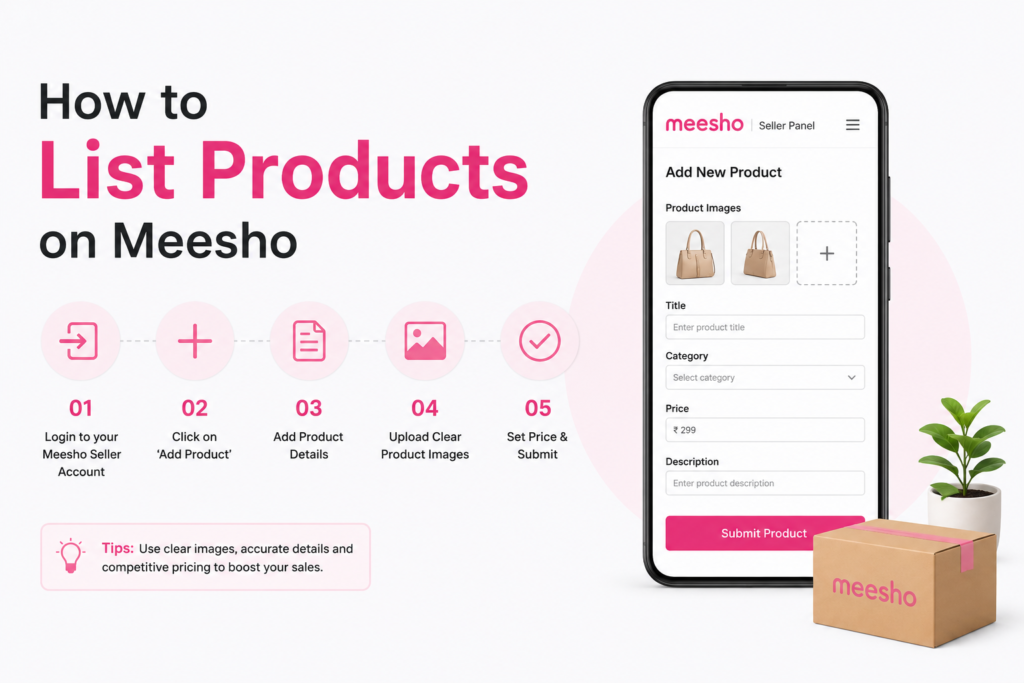
How to List Products on Meesho
Once your seller account is active, product listing is your next step. Meesho’s algorithm rewards active sellers who list consistently — adding new products every 10–15 days signals to the platform that you’re an engaged supplier and boosts your catalogue’s visibility in search results.
What makes a strong Meesho listing:
Product title: Clear, descriptive, keyword-rich. Include the product type, key feature, size or colour variant, and occasion if relevant. Example: “Women’s Cotton Anarkali Kurta — Floral Print, Sizes S–3XL, Casual Wear”
Images: Meesho shoppers are largely visual buyers browsing on mobile. Use high-quality images on a white or neutral background. Include at least one image with a model (for apparel) or in-context usage shot (for home products). Blurry or poorly lit images directly reduce your conversion rate.
Price: Meesho follows a supply price model, not direct selling price. Correct pricing is critical to avoid losses and RTO issues. Price too low and your margin disappears after shipping. Price too high and you lose to competitors. Research similar products on the platform and price within 5–10% of the competitive range.
Product details: Fill every field — size, material, colour, weight. Missing product information increases return rates because customers receive items that don’t match expectations.
Weight entry — this is critical: The weight you enter for your product directly affects your shipping charge. Entering incorrect weight (lower than actual) will cause weight discrepancy issues during pickup, leading to higher charges or delayed settlements. Always weigh your packed product (product + packaging material) and enter that figure, not just the product weight.
Meesho Shipping Charges Explained (2026)
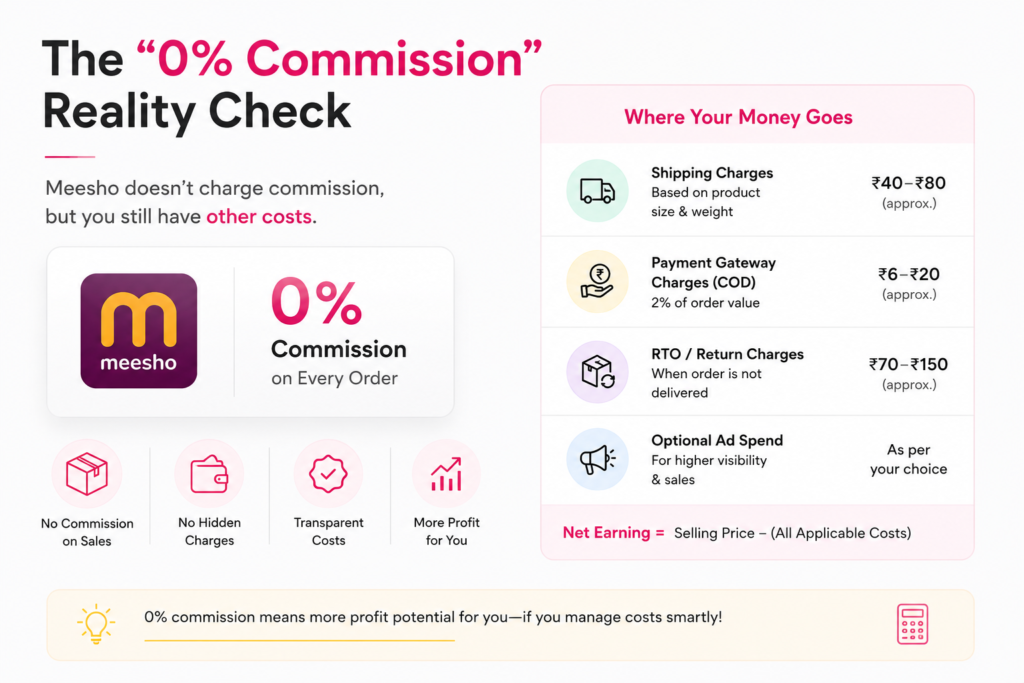
This is where most new Meesho sellers get their first unpleasant surprise. Meesho charges 0% commission — but shipping charges are deducted from every order settlement, and they add up fast.
Meesho shipping charges are calculated automatically based on packed weight, delivery zone, and reverse logistics. While the platform follows a low-commission model, forward and RTO shipping costs directly impact your final settlement. Even small weight differences can move your product into a higher slab and reduce margins.
Meesho Shipping Rate Slabs (2026)
Meesho uses Valmo — its own logistics vertical — to aggregate multiple courier partners and offer competitive shipping rates.
Packed Weight
Local Zone
Regional Zone
National Zone
Up to 500g
₹35 – ₹45
₹45 – ₹55
₹55 – ₹65
500g – 1 kg
₹45 – ₹60
₹55 – ₹70
₹65 – ₹85
1 kg – 2 kg
₹60 – ₹80
₹75 – ₹95
₹90 – ₹115
2 kg – 5 kg
₹90 – ₹120
₹110 – ₹145
₹130 – ₹175
Rates are indicative. An additional 18% GST applies to the shipping fee. Actual charges depend on courier partner allocation and pin code. Always check the shipping estimate in your Meesho Supplier Panel for each specific order.
The “0% Commission” Reality Check
Many new sellers misunderstand Meesho’s cost structure. Here’s what a real order looks like:
Example: Selling a kurti at ₹499
Item
Amount
Selling price
₹499
Meesho commission (most categories)
₹0
Forward shipping (500g, national)
– ₹65
GST on shipping (18%)
– ₹11.70
Net settlement (if delivered)
₹422.30
Your product cost
– ₹250
Packaging material
– ₹15
Gross profit (if delivered)
₹157.30
Now factor in RTO. If 20% of your orders come back:
Scenario
Cost
Forward shipping (lost on RTO)
– ₹65
Return shipping charge
– ₹40 (approx.)
Total loss per RTO order
₹105 + your product is back in stock but you’ve lost ₹105
On 100 orders with 20% RTO, you lose ₹2,100 purely in shipping on failed orders. This is why managing RTO is not optional — it is the difference between profit and loss.
Understanding COD on Meesho
Cash on Delivery is the dominant payment mode on Meesho. The platform’s customer base is heavily Tier 2 and Tier 3 — price-sensitive shoppers who strongly prefer COD over prepaid UPI or card payments.
How COD works for Meesho sellers:
Customer places a COD order — no payment at order stage
Meesho’s logistics partner picks up the product from you
Delivery partner collects cash from the customer at delivery
Payments from Meesho are credited directly to your linked bank account every 7 days after delivery, even for Cash on Delivery (COD) orders
COD charges on Meesho: COD orders attract a slightly higher shipping charge than prepaid orders on most platforms. On Meesho, COD handling is built into the shipping fee — there is no separate COD surcharge listed, but the effective per-order shipping cost for COD orders is typically ₹5–₹15 higher than equivalent prepaid orders.
The COD cash flow challenge:
The 7-day payment cycle means your cash is locked for a week after each delivery. For sellers shipping 50–100 orders per week, this creates a working capital gap — you’re buying and packaging new inventory before last week’s settlements have arrived. Plan for this by maintaining a buffer of at least 2 weeks’ inventory cost in working capital.
COD verification tip: Before dispatching high-value COD orders (above ₹600–₹800) from new customers with no purchase history, consider sending a quick WhatsApp confirmation. While Meesho doesn’t provide customer phone numbers directly, building habits around order verification reduces impulse cancellations and RTO.
Meesho RTO — What It Is and How to Reduce It
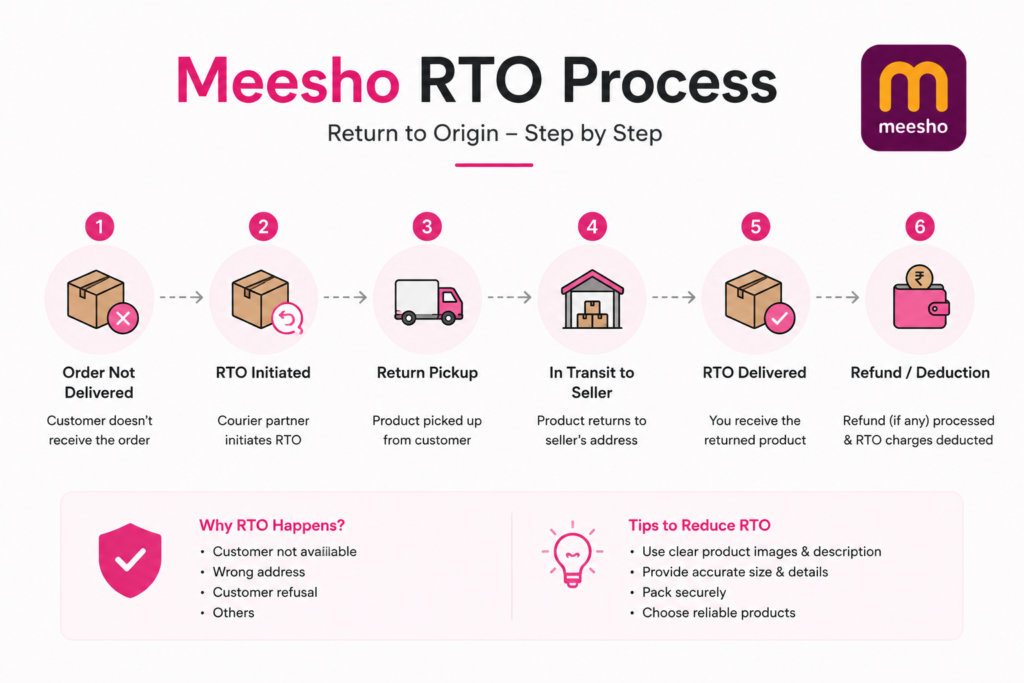
RTO (Return to Origin) is the single biggest profitability threat for Meesho sellers. RTO is when a package fails to deliver and returns to the seller. Meesho does not charge a separate RTO fee — however, you lose the forward shipping cost on every RTO order.
In some categories on Meesho — particularly fashion, where customers often order multiple sizes — RTO rates can exceed 25–35%. Every RTO order costs you forward shipping (₹40–₹85 depending on zone and weight) plus return shipping (₹35–₹60), plus the time your inventory was out of your hands.
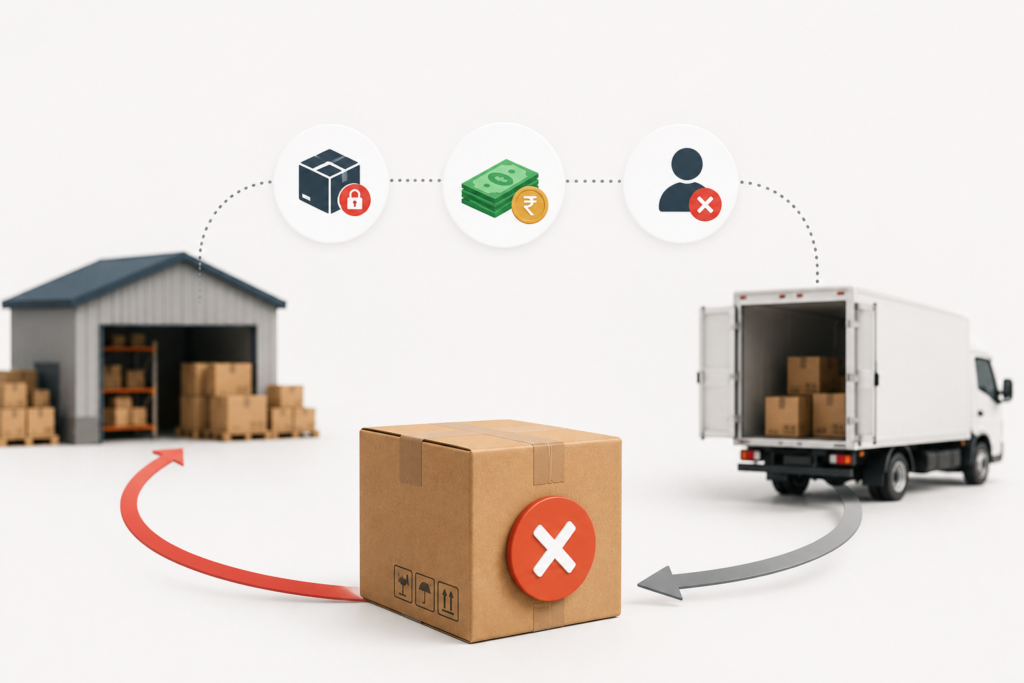
A minimal infographic showing the Meesho Return-to-Origin (RTO) process, including failed delivery, return pickup, transit, and seller-side return handling.
Why RTO Happens on Meesho
Wrong address or unreachable customer: The most common cause. Customers in Tier 2/3 towns sometimes enter incomplete addresses or are unavailable during delivery attempts.
Impulse orders: Meesho’s low prices and easy COD encourage impulse purchases. Some customers order without strong intent to receive — especially during sale events.
Expectation mismatch: Product arrives looking different from the listing photos. This is a listing quality problem, not a shipping problem.
Delivery attempt failure: Courier partner makes one or two delivery attempts, customer is unavailable, parcel is marked RTO.
7 Proven Ways to Reduce Your Meesho RTO Rate
1. Enter accurate product weight. Weight discrepancies cause disputes and delayed pickups, which can result in RTOs before delivery even starts.
2. Use precise product descriptions and real product images. The closer your listing is to what arrives in the customer’s hands, the fewer expectation-gap returns you’ll see.
3. Include accurate size charts for apparel. Fit issues are the #1 cause of returns in fashion. A clear, measurement-based size chart prevents the majority of sizing returns.
4. Enrol in Meesho’s Next Day Dispatch (NDD) programme. Next Day Dispatch (NDD) is Meesho’s programme that lets sellers ship orders to customers the next day after they are placed. Once you enlist in this programme, your catalogue appears at the top of the homepage. The NDD facility reduces order cancellations and RTO, ultimately leading to growth.
5. Pack securely. A damaged product arriving in poor condition triggers both a return and a negative review. Use appropriate packaging for your product type — poly mailers for apparel, corrugated boxes for fragile items.
6. Maintain a high seller rating. Meesho’s algorithm prioritises listings from high-rated sellers. Better placement means more genuine buyers, which correlates with lower RTO rates.
7. Monitor your RTO tab regularly. If the customer doesn’t receive the product, it will be returned to you, which you can find in the “RTO” tab. Track your RTO rate by product category and identify which SKUs are generating the most returns — sometimes a single problematic listing is responsible for a disproportionate share of your RTO.
Meesho Payment Cycle — When Does Money Arrive?
Understanding the payment cycle is essential for cash flow management.
Payments on Meesho are credited directly to your linked bank account every 7 days after delivery, even for COD orders. Delivered orders are visible under the Payment tab, pending or disputed payments under Verification, and returns and RTO under the Returns or RTO tab. Every transaction on Meesho is transparent — you can see the payment date, amount, and bank reference number.
Payment cycle summary:
Event
When payment arrives
Prepaid order delivered
7 days after delivery
COD order delivered
7 days after delivery
RTO order
No payment (shipping cost deducted)
Customer-initiated return
After return pickup confirmed
Managing payment cycles as you scale:
At low volumes (10–20 orders per week), the 7-day cycle is manageable. At higher volumes (100+ orders per week), you have multiple weeks of settlements in the pipeline simultaneously. Keep a running spreadsheet of expected settlement dates versus actual credits. Delays in settlement — though uncommon on Meesho — are easier to catch and escalate when you have records.
Meesho Shipping Charges vs Independent Courier — What’s the Real Difference?
Meesho’s built-in logistics (Valmo) is convenient and cost-effective for most sellers starting out. But as you grow and start shipping beyond Meesho — on your own website, Instagram store, WhatsApp, or other marketplaces — you’ll need your own courier setup.
Here’s a side-by-side comparison:
Factor
Meesho Built-in Logistics
Independent Courier Aggregator
Shipping cost
₹35–₹85 per order (auto-deducted)
₹30–₹90 per order (negotiable at volume)
Courier choice
Meesho assigns partner
You choose from 15+ options
COD remittance
7 days
2–5 days (depending on courier)
Non-Meesho orders
❌ Not supported
✅ All channels
Tracking
Meesho Supplier Panel only
Unified dashboard across all orders
Rate negotiation
❌ Fixed slabs
✅ Volume-based discounts
RTO management
Basic
Advanced NDR automation
The transition point: Most Meesho sellers find that once they’re consistently shipping 50+ orders per week, the limitations of Meesho’s built-in logistics become apparent — especially if they’re selling across multiple channels simultaneously.
Growing Beyond Meesho — When to Add Your Own Shipping
Meesho is an excellent starting point. But the most successful Indian online sellers don’t stay exclusively on one platform. They start on Meesho, validate their products, build operational discipline, and then expand to their own website, Instagram store, or other marketplaces — each requiring their own shipping setup.
You’re receiving orders through Instagram DMs or WhatsApp in addition to Meesho
Your Meesho RTO rate is high and you want more control over delivery partner selection
You want faster COD remittance than Meesho’s 7-day cycle
You’re listing on multiple platforms (Amazon, Flipkart, Meesho simultaneously)
You want to build your own brand website and ship directly to customers
At this stage, a courier aggregator gives you the multi-courier flexibility that Meesho’s built-in logistics doesn’t — letting you compare rates, choose the best carrier for each shipment, and manage all your orders across all channels in one place.
How ShipEasy Helps Meesho Sellers Scale
A futuristic ecommerce logistics visual showing how automation, intelligent routing, and scalable shipping systems help D2C brands handle rapid growth without operational breakdowns.
ShipEasy is a courier aggregator designed for Indian e-commerce sellers at every stage — including Meesho sellers who are ready to take their shipping operations to the next level.
Whether you’re expanding beyond Meesho to your own website, managing orders from Instagram and WhatsApp alongside your Meesho store, or simply want more control over your courier selection and RTO management, ShipEasy gives you:
Live rate comparison across 15+ courier partners — Delhivery, DTDC, Blue Dart, XpressBees, Amazon Shipping, India Post, and more
Faster COD remittance — T+2 to T+4 settlement versus Meesho’s 7-day cycle on most courier partners
NDR automation — act on every failed delivery attempt within 24 hours, before it becomes an RTO
Unified tracking dashboard — all shipments across all channels in one place
Bulk label generation — upload all your orders via CSV and generate labels in minutes
No minimum volume — start with your first non-Meesho order and scale from there
The goal isn’t to replace Meesho — it’s to give you the shipping infrastructure to build a business that doesn’t depend on any single platform.
Example for a 400g fashion accessory selling at ₹349:
Item
Amount
Selling price
₹349
Product cost
₹150
Packaging (poly mailer + tape)
₹10
Forward shipping (500g, national)
₹65
GST on shipping (18%)
₹11.70
RTO cost (20% rate × ₹105 avg)
₹21
Estimated net profit
₹91.30
Gross margin: ~26%
At 26% gross margin, you’re profitable — but there’s limited room for error. A 5% increase in your RTO rate or a weight discrepancy pushing you into the next shipping slab can tip you into loss territory. This is why every serious Meesho seller builds margin into their pricing before listing, not after.
Rule of thumb: For products under ₹300, aim for at least 40–50% margin before shipping. For products between ₹300–₹600, 30–40% is workable. Below these thresholds, shipping charges will erode profitability significantly.
Frequently Asked Questions
How do I start selling on Meesho in India in 2026? Visit supplier.meesho.com, click “Start Selling,” and complete registration with your PAN card, bank account details, and mobile number. GST is optional for sellers with annual turnover below ₹40 lakhs. Account verification takes 24–48 hours. Once approved, upload your product catalogue and you’ll start receiving orders.
What are Meesho shipping charges in 2026? Meesho shipping charges range from approximately ₹35–₹85 per order depending on packed weight and delivery zone (local, regional, or national). An additional 18% GST applies to the shipping fee. Charges are automatically deducted from your settlement — you don’t pay upfront. Always weigh your packed product accurately to avoid being moved into a higher slab.
Does Meesho charge commission? Meesho charges 0% commission on most product categories. In some categories like electronics and high-ticket items, a minimal commission of 1–5% may apply. Check your specific category in the Supplier Panel before listing.
How does COD work for Meesho sellers? When a customer places a COD order, Meesho’s logistics partner picks up the product from you and collects cash at delivery. The payment is credited to your bank account 7 days after successful delivery. COD orders have higher RTO risk — confirm high-value COD orders and maintain low RTO rates to protect margins.
What is RTO on Meesho and how can I reduce it? RTO (Return to Origin) occurs when delivery fails and the parcel is sent back to you. You lose forward shipping cost on every RTO. Reduce RTO by entering accurate product weights, using precise listing images and size charts, enrolling in Next Day Dispatch (NDD), packing securely, and monitoring your RTO tab regularly to identify high-return SKUs.
Can I use my own courier instead of Meesho logistics? For Meesho orders, you must use Meesho’s assigned logistics partner (Valmo network). However, for orders from other channels — your own website, Instagram, WhatsApp — you can use an independent courier aggregator like ShipEasy to compare rates across 15+ courier partners and manage all your non-Meesho shipments.
How much can I earn selling on Meesho? Earnings depend entirely on your product category, pricing, sourcing cost, and RTO rate. Sellers who choose trending products, maintain competitive pricing with 30–40% gross margins, and keep RTO below 15% consistently earn a sustainable income. Use the profit formula in this guide to calculate your expected earnings before listing any product.
Information in this guide is based on publicly available Meesho seller documentation and industry data as of May 2026. Meesho’s shipping charges, commission rates, and platform policies may change — always verify current details in your Meesho Supplier Panel before listing products.
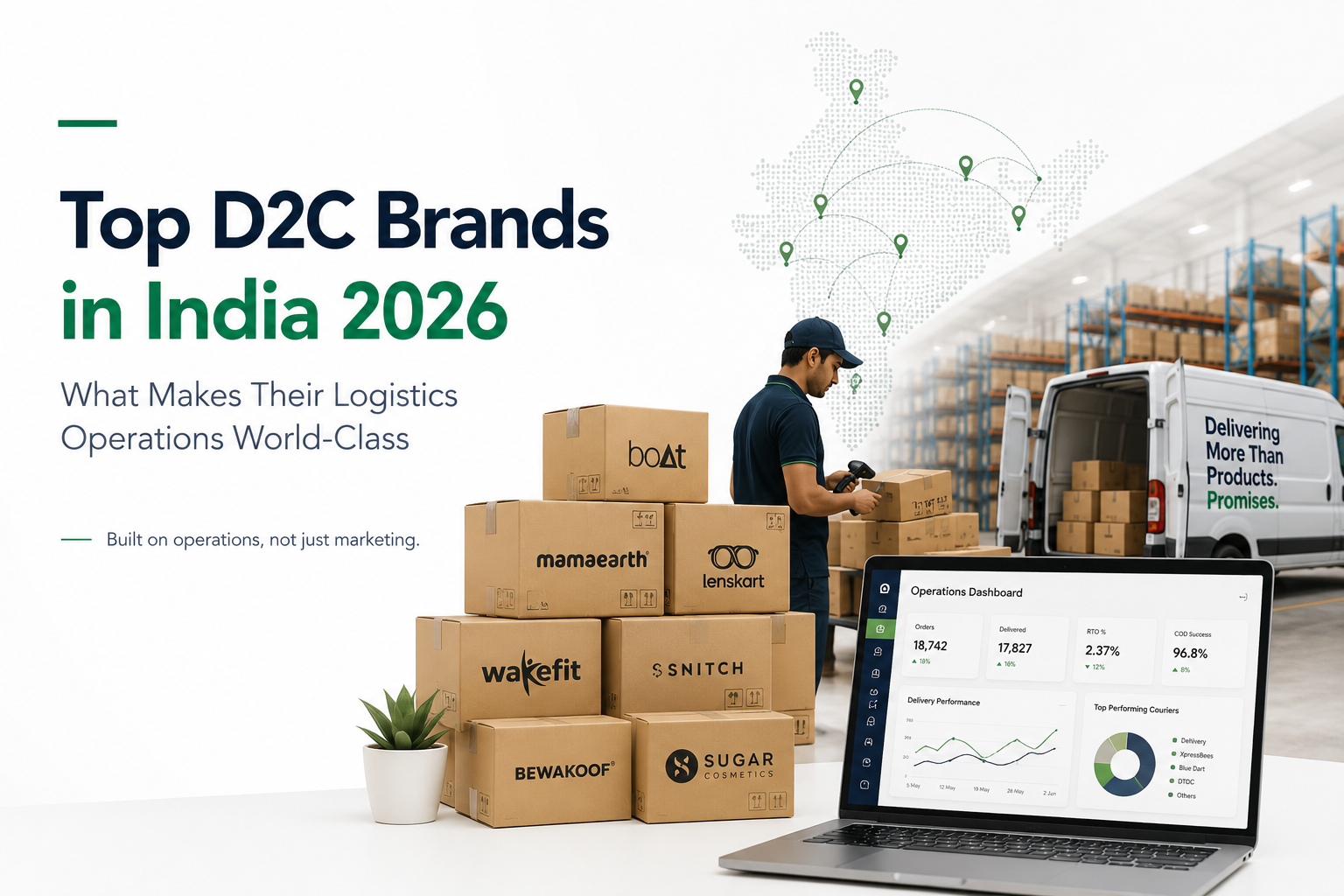
The top D2C Brands in India 2026.— boAt, Mamaearth, Lenskart, Wakefit, SNITCH, and Sugar Cosmetics have built something most founders underestimate: a world-class logistics operation that makes every delivery a brand experience. Over 250 million Indians now shop directly from brands across fashion, beauty, wellness, and home décor, bypassing traditional retail entirely.
But here is what most coverage of India’s top D2C brands gets wrong: it focuses on marketing, fundraising, and product innovation while completely ignoring the operational engine underneath. In 2026, D2C brands are shifting from rapid customer acquisition to operational excellence. Success will depend on mastering the post-purchase experience.
The brands that have built lasting businesses in India’s D2C space — boAt, Mamaearth, Lenskart, Wakefit, SNITCH, Bewakoof, Sugar Cosmetics, Licious — didn’t just win on great products and smart ads. They won because they built logistics operations that could scale without breaking, deliver reliably to 19,000+ pin codes, and recover failed deliveries before they became permanent losses.
A look inside the operational systems powering India’s fastest-growing D2C brands — from smart logistics and warehouse efficiency to scalable delivery networks.
This guide breaks down India’s top D2C brands in 2026, what they sell, why they won, and specifically — what their shipping and logistics operations look like under the hood. Whether you’re building a D2C brand from scratch or scaling past your first 1,000 orders, this is the operational playbook you need.
The D2C Logistics Reality in India
Before we look at individual brands, it is worth understanding the operational environment every D2C brand in India navigates.
Industry estimates put RTO rates for Indian e-commerce shipments at 20–30% for certain categories, particularly cash-on-delivery orders. At those levels, the cost of a failed delivery isn’t just the reverse logistics charge. It is inventory tied up in transit, working capital locked in unsettled COD, and a customer who may never return.
In a market where 80% of consumers won’t return after a single poor shipping experience, logistics has become the technical backbone needed to turn delivery into a retention engine.
Failed deliveries don’t just increase reverse logistics costs — they lock inventory, delay cash flow, and reduce customer lifetime value for ecommerce brands.
The brands that have figured this out share three operational characteristics:
They don’t rely on a single courier. The honest reality is that no single logistics company covers every pin code, every delivery speed, and every price point perfectly. The businesses that ship most efficiently use 2–4 carriers simultaneously, routing each order to the best carrier for that specific pin code, weight, and delivery speed.
They treat logistics as a growth lever, not a cost centre. Faster, more reliable delivery timelines surface at checkout and influence purchase decisions. Improved delivery predictability reduces customer support load.
They automate NDR management. Closed-loop NDR management — where automated IVR, SMS and WhatsApp workflows engage customers when a delivery attempt fails — turns failed deliveries from sunk costs into recoverable orders.
Now let’s look at how India’s top D2C brands built their operations.
boAt identified a simple, powerful insight: Indian consumers wanted affordable, stylish audio products that could take daily wear and tear. International brands like JBL and Sony dominated the premium segment. boAt owned the ₹500–₹3,000 sweet spot with products that looked and felt premium without carrying import-level pricing.
boAt remains a leader in consumer electronics not only because of its pricing but also because of its strong brand. Its distinctive design language, aggressive influencer marketing, and relentless product cadence kept it perpetually relevant.
The Logistics Operation
boAt operates at scale that requires military-grade logistics precision. Shipping hundreds of thousands of orders per month across India’s full geographic range — from Mumbai and Delhi to Northeast states and remote Tier 3 towns — demands multi-carrier architecture by necessity, not choice.
What boAt’s logistics setup looks like:
Multi-carrier routing with Delhivery as primary for most interstate express lanes, Blue Dart for high-value premium accessories, and regional partners for Tier 2/3 city penetration
Air waybill automation at scale — label generation, pickup scheduling, and carrier assignment handled through an integrated shipping platform rather than manually
Dedicated returns management pipeline — electronics have specific testing and refurbishment requirements before resale, making reverse logistics more complex than apparel
The lesson for new D2C brands: Electronics have high declared value, which means insurance and careful packaging aren’t optional. Underdeclaring product value to save on insurance is a common mistake that costs brands significantly when damage claims arise.
Mamaearth’s growth in India’s beauty and personal care market has been supported by fast fulfillment, strong inventory movement, and scalable D2C logistics operations.
Mamaearth began with toxin-free baby care and later grew into a complete personal care range for adults. The brand’s timing was near-perfect — it arrived just before India’s clean beauty movement went mainstream, with a clear answer already prepared when consumers started asking the question.
Mamaearth did not create the clean beauty movement. They showed up just before it exploded, with a clear answer already ready.
The Logistics Operation
Beauty and personal care has specific shipping challenges that Mamaearth has had to solve at scale: liquid products require secondary sealing, glass bottles need careful padding, and products have expiry dates that create FIFO inventory pressure.
What Mamaearth’s logistics setup looks like:
Regionalised warehousing to reduce average transit distance — multiple fulfillment centres across India so orders reach customers faster and at lower per-unit shipping cost
Strict packaging standards for liquid products — tamper-evident seals, internal cushioning, and outer box reinforcement are non-negotiable at their scale
Category-specific courier routing — lightweight serums and face washes routed to cost-efficient carriers; fragile glass-bottled products routed to couriers with better handling standards
High repeat purchase rate means subscription and auto-replenishment logistics are optimised separately from one-time purchase fulfillment
The lesson for new D2C brands: Mamaearth’s clean packaging and unboxing experience is a direct extension of its brand values. For beauty brands, packaging that arrives pristine is not a logistics detail — it is brand communication. Every leaking bottle is a broken brand promise, not just a returns cost.
Lenskart looked at the experience of buying glasses and decided it was broken. Virtual try-on, AI-powered recommendations, easy home delivery — the tech was real and actually useful, not just a press release. But what built Lenskart wasn’t the app feature. It was 1,000-plus physical stores, consistent pricing, and service that didn’t fall apart after the first purchase.
The Logistics Operation
Lenskart ships a product that is both high-value and custom-manufactured — prescription lenses are made-to-order, which means the logistics operation begins not at dispatch but at the manufacturing stage. This is fundamentally different from most D2C brands that ship pre-made inventory.
Lenskart had to face logistical issues such as the management of order fulfillment and returns as the company started to scale. The delivery of prescribed eyewear on time and handling fast-rising returns complicated the logistics and customer service, prompting considerable investment in logistics and customer service infrastructure.
What Lenskart’s logistics setup looks like:
Integrated manufacturing-to-dispatch workflow — optical labs connected directly to the fulfillment and dispatch system so orders move from prescription confirmation to shipping with minimal manual handoffs
Precision packaging for fragile, high-value product — custom hard cases, foam inserts, and double-boxing as standard, not optional
Express delivery prioritised — prescription eyewear customers have urgent, functional need. Lenskart invests in faster delivery SLAs than most D2C categories require
Returns management built for exchange-heavy behaviour — customers frequently return frames after trying on prescription lenses. A smooth exchange process is central to their retention strategy
The lesson for new D2C brands: If you are shipping made-to-order or custom products, integrate your production and fulfillment systems early. The biggest source of delays in custom D2C products isn’t the courier — it’s the handoff gap between manufacturing completion and dispatch initiation.
Wakefit built a scalable D2C logistics network capable of handling bulky shipments, fast fulfillment, and reliable nationwide delivery for home and sleep products.
Buying a mattress online sounds risky. You can’t try it in a store. You don’t know how it will feel in a week. Wakefit understood this concern completely and answered it with a 100-day trial policy. Return it if you don’t love it. No questions. The trial was a bet that the product was genuinely good enough to win on honesty.
With over ₹600 crore revenue and a pan-India logistics network, Wakefit proved that high-involvement D2C is viable in India when combined with value-driven service.
The Logistics Operation
Wakefit ships some of the most challenging products in all of Indian D2C: mattresses that weigh 15–30 kg, furniture that requires assembly, and bulky pillows and bedding that trigger extreme volumetric weight charges. Their logistics operation is built around this reality.
What Wakefit’s logistics setup looks like:
Dedicated large-item shipping partners — standard courier networks are not built for 25 kg mattresses. Wakefit uses specialised freight-forwarding logistics partners for furniture and mattress delivery alongside standard couriers for accessories and small items
Compression packaging technology — mattresses are vacuum-compressed and rolled before packaging, reducing dimensions dramatically and making standard courier delivery possible for a product class that would otherwise require dedicated truck dispatch
Assembly-ready delivery coordination — for furniture items, delivery is coordinated with installation, requiring more sophisticated last-mile scheduling than standard drop-and-go courier delivery
Returns by appointment — the 100-day trial works because Wakefit’s reverse logistics for large items is professionally managed. A mattress pickup requires a different operational playbook than returning a t-shirt
The lesson for new D2C brands: If your product is bulky, calculate volumetric weight before you set your price. (Length × Breadth × Height in cm) ÷ 5000 is the formula. A mattress that appears to weigh 20 kg actual weight may be charged at 40+ kg volumetrically. Build this into your margin model from day one.
SNITCH scaled its men’s fashion brand through fast inventory movement, trend-driven fulfillment, and agile ecommerce logistics operations across India.
Founded: 2018 | Category: Men’s apparel, fast fashion
Why SNITCH Won
SNITCH emerged at a time when men’s fashion in India was becoming trend-sensitive and fast-moving. The brand capitalised on rising demand for affordable, globally inspired styles. SNITCH gained visibility through high-frequency product launches promoted aggressively on Instagram and performance marketing channels. SNITCH’s success relied on speed — both in launching new styles and fulfilling orders quickly.
The Logistics Operation
Fashion is one of the most logistics-intensive D2C categories — high order volume, high return rates, and COD-heavy order mix create a perfect storm of operational complexity. SNITCH’s growth required a shipping operation that could handle volume spikes during product launches, manage 20–30% return rates efficiently, and keep COD remittance fast enough to fund ongoing inventory purchases.
What SNITCH’s logistics setup looks like:
Multi-carrier routing with aggregator platform — managing 15+ courier relationships through a single dashboard rather than separate contracts, enabling automated carrier selection by zone and order value
Returns infrastructure built for speed — apparel returns need to be inspected, repackaged, and restocked quickly to maintain inventory availability for the next product launch cycle
COD as primary payment method — Tier 2/3 city buyers who fuel SNITCH’s growth outside metros predominantly order COD. Fast COD remittance (T+2 to T+4) is critical for cash flow management at high order volumes
NDR automation — when a delivery attempt fails, automated WhatsApp and SMS workflows engage the customer within hours to reschedule rather than waiting for the courier to attempt again independently
The lesson for new D2C brands: In fashion, your returns rate is a function of your product photography and sizing guide as much as your logistics setup. Invest in accurate size charts, real-model photography, and detailed product descriptions before you invest in returns infrastructure — prevention is always cheaper than processing.
Bewakoof grew its lifestyle fashion brand with fast-moving inventory systems, efficient order fulfillment, and scalable last-mile delivery operations across India.
Most fashion brands try to look aspirational. Bewakoof tried to be funny. Irreverent t-shirts, social media that felt like a friend talking — not a marketing team — and prices that made buying two or three pieces easy. The brand built a loyal customer base not on glamour, but on personality. Tone is a real strategy.
The Logistics Operation
Bewakoof built its business on affordable fashion at high volume — a model that only works if logistics costs are kept low. Their operation is optimised for cost efficiency above all else.
What Bewakoof’s logistics setup looks like:
Economy surface shipping as default — for low-value orders (₹299–₹599 t-shirts), air express shipping eats too much margin. Surface shipping at 4–6 days is acceptable for price-sensitive buyers and significantly cheaper
Poly mailer packaging standardisation — all apparel ships in lightweight poly mailers, not boxes. The difference in packaging cost and weight across millions of annual shipments is substantial
Bundle shipping to increase AOV — Bewakoof actively promotes “buy 3, get discount” offers partly because bundling 3 t-shirts into one shipment reduces per-unit shipping cost dramatically versus 3 separate orders
Zone-based carrier optimisation — different couriers perform better on different state-to-state routes. Automated routing to the best performer by lane saves 10–20% on per-shipment costs at scale
Vineeta Singh noticed something the big cosmetics companies had missed: women in Tier 2 and Tier 3 cities did not want drugstore basics. They wanted bold, high-performance products — but at prices they could actually afford. Sugar Cosmetics filled this gap with a product range that matched its bold visual identity.
The Logistics Operation
Cosmetics present specific packaging challenges — products are fragile, often contain pigments that stain if leaked, and customer expectations around unboxing are unusually high. Sugar’s logistics reflects its brand positioning.
What Sugar Cosmetics’s logistics setup looks like:
Premium outer packaging as brand investment — Sugar treats its shipping box as an extension of its brand identity. Matte finish branded boxes with tissue paper and branded inserts are standard, not optional
Fragile product protection — lipstick bullets can break in transit, compact mirrors crack, and liquid foundations leak. Internal packaging is designed to prevent these failure modes regardless of how roughly the parcel is handled at sorting centres
Strong returns prevention — unlike apparel, cosmetics have very low return rates (1–5%) since opened products cannot be resold. Investment is focused on preventing damage-in-transit returns rather than processing post-delivery returns
Tier 2/3 delivery focus — a significant portion of Sugar’s growth comes from non-metro customers discovering the brand online. Couriers with strong Tier 2/3 coverage (XpressBees, Delhivery) are prioritised over premium express options for this customer segment
Licious is transforming quality and delivery in the food and beverage sector. It identified a specific gap — Indians wanted high-quality, fresh, butcher-standard meat without the hygiene uncertainty of traditional wet markets. Licious delivered on both product quality and the cold chain infrastructure to support it.
The Logistics Operation
Licious operates arguably the most complex logistics infrastructure of any D2C brand in India. Fresh meat and seafood must be maintained at specific temperatures throughout the delivery chain — from storage to pickup to last-mile delivery. There is no room for error.
What Licious’s logistics operation looks like:
City-by-city expansion model — unlike most D2C brands that launch nationally, Licious expands city by city specifically because cold chain infrastructure must be in place before operations start. It cannot ship nationwide without local cold chain
Owned last-mile delivery in most markets — Licious does not rely on standard courier networks for its primary delivery. It operates its own temperature-controlled last-mile fleet because standard couriers cannot guarantee cold chain integrity
Same-day and scheduled delivery slots — customers choose a delivery slot at checkout. This reduces failed delivery rates to near-zero because someone is always home when the order arrives
Dark kitchen network — Licious operates processing facilities in each city it serves, minimising transit time from cutting to customer and reducing temperature exposure duration
The lesson for new D2C brands: If your product has temperature or freshness requirements, do not attempt to solve this with standard courier packaging alone. Gel packs buy you 24–48 hours. Beyond that, you need dedicated cold chain infrastructure. Launch in your city first, prove the model, then expand.
The 5 Logistics Principles That Separate India’s Top D2C Brands
Looking across all eight brands above, five operational principles emerge consistently:
1. They Use Multi-Carrier Architecture From Early On
For most of the last decade, an Indian e-commerce founder making a logistics decision had two real options: sign with one of the big national couriers and accept whatever performance variance came with it, or attempt to manage three or four courier relationships in parallel and absorb the operational cost of doing so. Both paths had ceilings.
India’s top D2C brands found a third path: shipping aggregators that manage multiple carrier relationships through a single platform, with automated routing that picks the optimal courier for each order.
2. They Measure RTO as a Business KPI, Not an Operational Problem
Brands using multi-courier allocation and NDR management workflows have reported RTO reductions of 15–25%. For a brand shipping 10,000 orders a month, even a 10% reduction in RTO translates into measurable savings in reverse logistics, inventory holding costs and working capital efficiency.
Top D2C brands track RTO rate per courier, per zone, per product category, and per payment method. They manage it the way they manage marketing spend — with data, experimentation, and continuous optimisation.
3. They Invest in NDR Management Before They Need It
AI-driven NDR management helps brands reduce RTO rates by up to 54% and transforms delivery into a retention engine.
Acting on every failed delivery attempt within 24 hours — through automated WhatsApp, SMS, and IVR — recovers a significant percentage of orders that would otherwise become permanent RTOs.
4. They Treat Packaging as a Brand Investment, Not Just a Cost
Across boAt, Mamaearth, Sugar Cosmetics, and Licious, packaging investment is proportional to brand positioning. Budget packaging on a premium product sends a conflicting message at the most important brand touchpoint — the moment of unboxing.
5. They Build Logistics Infrastructure Ahead of Volume
Brands that invest early in scalable operations gain the ability to move faster, serve wider markets, and respond better to demand shifts. The brands that scramble to fix their logistics infrastructure after rapid growth spend twice as much and lose customer trust they can never fully recover.
What Does This Mean for Your Brand?
You don’t need to be boAt or Mamaearth to build world-class logistics operations. The same principles — multi-carrier routing, RTO management, NDR automation, data-driven carrier selection — are accessible to brands shipping 50 orders a month through the right platform.
As D2C brands scale, shipping stops being a back-office task and starts becoming a core operational system. What works at 20 orders a day breaks at 200. What feels manageable with one warehouse becomes chaotic with three.
The question is not whether you need to take logistics seriously. The question is whether you start building the right infrastructure now — when it costs you an hour to set up — or wait until a logistics crisis forces you to fix it mid-scale.
Build Your Logistics Foundation with ShipEasy
ShipEasy.tech combines automation, smart courier allocation, real-time tracking, and human support to help ecommerce brands reduce RTO losses and scale operations efficiently.
ShipEasy is a courier aggregator built for Indian D2C brands at every stage of growth. The same multi-carrier infrastructure that India’s top brands rely on — rate comparison, automated carrier selection, COD management, NDR automation, unified tracking — available to you from your very first order.
What you get with ShipEasy:
Multiple courier partners — Delhivery, DTDC, Blue Dart, XpressBees, Amazon Shipping and more compared in real time
Automated carrier selection — the best courier for each order selected automatically based on pin code, weight, and delivery speed
COD management — all collections tracked with remittance visibility and T+2 to T+4 settlement
NDR automation — act on failed deliveries within 24 hours before they become RTOs
Bulk order processing — generate all shipping labels in one upload
Single tracking dashboard — all shipments across all carriers in one place
Whether you’re at 10 orders a day or 10,000, ShipEasy gives you the logistics infrastructure that India’s best D2C brands built — without building it yourself.
Which are the top D2C brands in India in 2026? India is now home to 50,000+ digital-first brands with four unicorns — boAt, Mamaearth, Licious, and Lenskart — and several deep-pocketed players like Pepperfry, Wakefit, Sugar Cosmetics, Country Delight, and Bluestone. Leading brands span fashion (SNITCH, Bewakoof), beauty (Mamaearth, Sugar Cosmetics), wellness (Wakefit, Lenskart), and food (Licious, Blue Tokai).
What makes a D2C brand’s logistics operations world-class? World-class D2C logistics in India combines multi-carrier routing (2–4 couriers managed through an aggregator), automated NDR management that recovers failed deliveries within 24 hours, fast COD remittance for healthy cash flow, and packaging that protects the product while reinforcing the brand experience.
How do top D2C brands in India manage high RTO rates? Brands using multi-courier allocation and NDR management workflows have reported RTO reductions of 15–25%. The key practices are automated delivery confirmation via WhatsApp and SMS, pin-code-level carrier routing to couriers with the highest delivery success for each zone, COD order verification before dispatch, and address validation at checkout.
How can a new D2C brand build a logistics operation like boAt or Mamaearth? Start with a courier aggregator that gives you access to multiple carriers through one dashboard — this is what all major D2C brands use rather than managing separate courier contracts. Set up NDR automation from day one. Track RTO rate by courier and zone from your first 100 orders. And treat your packaging as a brand investment, not a cost to minimise.
What is the biggest logistics mistake D2C brands make in India? Committing to a single courier and staying loyal to it regardless of performance. No single courier is optimal for all pin codes, all product weights, or all delivery speed requirements. The brands that ship most efficiently use 2–4 carriers and route intelligently — a practice made simple by courier aggregator platforms.
Brand data, revenue figures, and logistics details in this article are sourced from publicly available information, industry reports, and media coverage as of May 2026. Operational details are based on available public information and industry standards for each product category.
Shipping costs are one of the biggest controllable expenses for any e-commerce business in India. Yet most sellers pick a courier once and never revisit the decision whereby leaving thousands of rupees on the table every month.
The reality is that no single courier is optimal for 100% of your shipments. A multi-carrier shipping strategy, where you route each shipment to the carrier that’s cheapest and most reliable for that specific lane, consistently outperforms single-carrier contracts — especially for D2C brands with a national customer base.
But to make smarter routing decisions, you first need to understand how each courier is priced, where they perform best, and what hidden charges can inflate your actual bill. That’s exactly what this guide covers.
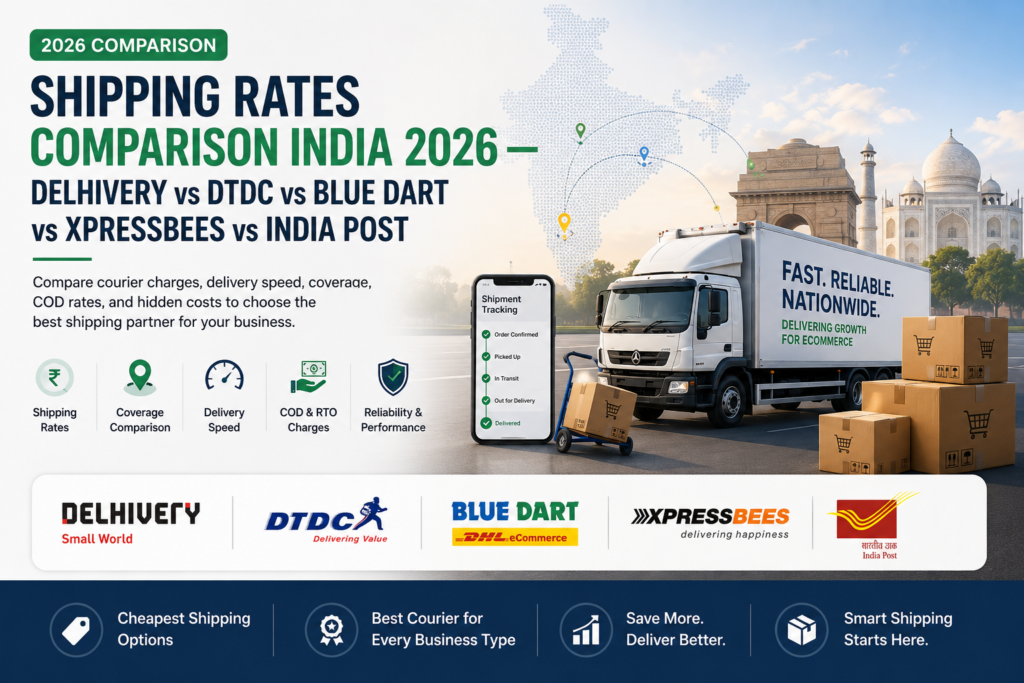
Here is a complete, side-by-side comparison of India’s top courier services for e-commerce sellers in 2026 with real rates, delivery timelines, COD terms, and a clear recommendation for each use case.
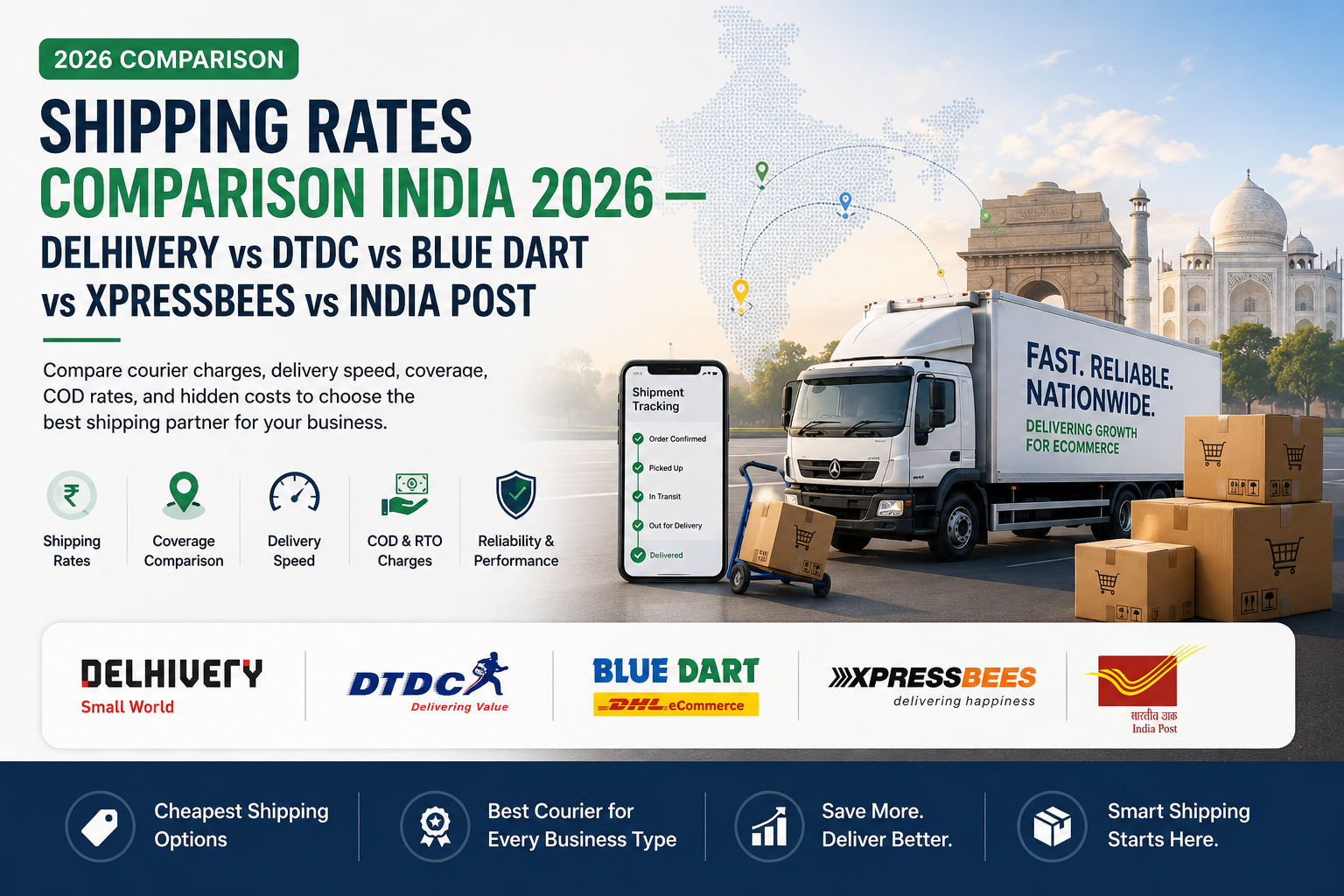
A complete 2026 comparison of India’s top courier companies based on shipping rates, delivery speed, coverage, COD charges, and ecommerce performance.
How Courier Charges Are Calculated in India
Before comparing rates, you need to understand how every major courier in India bills you. Five variables determine your final charge:
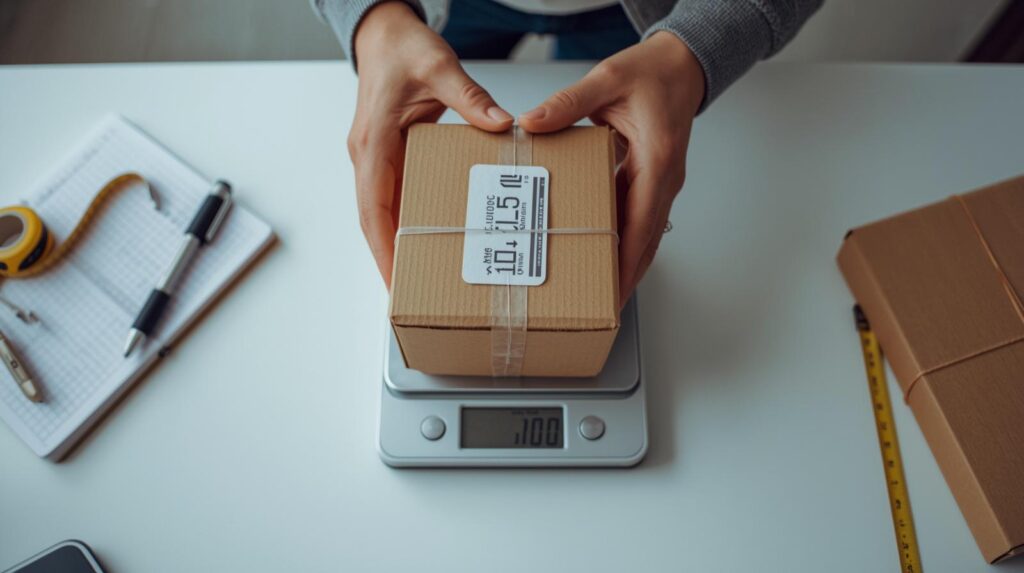
1. Chargeable Weight (Actual vs Volumetric) Every courier charges based on whichever is higher — actual weight or volumetric weight. Volumetric weight is calculated as:
Courier charges in India depend on actual or volumetric weight, so measuring correctly is essential.
(Length cm × Breadth cm × Height cm) ÷ 5000
A parcel measuring 40 × 30 × 30 cm that weighs 2 kg has a volumetric weight of 7.2 kg — and that’s what you’d be charged for. This formula is standard across all major Indian couriers including DTDC, Delhivery, and Blue Dart.
2. Delivery Zone India is divided into zones based on distance between origin and destination pin codes — typically Local (same city), Zone A (nearby states), Zone B (mid-distance), Zone C (far states), and Zone D (remote/Northeast). The farther the zone, the higher the charge.
3. Service Tier Most couriers offer economy (surface/road) and express (air) options. Express is 40–60% more expensive but delivers in 1–3 days versus 4–7 days for surface.
4. COD vs Prepaid COD shipments cost ₹20–₹50 more per shipment, plus a COD handling fee of 1–2% of the collected amount. Prepaid orders are always cheaper to ship.
5. Add-on Charges Fuel surcharge (typically 10–20% of base rate), GST at 18%, insurance, and remote area surcharges all add to your final bill. For an ₹850 shipment, GST alone adds ₹153, bringing the total to ₹1,003.
Best for: E-commerce sellers of all sizes, especially Tier 2 and Tier 3 city deliveries
About Delhivery
Delhivery is India’s largest technology-driven logistics company, handling millions of shipments daily with coverage across 18,000+ pin codes. For ecommerce sellers, Delhivery provides the best balance of technology, coverage, and cost — making it the go-to choice for most D2C brands.
Delhivery Shipping Rates (2026)
Weight
Same Zone
Zone A
Zone B
Zone C/D
500g
₹45 – ₹65
₹65 – ₹90
₹75 – ₹105
₹90 – ₹130
1 kg
₹55 – ₹75
₹80 – ₹110
₹95 – ₹130
₹115 – ₹160
2 kg
₹80 – ₹110
₹110 – ₹150
₹130 – ₹175
₹160 – ₹220
5 kg
₹160 – ₹220
₹200 – ₹280
₹240 – ₹320
₹300 – ₹400
Rates are indicative. Delhivery charges ₹28/500g on standard surface for eCommerce bulk, with same-day options in metro cities.
Delhivery Key Facts
Delivery time: 1–2 days in metros, 3–5 days Tier 2/3, 5–7 days remote
COD settlement: 2–4 days (one of the fastest in India)
COD charges: ₹25–₹45 per shipment + 1–1.5% of COD amount
Minimum volume: No minimum for aggregator accounts; direct accounts require volume commitments
Delhivery Strengths & Weaknesses
✅ Strongest technology integration — connects with Shopify, WooCommerce, all major platforms ✅ Fastest COD remittance (2–4 days) ✅ Excellent Tier 2/3 coverage ✅ Competitive rates for medium-to-high volume sellers ❌ Direct rates not ideal for very low volume (under 50 shipments/month) ❌ Customer support can be slow for small account holders
Best for: Budget-conscious sellers, rural deliveries, and pan-India reach on a mid-range budget
About DTDC
DTDC is one of India’s oldest and most widespread courier networks, covering 14,000+ pin codes through a franchise model. It offers four service tiers — Lite, Blue, Plus, and Prime — catering to everything from budget economy shipping to express delivery.
DTDC Shipping Rates (2026)
Service Tier
500g (Local)
500g (Interstate)
Per Extra kg
DTDC Lite (Economy)
₹40 – ₹70
₹80 – ₹150
₹80 – ₹100
DTDC Blue (Standard)
₹50 – ₹90
₹90 – ₹170
₹90 – ₹110
DTDC Plus (Express)
₹60 – ₹110
₹110 – ₹200
₹100 – ₹130
DTDC Prime (Premium)
₹80 – ₹150
₹140 – ₹250
₹120 – ₹150
DTDC Key Facts
Delivery time: 2–3 days (Plus/Prime), 4–6 days (Lite/Blue), 6–8 days remote
COD settlement: 5–7 days
Pin code coverage: 14,000+ pin codes
COD charges: ₹20–₹40 per shipment + 1–2% of COD amount
Volume discounts: Businesses shipping 500+ orders per month can typically negotiate 15–30% below retail rates.
DTDC Strengths & Weaknesses
✅ Wide franchise network — strong in smaller towns where other couriers have limited presence ✅ DTDC Lite is one of the cheapest options for non-urgent interstate surface shipping ✅ Long operational history — trusted by businesses across India for decades ✅ Good for sellers with rural or semi-urban customer base ❌ Slower COD remittance (5–7 days) compared to Delhivery ❌ Service quality can be inconsistent across franchise locations ❌ DTDC tracking reliability varies by franchise — some regions have excellent service, others may have inconsistent delivery experiences
Best for: High-value shipments, fragile products, time-sensitive B2B deliveries
About Blue Dart
Blue Dart is India’s premium domestic courier, part of the DHL Group. It operates its own air network and ground fleet — giving it delivery reliability and speed that other couriers cannot match. The tradeoff is price: Blue Dart wins for metro-to-metro overnight delivery, and for urgent shipments where a day’s delay costs more than the shipping premium, Blue Dart justifies its higher rates.
Blue Dart Shipping Rates (2026)
Service
500g
1 kg
2 kg
5 kg
Dart Surface Line (Economy)
₹80 – ₹120
₹120 – ₹180
₹200 – ₹280
₹400 – ₹550
Domestic Priority (Express)
₹150 – ₹250
₹220 – ₹350
₹380 – ₹550
₹750 – ₹1,100
Blue Dart express service rates are ₹150–₹2,050 depending on weight and zone.
Blue Dart Key Facts
Delivery time: Next-day (metro-to-metro), 1–3 days (national express), 3–5 days (economy)
COD settlement: 3–5 days
Pin code coverage: 35,000+ pin codes (widest of any private courier)
Tracking: Best-in-class, real-time with delivery partner contact details
Fragile handling: Significantly better handling standards than budget couriers
Blue Dart Strengths & Weaknesses
✅ Most reliable delivery timelines in India — overnight metro-to-metro ✅ Own air network — no dependence on commercial airlines ✅ Best for high-value, fragile, or time-critical shipments ✅ Widest pin code coverage (35,000+) of any private courier ❌ Most expensive standard rates — 2–3x Delhivery or DTDC for comparable shipments ❌ Not cost-effective for standard e-commerce shipments under ₹1,000 value ❌ COD remittance slower than Delhivery
Best for: High-volume e-commerce sellers, Tier 2/3 city deliveries at competitive rates
About XpressBees
XpressBees has grown into one of India’s largest e-commerce focused logistics companies, handling 3 million+ shipments per day with AI-powered tracking and a strong focus on cost efficiency. XpressBees deserves mention as one of India’s fastest-growing delivery service partners — for sellers focused on minimizing shipping costs without sacrificing reliability, it offers a compelling middle ground between premium services and India Post’s economy option.
XpressBees Shipping Rates (2026)
Weight
Local
Zone A
Zone B
Zone C/D
500g
₹35 – ₹55
₹55 – ₹80
₹65 – ₹95
₹80 – ₹120
1 kg
₹45 – ₹65
₹70 – ₹100
₹85 – ₹120
₹105 – ₹150
2 kg
₹70 – ₹95
₹100 – ₹140
₹120 – ₹165
₹150 – ₹210
XpressBees pricing can be lower than Delhivery, with shipments around ₹81 versus Delhivery’s ₹90 for comparable parcels after including courier and COD charges.
XpressBees Key Facts
Delivery time: 2–4 days (standard), 1–2 days (express)
COD settlement: 2–3 days
Pin code coverage: 2,000+ cities
AI tracking: Real-time updates, predictive delivery notifications
Strength zones: Tier 2 and Tier 3 cities — one of the best performers outside metros
XpressBees Strengths & Weaknesses
✅ Often cheapest private courier for e-commerce weight slabs ✅ Strong Tier 2/3 performance ✅ Fast COD remittance ✅ AI-powered tracking with excellent customer communication ❌ Less brand recognition than Delhivery or Blue Dart among customers ❌ Delivery SLA can slip in peak season
Best for: Amazon marketplace sellers wanting integrated, reliable fulfillment within the Amazon ecosystem
About Amazon Shipping
Amazon Shipping refers to Amazon India’s two seller-facing logistics services — Easy Ship and Fulfillment by Amazon (FBA). Both are exclusively available to registered Amazon.in sellers and leverage Amazon’s own delivery network, which reaches 99% of India’s serviceable pin codes.
Easy Ship: Amazon picks up the parcel from your location and delivers it to the customer. You store inventory at your premises.
FBA (Fulfillment by Amazon): You send bulk inventory to Amazon’s fulfillment centres. Amazon stores, packs, and ships each order on your behalf.
For non-Amazon D2C sellers, Amazon Shipping is also available as a standalone courier option through aggregator platforms, giving you access to Amazon’s delivery network for your own website orders.
Amazon Easy Ship Rates (2026)
Amazon Easy Ship charges are based on item weight (actual or volumetric, whichever is higher) and delivery distance — Local, Regional, or National.
Weight
Local
Regional
National
Up to 500g
₹55 – ₹65
₹65 – ₹80
₹75 – ₹95
500g – 1 kg
₹65 – ₹80
₹80 – ₹100
₹95 – ₹120
1 kg – 2 kg
₹80 – ₹110
₹100 – ₹135
₹120 – ₹160
2 kg – 5 kg
₹110 – ₹150
₹140 – ₹185
₹165 – ₹220
Note: Amazon Easy Ship rates are charged as weight handling fees and vary by category. A 350g headphone shipment via Easy Ship is billed at a flat ₹55; a 3.5 kg electronics item at ₹164. These are in addition to Amazon’s referral fees and closing fees for marketplace orders.
Amazon FBA Weight Handling Fees (2026)
For FBA sellers, Amazon charges a pick & pack fee of approximately ₹14–₹40 per unit depending on size, plus weight handling and monthly storage fees of ₹45 per cubic foot per month.
Amazon Shipping Key Facts
Delivery time: 1–2 days (Prime-eligible), 2–4 days (standard)
COD: Available for Easy Ship orders
Pin code coverage: 99% of serviceable pin codes in India
Tracking: Real-time, fully integrated with Amazon customer notifications
Eligibility: Easy Ship open to all Amazon sellers; FBA requires sending inventory to Amazon’s fulfillment centres
Important fee update: As of March 2026, Amazon expanded zero referral fees to products priced under ₹1,000 across 1,800+ categories — significantly improving net margins for Easy Ship sellers in this price range
Amazon Shipping Strengths & Weaknesses
✅ Seamlessly integrated with Amazon Seller Central — no separate courier account needed ✅ Prime badge eligibility drives significantly higher conversion on Amazon listings ✅ Reliable, consistent delivery with Amazon’s own network — 99% pin code reach ✅ Real-time tracking deeply integrated with customer notification system ✅ FBA removes all packing, dispatch, and customer service overhead ❌ Exclusive to Amazon orders — cannot use Easy Ship for orders from your own website or other marketplaces (unless via aggregator) ❌ FBA storage fees can erode margins for slow-moving inventory ❌ Less cost-effective than Delhivery or XpressBees for non-Amazon channels ❌ FBA requires upfront inventory commitment at Amazon’s fulfillment centres
Best for: Lowest-cost shipping, rural and remote destinations, heavy parcels
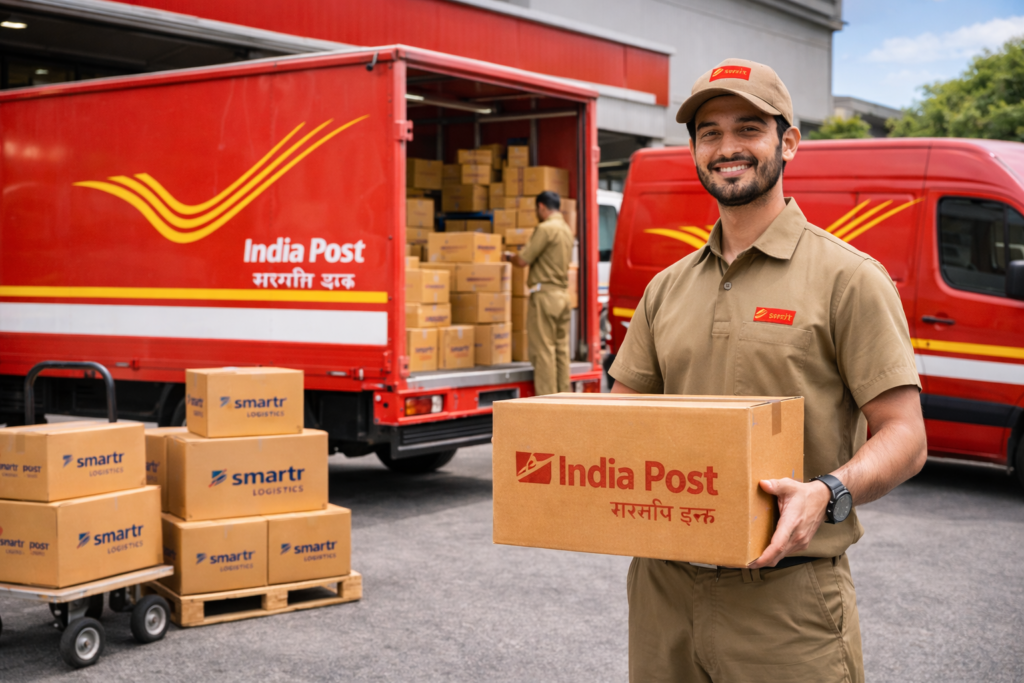
About India Post
India Post operates 1.55 lakh post offices — the world’s largest postal network. It is the undisputed cheapest courier option in India and the only one that reliably reaches remote pin codes where no private courier operates. If price matters most, India Post is almost always the answer. Private couriers simply cannot match India Post parcel charges for most domestic shipments.
India Post / Speed Post Rates (2026)
Regular Parcel:
Weight
Approx. Rate (Interstate)
Up to 500g
₹19 – ₹35
1 kg
₹35 – ₹55
2 kg
₹55 – ₹80
5 kg
₹90 – ₹140
10 kg
₹160 – ₹220
Speed Post (Domestic):
Weight
Local
Up to 200 km
200–1000 km
Above 1000 km
Up to 500g
₹30
₹35
₹45
₹60
Per extra 500g
+₹10
+₹15
+₹20
+₹25
Key advantage: India Post does not apply volumetric weight for domestic parcels — you pay only for actual weight. This is a significant saving for bulky, lightweight products.
India Post Key Facts
Delivery time: 1–3 days (Speed Post), 5–8 days (Regular Parcel)
COD: Available for registered e-commerce sellers
Pin code coverage: All 1.55 lakh post offices — unmatched rural reach
Volumetric weight: Not applied for domestic shipments
Tracking: Available via 13-digit consignment number (Speed Post)
India Post Strengths & Weaknesses
✅ Cheapest rates in India — by a significant margin for most weight/zone combinations ✅ Unmatched rural and remote reach (Northeast, islands, hill stations) ✅ No volumetric weight charge for domestic parcels ✅ Book Parcel service 30–40% cheaper than standard parcel for printed materials ❌ Slower delivery (5–8 days for regular parcel) ❌ Limited tracking granularity compared to private couriers ❌ COD remittance can take 10–15 days ❌ Pickup from home requires prior scheduling — less flexible
Best for: Same-day and next-day delivery in metro cities, hyperlocal shipments
About Shadowfax
Shadowfax specialises in hyperlocal and express delivery in India’s major cities. It partners with thousands of gig delivery partners and offers some of the fastest same-day delivery capabilities in India.
Shadowfax Rates (2026)
Service
Rate
Same-day metro delivery
₹22 – ₹35 per 500g
Next-day city delivery
₹28 – ₹45 per 500g
Standard interstate
₹55 – ₹90 per 500g
Shadowfax Key Facts
Delivery time: Same-day in major metros, 1–2 days intercity
Best for: Food & beverage, perishables, fashion, quick commerce
Coverage: Major metro and Tier 1 cities (limited Tier 2 presence)
Side-by-Side Shipping Rates Comparison: All Couriers
500g Parcel — Interstate (Zone B)
Courier
Rate
Delivery Time
COD Available
India Post (Speed Post)
₹45 – ₹60
1–3 days
Yes
XpressBees
₹65 – ₹95
2–3 days
Yes
DTDC Lite
₹80 – ₹120
4–6 days
Yes
Delhivery
₹75 – ₹105
2–4 days
Yes
Ecom Express
₹60 – ₹90
2–4 days
Yes
Blue Dart (Economy)
₹120 – ₹180
3–5 days
Yes
Blue Dart (Express)
₹200 – ₹300
1–2 days
Yes
2 kg Parcel — Interstate (Zone B)
Courier
Rate
Delivery Time
COD Settlement
India Post (Regular)
₹55 – ₹80
5–8 days
10–15 days
XpressBees
₹120 – ₹165
2–4 days
2–3 days
DTDC Blue
₹130 – ₹175
3–5 days
5–7 days
Delhivery
₹130 – ₹175
2–4 days
2–4 days
Ecom Express
₹150 – ₹195
2–4 days
2 days
Blue Dart (Economy)
₹200 – ₹280
3–5 days
3–5 days
Blue Dart (Express)
₹380 – ₹550
1–2 days
3–5 days
Hidden Charges That Inflate Your Actual Courier Bill
Most courier comparison blogs only show base rates. These are the additional charges that make your real bill significantly higher:
Fuel Surcharge: Applied by all private couriers, typically 10–20% of the base rate. This fluctuates with petroleum prices and is usually stated separately on your invoice.
GST at 18%: Applied to all courier services in India without exception. For registered businesses, you can claim Input Tax Credit (ITC).
Remote Area Surcharge: Deliveries to pin codes classified as remote (typically Northeast India, island territories, hill stations) attract a surcharge of ₹50–₹200 per shipment depending on the courier.
COD Handling Charge: Beyond the flat per-shipment COD fee, most couriers charge 1–2% of the collected amount as a handling fee. On a ₹1,500 COD order, this adds ₹15–₹30 per shipment.
Weight Discrepancy Charge: If the weight you declare at booking is less than what the courier measures at the sorting centre, you get billed for the difference plus a penalty. Always weigh accurately before booking.
RTO Charge (Return to Origin): When a delivery fails and the parcel is returned to you, you pay the return shipping cost — typically 50–80% of the forward shipping charge. RTO rates in Indian eCommerce run between 15–30% depending on your category. A courier with strong NDR management and reverse logistics can save you lakhs per month.
Which Courier Should You Choose? A Decision Framework
There is no single best courier for every situation. Here’s a decision framework that routes each shipment type to the right carrier:
If cost is the absolute priority and speed is not critical: → India Post Regular Parcel or Speed Post. Unbeatable on price, especially for heavier parcels above 2 kg.
If you need the best balance of cost, speed, and technology: → Delhivery for most e-commerce shipments. Best API, fastest COD remittance among standard couriers, strong Tier 2/3 reach.
If you’re shipping to Tier 2/3 cities and want to minimise cost: → XpressBees. Often 10–15% cheaper than Delhivery on comparable weight-zone combinations.
If you’re shipping high-value, fragile, or time-critical orders: → Blue Dart. Premium pricing is justified when reliability matters more than cost.
If you have high COD volume and fast cash flow is critical: → XpressBees or Amazon. Both offer T+2 COD remittance.
If you’re shipping in metro cities and need same-day delivery: → Shadowfax. No private courier matches its same-day capability in major cities.
If you ship to rural India, remote Northeast, or island territories: → India Post. Only they reach every pin code in the country at a reasonable rate.
The smartest approach for scaling sellers: No single logistics company covers every pin code, every delivery speed, and every price point perfectly. That’s why a growing number of businesses are shipping through multiple carriers. Using a courier aggregator to automatically route each order to the best carrier saves 15–30% on shipping costs compared to committing to one provider.
How to Reduce Your Shipping Costs by 15–30%
Knowing the rates is step one. Here’s how to actually reduce your shipping bill:
1. Always calculate volumetric weight before booking. Use right-sized packaging — an oversized box adds phantom weight that increases your courier bill with no benefit.
2. Use a courier aggregator for rate comparison. With the right courier partner and optimised packaging, you can reduce shipping costs by 15–30%. An aggregator compares live rates across all couriers before each booking.
3. Negotiate volume rate cards. Businesses shipping 500+ orders per month can typically negotiate 15–30% below retail rates. Review and renegotiate contracts quarterly as your volume grows — many brands leave money on the table by staying on outdated rate cards.
4. Route intelligently by zone. DTDC may be cheapest for surface shipments to Tier 2 cities in South India, while Delhivery wins on express lanes to North Indian metros. A courier aggregator automates this routing decision.
5. Reduce RTO through NDR management. A 5% reduction in RTO rate on 1,000 monthly shipments at ₹150 average shipping cost = ₹7,500 saved per month. Act on every failed delivery attempt within 24 hours.
6. Incentivise prepaid orders. COD adds ₹25–₹60 per shipment. Offering a ₹20–₹30 discount for prepaid orders costs less than the COD surcharge you save.
Compare All Courier Rates Instantly with ShipEasy
Manually checking rates across Delhivery, DTDC, Ekart XpressBees, and India Post for every shipment is time-consuming — and most sellers get it wrong, consistently overpaying on routes where a cheaper option was available.
ShipEasy is a courier aggregator built for Indian e-commerce sellers. Enter your origin pin code, destination pin code, parcel weight, and order value — and instantly see live rates from 15+ courier partners side by side.
What you get with ShipEasy:
Live rate comparison across Delhivery, DTDC, Blue Dart, XpressBees, Ecom Express, India Post, and more
Automatic best-rate selection — let the platform pick the cheapest courier for each order
Bulk order processing — upload all orders via CSV and generate labels in one go
COD management — all collections tracked with remittance date visibility
NDR automation — act on failed deliveries before they become RTOs
Single tracking dashboard — monitor all shipments across all couriers in one place
Whether you’re shipping 10 parcels a month or 10,000, ShipEasy ensures you never overpay on a single shipment.
Which is the cheapest courier service in India for e-commerce in 2026? India Post is the cheapest for most weight and distance combinations, but private couriers like XpressBees and Delhivery offer better tracking, faster delivery, and faster COD remittance. For e-commerce sellers who need reliability alongside low cost, XpressBees and Delhivery offer the best value among private couriers.
What is the difference between Delhivery and DTDC for e-commerce shipping? Delhivery leads on technology integration, COD remittance speed (2–4 days vs DTDC’s 5–7 days), and API connectivity with e-commerce platforms. DTDC offers a wider franchise network in smaller towns and can be more affordable for certain rural pin codes. For most e-commerce sellers, Delhivery is the stronger default choice.
How do I compare shipping rates across multiple couriers in India? Use a courier aggregator like ShipEasy, which shows live rates from 15+ courier partners simultaneously. Enter your origin pin, destination pin, weight, and order value to get an instant side-by-side comparison. This is far more accurate than checking each courier’s website individually, as aggregators access volume-negotiated rates.
What is volumetric weight and how does it affect my shipping cost? Volumetric weight is calculated as (Length × Breadth × Height in cm) ÷ 5000. All major Indian couriers charge based on whichever is higher — actual weight or volumetric weight. This means a light but bulky product (like a pillow or sports equipment) may be charged at 3–4x its actual weight. Always calculate volumetric weight before pricing your shipping.
Which courier has the fastest COD remittance in India? Ecom Express offers T+2 (2-day) COD remittance — the fastest among major couriers. XpressBees and Delhivery both offer 2–4 day remittance. DTDC is slower at 5–7 days. Blue Dart takes 3–5 days. For cash flow management, Ecom Express or XpressBees is the best choice for COD-heavy businesses.
Is Blue Dart worth the premium price for e-commerce shipments? For standard e-commerce shipments under ₹1,500 value, Blue Dart’s premium is generally not justified. For high-value products (electronics, jewellery, premium apparel), fragile items, or time-critical B2B deliveries where a day’s delay is costly, Blue Dart’s reliability and overnight metro capability justifies the higher rate.
Shipping rates in this article are indicative figures based on publicly available data and industry sources as of May 2026. Actual rates vary by specific pin code pair, weight, service level, volume, GST, fuel surcharge, and negotiated contracts. Use ShipEasy’s live rate comparison tool for accurate real-time quotes before booking any shipment.
In March 2026, a kirana store owner in Ghaziabad handed over ₹2,400 worth of groceries after a customer showed a “Payment Successful” screen on his PhonePe app. Three hours later, when he checked his account at closing time, the money had never arrived. He had lost an entire day’s profit to a 30-second trick.
This is not an isolated story.
The same scam plays out thousands of times every day across India — at busy markets, petrol pumps, chai stalls, and increasingly, across online selling platforms. For D2C sellers, Instagram sellers, WhatsApp businesses, and small e-commerce operators, fake UPI payment fraud is one of the fastest-growing threats to business margins in 2026.
Fake payment confirmation scams are among the most commonly reported forms of digital payment fraud affecting small merchants, according to the National Payments Corporation of India (NPCI) and the Ministry of Home Affairs cybercrime portal. The scale of the problem is staggering — in January 2026 alone, UPI processed 21.70 billion transactions worth over ₹28.33 lakh crore across 691 banks. With volumes this high, scammers do not need to trick everyone — they only need a few people to accept a “paid” screen without real credit.
This guide is written specifically for online sellers — D2C brands, Instagram sellers, WhatsApp resellers, and marketplace operators — who accept UPI payments and need to know exactly how these scams work, how to spot them instantly, and how to protect every order they ship.
Learn how ecommerce sellers can identify fake UPI payment screenshots, prevent fraud transactions, and protect their business from payment scams in 2026.
How Fake UPI Payment Scams Work
Understanding the mechanics of the scam is the first step to never falling for it. There are four main methods scammers use against sellers:
Method 1: The Fake Screenshot
This is the most common and simplest form. The scammer places an order, then sends you a screenshot of a “Payment Successful” confirmation — either edited using photo software, generated using a fake payment app, or taken from a previous real transaction with the amount changed.
A screenshot, regardless of how convincing it appears, never constitutes proof of payment. Only actual credit appearing in your bank account or UPI app confirms you’ve been paid.
The screenshot looks real. It has the right logos, the right colours, even a fake transaction ID. But no money has moved. The seller ships the order. The scammer receives the goods. By the time the fraud is discovered, the scammer is unreachable.
This method is devastatingly effective because it exploits the time pressure sellers feel during busy hours — especially when managing multiple orders simultaneously.
Method 2: The Fake Payment App
Fraudsters now use counterfeit UPI apps that look identical to real payment apps to generate fake payment confirmations and scam ecommerce sellers.
More sophisticated scammers use counterfeit versions of PhonePe, Google Pay, or Paytm — apps designed to look identical to the real thing but generate fake “Payment Successful” screens without initiating any actual transaction.
Cybercrime officer Hardik Makadia issued public warnings about coordinated fake PhonePe and Paytm frauds targeting sweet shops during Diwali 2025, with multiple incidents reported across Gujarat and Kerala where fraudsters used counterfeit versions of major payment apps.
The scammer opens the fake app in front of you, enters the amount, and shows you the success screen. Everything looks legitimate. Nothing has been transferred.
Method 3: The Overpayment / Refund Trick
Never refund “extra payments” before verifying the original transaction settlement in your bank account.
The scammer makes a real UPI payment of a deliberately inflated amount — say ₹5,000 instead of ₹500 — then immediately claims it was a mistake and asks for a refund of the difference before you’ve verified the credit. In some versions, the original payment is made via a fraudulent instrument that gets reversed later, leaving you both out of pocket for the goods and the refund.
Method 4: Fake Collect Requests
Fraudsters often disguise UPI collect requests as incoming payments to trick sellers into sending money instead of receiving it.
The scammer sends you a UPI collect request — which looks like an incoming payment notification — and asks you to “approve” it to receive your money. Approving a collect request actually sends money out of your account, not into it. This tricks sellers who are unfamiliar with how UPI collect requests work.
UPI PIN is only required for sending money — receiving money is automatic and requires no PIN or approval from the recipient. Any scenario where you are asked to enter your UPI PIN or approve a request to receive money is always a scam.
Who Is Being Targeted
Street vendors, small shop owners, and individual sellers on platforms like OLX and Facebook Marketplace are disproportionately targeted. The common thread is high transaction volume, time pressure, and limited ability to verify payments in real time.
For online sellers specifically, the highest-risk scenarios are:
Instagram and WhatsApp sellers processing prepaid orders manually — where the buyer sends a payment screenshot via chat and the seller ships before verifying the bank credit.
COD-to-prepaid conversion attempts — where a buyer initially places a COD order, then at the last minute offers to switch to prepaid UPI “to save the COD charge,” sends a fake screenshot, and expects the order to be dispatched immediately.
High-value single orders from new buyers — scammers target higher-value orders where the payoff justifies the effort. A ₹3,000 order from a brand new customer with no purchase history asking for immediate dispatch after sending a UPI screenshot is a classic red flag profile.
Festival and sale season orders — scammers rely heavily on time pressure and trust manipulation, and peak sale periods (Diwali, New Year, Valentine’s Day) when sellers are processing high volumes and moving quickly are prime targeting windows.
How to Verify a UPI Payment — The Right Way
Here is the definitive verification process every online seller in India should follow before dispatching any prepaid order:
Step 1: Check Your Own App — Not the Customer’s Screenshot
This is the golden rule. Always confirm the money is credited in your bank account, verify the UTR number in your transaction history, and ignore screenshots entirely.
Open your own UPI app (Google Pay, PhonePe, Paytm, or your bank’s app) and check your transaction history. A real payment will appear in your received transactions with a UTR (Unique Transaction Reference) number within seconds of the transfer.
If the payment does not appear in your own app within 2–3 minutes of the customer claiming to have paid — it has not arrived. Full stop.
Step 2: Verify the UTR Number
A UPI UTR number is a unique transaction reference generated for every payment and is essential for tracking, verification, refunds, and dispute resolution.
Every genuine UPI transaction generates a UTR number — a 12-digit unique reference that is assigned by the banking system at the time of transfer. This number is visible in your transaction history on your UPI app and can be cross-verified with your bank.
Ask the customer for the UTR number from their payment confirmation. Then cross-check it against the transaction in your own app. A real payment will have a matching UTR in your received transactions. A fake screenshot will either have no UTR, a made-up number, or a UTR that doesn’t match any transaction in your history.
Step 3: Check Your Bank Account Directly
For any order above ₹500, check your bank account balance or mini statement — either via your bank’s app, SMS banking, or a missed call banking service. This takes 30 seconds and is the most reliable confirmation of actual credit.
Step 4: Wait for the Credit Notification
Real UPI transactions trigger an instant credit notification from your bank via SMS. If a customer claims payment was made but you haven’t received an SMS credit alert from your bank within 2 minutes, the payment has not gone through.
Important: Do not rely on notifications from the customer’s phone. Only your own bank’s SMS or app notification confirms receipt.
Step 5: For High-Value Orders, Ask for Transaction ID
For any order above ₹1,000 from a new customer, ask the buyer to share their full transaction details — the UTR number, the UPI ID they paid from, and the time of transaction. Cross-reference all three against your own bank records. A legitimate buyer will have no problem providing this. A scammer will either delay, deflect, or disappear.
Red Flags to Watch For
Train yourself and anyone on your team who processes orders to watch for these warning signs:
Urgency pressure: “Please dispatch immediately, it’s urgent” right after sending a payment screenshot — before you’ve had time to verify.
New customer, high-value order: First-time buyers placing orders above ₹1,000 and paying upfront via UPI with a screenshot sent over WhatsApp or Instagram DM.
Screenshot via chat instead of bank notification: Real customers whose payments go through don’t need to send you a screenshot — your bank notifies you automatically. A buyer who sends a screenshot unprompted is often doing so because no real payment was made.
Mismatch in payment details: The name on the screenshot doesn’t match the name the buyer gave. The amount on the screenshot is slightly different from the order total. The timestamp seems off.
Overpayment followed by refund request: Any buyer who claims to have paid more than the order amount and immediately asks you to refund the difference — before you’ve verified the original credit — is almost certainly running a scam.
Pressure to ship before verification: Any buyer who gets aggressive or threatening when you take time to verify payment is a major red flag. Legitimate customers understand that verification takes a few minutes.
Building a Fraud-Proof Order Processing System
Beyond individual transaction verification, here’s how to build systematic protection into your order workflow:
Set a Clear Payment Policy
State explicitly in your Instagram bio, WhatsApp status, and website: “Orders are dispatched only after payment is confirmed in our bank account. Screenshots are not accepted as proof of payment.”
This filters out scammers at the top of the funnel and sets legitimate customers’ expectations correctly.
Never Dispatch Before Bank Confirmation
Make this a hard rule with no exceptions. Not even for repeat customers, not even during peak season, not even when the buyer is pressuring you. One scam order at ₹2,000 costs more than the time saved by skipping verification on 50 orders.
Use Payment Links Instead of Sharing UPI IDs Directly
Instead of asking buyers to transfer to your UPI ID (which opens the door to fake screenshots), generate a payment link through your payment gateway (Razorpay, Cashfree, PayU) or a UPI link from your bank. When the buyer pays via the link, you receive an automatic server-side confirmation — no screenshot can fake this.
For sellers using Shopify, WooCommerce, or any proper e-commerce platform, always route UPI payments through your payment gateway rather than accepting manual transfers.
Implement an Order Hold Period
For new buyers paying via UPI screenshot on Instagram or WhatsApp, implement a 15–30 minute hold before dispatch. Use this window to verify payment in your bank. Most legitimate buyers will not object. Anyone who objects strongly to a 15-minute hold on their order is a red flag in itself.
Keep a Verification Log
For all prepaid UPI orders, maintain a simple spreadsheet logging: order ID, buyer name, order amount, UTR number, and time of bank confirmation. This takes 2 minutes per order and creates an audit trail that is invaluable if a dispute arises later.
Maintaining a simple verification log for prepaid UPI orders helps ecommerce businesses track payments, verify transactions, and protect themselves during disputes or fraud investigations.
What to Do If You’ve Been Scammed
Despite best precautions, if a fake UPI payment scam is successfully executed against you, here’s the immediate action plan:
Within the first hour:
File a complaint at the National Cybercrime Reporting Portal: cybercrime.gov.in
Call the cybercrime helpline: 1930 (available 24/7 across India)
Contact your bank immediately and report the fraudulent transaction
Screenshot all communication with the scammer — their phone number, UPI ID, chat history
Why speed matters: Reporting within 24 hours gives the best chance of freezing the scammer’s account and recovering funds, as banks can reverse transactions if reported quickly enough.
Collect and preserve evidence:
The fake screenshot the scammer sent you
Their phone number and UPI ID
The delivery address if the order was shipped
Chat logs from WhatsApp, Instagram, or any platform used
File an FIR: For amounts above ₹1,000, file a First Information Report at your local police station in addition to the online cybercrime complaint. Many states have dedicated cybercrime cells that handle UPI fraud cases.
The COD Alternative: How ShipEasy Protects Sellers from Payment Fraud
One of the most effective ways to eliminate fake UPI payment risk entirely for a significant portion of your orders is to offer Cash on Delivery — where payment happens at the door, in cash, after successful delivery. No screenshots. No prepayment. No fraud risk on the payment side.
The tradeoff is RTO (Return to Origin) risk — COD orders have higher failed delivery rates. But a well-managed COD workflow with proper address verification, delivery-day WhatsApp reminders, and NDR management can bring RTO rates down to manageable levels — and completely eliminates prepayment fraud risk.
Despite rapid digital adoption, a majority of Indian ecommerce buyers still prefer Cash on Delivery, especially across Tier 2, Tier 3, and rural markets.
COD availability check — instantly see which courier partners offer COD for any pin code before you take the order
COD remittance tracking — all your cash collections tracked in one dashboard with remittance date visibility
NDR management — act on failed delivery attempts within 24 hours to recover shipments before they become RTOs
Multi-courier comparison — compare COD charges and delivery success rates across 15+ courier partners to pick the best option for each order
Whether you choose to accept prepaid UPI (with proper verification) or COD (with proper RTO management), ShipEasy gives you the tools to ship every order confidently — without losing money to fraud or failed deliveries.
Before dispatching any prepaid UPI order, run through this checklist:
Payment confirmed in my own UPI app transaction history (not the customer’s screenshot)
UTR number visible in my received transactions
Bank SMS credit alert received on my registered mobile number
Payment amount matches order total exactly
Sender name/UPI ID matches the buyer’s details
For orders above ₹1,000 from new buyers — UTR number cross-verified with buyer
No unusual urgency pressure from the buyer to dispatch immediately
Order dispatched only after all above confirmed ✓
Frequently Asked Questions
How do I know if a UPI payment screenshot is fake? The only reliable way is to ignore the screenshot entirely and verify payment in your own UPI app or bank account. A genuine payment will appear in your transaction history with a UTR number within seconds. If it’s not in your own app, it hasn’t arrived — regardless of how authentic the screenshot looks.
What is a UTR number and how do I use it to verify payment? UTR stands for Unique Transaction Reference — a 12-digit number assigned by the banking system to every genuine UPI transaction. When a buyer pays you, the UTR appears in your received transactions in your UPI app. Ask the buyer for their UTR and cross-check it against your transaction history. A matching UTR in your received transactions confirms the payment is real.
Can a fake UPI payment screenshot look completely real? Yes. Scammers use photo editing software, fake payment generator websites, and counterfeit versions of PhonePe, Google Pay, and Paytm to create screenshots that are visually indistinguishable from genuine ones. This is why visual verification of screenshots is never sufficient — only bank-side confirmation is reliable.
What should I do if a buyer becomes aggressive when I ask for verification time? A legitimate buyer has no reason to pressure you into skipping payment verification. Aggression or urgency when you request 10–15 minutes to confirm payment is a strong indicator of fraud. Politely hold your position — “I’ll dispatch as soon as I see the credit in my account” — and if the pressure continues, cancel the order.
Is COD safer than UPI for online sellers? From a payment fraud perspective, yes — COD eliminates prepayment fraud entirely since payment happens at delivery in cash. The tradeoff is RTO risk. Use a courier aggregator like ShipEasy to manage COD logistics efficiently, including NDR management and delivery confirmation, to keep RTO rates low while avoiding payment fraud.
How do I report a fake UPI payment scam in India? File a complaint immediately at cybercrime.gov.in or call the national cybercrime helpline at 1930. Report to your bank within 24 hours for the best chance of fund recovery. Also file an FIR at your local police station for amounts above ₹1,000 and preserve all evidence including chat logs, screenshots, and the scammer’s phone number and UPI ID.
This article is written for educational purposes to help Indian online sellers protect themselves from payment fraud. All fraud cases referenced are based on publicly reported incidents. If you have been a victim of UPI fraud, report immediately to cybercrime.gov.in or call 1930.
Starting an e-commerce business in India in 2026 is one of the best decisions you can make. India’s digital commerce market is racing toward $100 billion, Tier 2 and Tier 3 cities are coming online at record speed, and the window to build a niche brand before the big players crowd in is still very much open.
But the most common mistake new sellers make is starting with the wrong product.
They pick something broad — “clothing” or “skincare” — without realising they’re walking into a category where hundreds of established brands have already spent crores building recognition. The result: high advertising costs, price wars, and shrinking margins.
The smarter play is to go niche first. A focused product — one that solves a specific problem for a specific audience — costs less to market, builds loyalty faster, and has a much better chance of ranking on Google, Amazon, and Flipkart without a huge ad budget.
This guide covers most profitable ecommerce products in india categories for new e-commerce sellers in India in 2026. For each one, you’ll find the market size and growth rate, typical pricing, who your customers are, how competitive the space is, what’s driving demand, and what you need to know before you start.
Discover the most profitable ecommerce products to sell in India in 2026 and learn how to scale smarter with better shipping strategies.
How to Read This Guide
Each product category is rated on three parameters that matter most to a new seller:
Entry barrier — How easy is it to start? (Low / Medium / High)
Competition level — How crowded is the market? (Low / Medium / High)
Repeat purchase potential — Will customers buy again? (Low / Medium / High)
A category with Low Entry Barrier + Low/Medium Competition + High Repeat Purchase is the ideal starting point for a new seller.
1. Ayurvedic & Herbal Supplements
Ayurvedic supplements like Ashwagandha, Tulsi, Triphala, and Brahmi are among India’s fastest-growing wellness ecommerce categories
Entry barrier: Medium | Competition: Medium | Repeat purchase: ⭐⭐⭐⭐⭐
Market Overview The India ayurvedic products market was valued at ₹1,01,751 crore in 2025 and is projected to grow at a CAGR of 15.52% to reach ₹3,72,875 crore by 2034. This is not a niche — it is one of the fastest-growing wellness categories in the country, driven by a massive shift toward preventive health, natural ingredients, and distrust of synthetic chemicals.
What makes this exciting for new sellers is that within this large market, there are dozens of underserved sub-niches: stress management supplements, women’s hormonal balance products, gut health formulations, Ayurvedic gummies for Gen Z, and sports recovery blends using traditional herbs like ashwagandha, shatavari, and brahmi.
What’s Selling
Ashwagandha capsules, chyawanprash variants, triphala powder, immunity boosters, moringa supplements, Ayurvedic sleep aids, herbal protein powders, and nutraceutical gummies (the fastest-growing format among millennials and Gen Z who are, as one market report puts it, “pill-tired”).
Typical Pricing
Product
Selling Price Range
Approximate COGS
Gross Margin
Ashwagandha capsules (60ct)
₹299 – ₹799
₹80 – ₹180
55 – 70%
Herbal immunity booster
₹249 – ₹599
₹60 – ₹150
60 – 75%
Ayurvedic gummies (30ct)
₹349 – ₹899
₹100 – ₹220
65 – 75%
Nutraceutical protein powder
₹699 – ₹1,799
₹200 – ₹500
55 – 70%
Target Customers
18–35 year olds seeking immunity, sleep, energy, and stress relief
35–55 year olds managing chronic conditions, joint health, and preventive care
Women looking for hormonal balance, skin, and hair health products
Fitness enthusiasts seeking natural, plant-based performance support
Demand is strong across metros and Tier 2 cities alike. Rural India is also emerging as a significant market for trusted herbal formulations from brands with regional credibility.
What’s Driving Growth
Post-pandemic health consciousness hasn’t faded — it has deepened. The combination of Ayurveda’s ancient credibility with modern formats (gummies, sachets, ready-to-mix) is creating products that younger consumers actually enjoy using. The 18–35 age group now constitutes the largest consumer base for nutraceuticals in India.
What to Watch Out For
FSSAI registration is mandatory for food supplements in India. Manufacturing standards are regulated. If you’re white-labelling from a third-party manufacturer, verify their FSSAI license, test certificates, and ingredient sourcing. Claims on packaging are regulated — overpromising on health outcomes can lead to compliance issues.
Seller Tip
Start with a single, well-researched SKU rather than launching a full range. Ashwagandha is the #1 search term in this category — a premium, clean-label ashwagandha capsule with transparent sourcing is a lower-risk starting point than a 10-product range.
India’s herbal products market was valued at $64.8 billion in 2024 and is growing at a CAGR of 7.1%. Within it, herbal teas are the fastest-growing retail sub-category — increasingly a staple in urban Indian daily routines. Brands like Vahdam, Teabox, Blue Tea, and Chaayos have proven the market at scale, but the niche sub-segments (butterfly pea flower tea, adaptogenic blends, sleep teas, immunity kadha in tea form) are still wide open for new brands.
What’s Selling
Tulsi-ginger immunity tea, butterfly pea flower (color-changing) tea, chamomile sleep tea, peppermint digestive tea, ashwagandha-based stress relief blends, herbal kadha mixes, and curated gift sets.
Typical Pricing
Product
Selling Price
Approximate COGS
Gross Margin
Herbal tea (25 bags)
₹199 – ₹499
₹50 – ₹120
65 – 75%
Loose leaf herbal blend (50g)
₹249 – ₹599
₹60 – ₹130
65 – 78%
Gift set (3–4 varieties)
₹599 – ₹1,499
₹150 – ₹400
60 – 75%
Functional adaptogen blend
₹349 – ₹799
₹80 – ₹180
65 – 78%
Target Customers
Urban women aged 25–45 focused on wellness, sleep, and self-care
Work-from-home professionals seeking stress relief and focus
Gift buyers (herbal tea sets are strong gifting products, especially during Diwali and New Year)
What’s Driving Growth
The shift away from sugar-loaded beverages, the rise of “wellness as a lifestyle” among millennials, and the growing interest in functional ingredients (adaptogens, nootropics, sleep aids) are fuelling category growth. The visual appeal of butterfly pea tea and colour-changing blends has made herbal teas a viral-friendly product on Instagram and YouTube.
Why This Works for New Sellers
Tea has extremely low entry barriers — you can start private-labelling with a small minimum order quantity (MOQ) from established blenders, build a strong brand story around sourcing and wellness, and test the market with an investment of ₹50,000–₹1,50,000. It is lightweight to ship (reducing courier costs), has a long shelf life (reducing wastage risk), and drives strong repeat purchases.
Seller Tip
The packaging is 50% of the product in this category. Customers buy herbal tea as much for how it looks on their kitchen shelf as for what’s inside. Invest in premium, eco-friendly packaging before you launch — it directly affects your conversion rate and return rate.
3. Organic & Clean Beauty (Skincare)
Vitamin C serums, face washes, moisturizers, and sunscreens are high-margin skincare products in India’s beauty market.
Entry barrier: Medium | Competition: Medium–High | Repeat purchase: ⭐⭐⭐⭐⭐
Market Overview
India’s D2C beauty and personal care market is massive, with the skincare segment holding a 30.5% share. The organic and clean beauty sub-segment is growing at over 10% CAGR — significantly faster than the overall market. Consumers are shifting away from products containing parabens, sulphates, and synthetic fragrances, toward formulations built on neem, turmeric, aloe vera, rosehip, and other natural actives.
The opportunity for new sellers lies not in “skincare broadly” but in hyper-specific sub-niches: skincare for Indian skin tones, Ayurvedic face oils, clean sunscreens for Indian climate, minimal ingredient baby-safe skincare, or organic men’s grooming.
What’s Selling
Vitamin C serums with natural actives, Ayurvedic face oils, clay face masks, neem-tulsi cleansers, rosehip seed oil, natural sunscreen with SPF 50, herbal hair growth oils, and clean ingredient lip care.
Typical Pricing
Product
Selling Price
Approximate COGS
Gross Margin
Natural face serum (30ml)
₹499 – ₹1,299
₹100 – ₹280
60 – 78%
Ayurvedic face oil (30ml)
₹399 – ₹999
₹80 – ₹220
65 – 80%
Clay face mask (100g)
₹299 – ₹699
₹60 – ₹150
65 – 78%
Natural sunscreen SPF 50
₹449 – ₹999
₹120 – ₹260
60 – 73%
Target Customers
Urban women aged 20–40 with high skin awareness and ingredient literacy
Sensitive skin and acne-prone consumers avoiding harsh chemicals
First-time skincare buyers in Tier 2 cities discovering clean beauty
Men aged 22–35 entering the skincare routine market for the first time
Competition Reality Check
This is the most competitive niche on this list. Mamaearth, Plum, WOW Skin Science, MCaffeine, Juicy Chemistry, and dozens of other well-funded brands are fighting for the same customer. Winning here requires a very specific differentiation — not “natural skincare” broadly, but something like “Ayurvedic skincare for oily Indian skin in humid climates” or “5-ingredient minimalist skincare for sensitive skin.”
Seller Tip
If you’re entering this category, your angle must be extremely specific. Don’t launch a full skincare range — pick one hero product that solves one specific skin concern, build deep content around it (ingredient deep-dives, before/after content, dermatologist quotes), and let the product prove itself before expanding.
4. Men’s Grooming & Personal Care
Men’s grooming and personal care products are one of India’s fastest-growing ecommerce categories, driven by rising self-care and lifestyle trends.
Entry barrier: Medium | Competition: Medium | Repeat purchase: ⭐⭐⭐⭐⭐
Market Overview
Men’s grooming in India is the single fastest-growing personal care sub-category, with a CAGR of 15.5%. The category started with shaving — and has now expanded into skincare, haircare, beard grooming, body care, and fragrances for men. Brands like Beardo, The Man Company, Bombay Shaving Company, and MCaffeine have validated the market at scale.
But the mid-market and regional gaps are still wide open. Most successful brands target urban, metro consumers. A brand targeting college students, blue-collar professionals, or Tier 2 men who want effective but affordable grooming products faces significantly less competition.
What’s Selling
Beard growth oil, activated charcoal face wash, anti-dandruff hair serum, clay hair styler, natural deodorant, body perfume / deo spray, under-eye cream for men, and lip balm marketed specifically to men.
Typical Pricing
Product
Selling Price
Approximate COGS
Gross Margin
Beard growth oil (30ml)
₹349 – ₹899
₹70 – ₹180
65 – 80%
Men’s face wash (100ml)
₹199 – ₹499
₹40 – ₹100
65 – 80%
Natural deodorant
₹249 – ₹599
₹60 – ₹130
65 – 78%
Hair serum for men
₹299 – ₹699
₹60 – ₹150
65 – 78%
Target Customers
Men aged 18–35 in metros and Tier 2 cities becoming aware of personal grooming
College students and young professionals seeking affordable, effective products
Beard culture enthusiasts (a growing community in India)
Men who buy gifts for themselves (grooming kits are a high-conversion gifting product)
What’s Driving Growth
Social media normalisation of male grooming, rising disposable incomes among young professionals, fitness culture expanding awareness of body and skin health, and influencer marketing on YouTube and Instagram reaching audiences in non-metro cities.
Seller Tip
Men’s grooming is uniquely suited to combo / kit selling. A “starter beard grooming kit” (oil + comb + wax) at ₹699 outconverts individual products in this category because it reduces decision fatigue and increases average order value in a single transaction. Plan your product line around kits from day one.
Eco-friendly products are gaining strong demand in India as consumers shift toward sustainable and reusable alternatives.
Market Overview
India’s sustainable consumer products market is early-stage but accelerating, driven by Gen Z and millennial buyers who actively seek out alternatives to plastic and chemical-heavy products. Key sub-categories include bamboo-based products, biodegradable packaging, reusable household items, natural cleaning products, and zero-waste personal care.
Brands like Bambooloo (bamboo toothbrushes), The Organic World and Saathi (biodegradable sanitary napkins) have shown this market is real and growing. The key insight: eco-friendly products command a premium — buyers in this category are less price-sensitive than the general consumer.
What’s Selling
Bamboo toothbrushes, reusable beeswax food wraps, stainless steel water bottles and tiffins, natural cleaning concentrates (replacing plastic-bottled cleaners), compostable garbage bags, seed paper stationery, organic cotton produce bags, and bamboo kitchen utensil sets.
Typical Pricing
Product
Selling Price
Approximate COGS
Gross Margin
Bamboo toothbrush (4-pack)
₹249 – ₹499
₹60 – ₹110
65 – 78%
Beeswax food wraps (3-pack)
₹399 – ₹799
₹100 – ₹200
60 – 75%
Natural cleaning concentrate
₹299 – ₹599
₹60 – ₹130
65 – 78%
Compostable garbage bags
₹199 – ₹349
₹50 – ₹90
65 – 75%
Target Customers
Urban millennials and Gen Z (ages 20–35) with environmental awareness
Young parents seeking chemical-free alternatives for their household
Corporate gifting buyers seeking sustainable gift options
Schools, offices, and institutions with sustainability initiatives
What’s Driving Growth
Growing awareness of plastic pollution, social media content around zero-waste living, government restrictions on single-use plastics, and a generation of buyers who actively check whether brands align with their values.
Seller Tip
Story and mission sell in this category as much as the product itself. Your brand’s “why” — where you source materials, how much plastic you’re preventing, your own sustainability practices — should be prominent on your website, packaging, and social content. Buyers in this niche are highly engaged and vocal on social media, making word-of-mouth a powerful (and free) acquisition channel.
6. Functional & Healthy Snacks
Entry barrier: Medium | Competition: Low–Medium | Repeat purchase: ⭐⭐⭐⭐⭐
Market Overview
Food and beverages is structurally the best D2C category for one reason: repeat purchases are built into the product. Customers eat their products. They need more. The India nutraceutical market is valued at $38.77 billion in 2025, growing rapidly. Within food, the functional snack sub-category — snacks that taste good AND deliver a health benefit — is the fastest-growing segment.
Brands like GO DESi (desi snacks with clean ingredients), Yoga Bar (protein bars), and Slurrp Farm (healthy kids food) have demonstrated significant D2C scale. But hyper-regional flavours, gut health snacks, high-protein Indian-flavoured options, and low-sugar sweets are still significantly underserved.
What’s Selling
Roasted makhana (fox nuts) in flavoured variants, multigrain chikki, ragi cookies, protein-fortified laddoos, millet-based namkeen, low-sugar dark chocolate with Indian spices, dried fruit and nut mixes, and seed-based energy bars.
Parents seeking nutritious school tiffin alternatives for children
Fitness community looking for clean, high-protein Indian-flavoured snacks
Corporate office buyers for healthy desk snacks
What’s Driving Growth
Growing rejection of maida, refined sugar, and artificial preservatives among educated urban consumers, combined with a preference for Indian flavours and ingredients over imported protein bars. Makhana, millet, and ragi are seeing demand growth of 20–30% year-on-year.
Key Regulatory Note
FSSAI registration is mandatory for food products in India, even for home-based food businesses above a certain scale. Apply for your FSSAI license early — it takes 7–30 days and is a prerequisite for selling on Amazon, Flipkart, and most courier aggregator platforms for food shipments.
Seller Tip
Subscription boxes and monthly snack hampers dramatically increase customer lifetime value in this category. A customer who buys once might spend ₹350. The same customer on a monthly subscription spends ₹350 × 12 = ₹4,200 per year — with nearly zero incremental acquisition cost. Design your product line with a subscription model in mind from day one.
7. Pet Care Products
Products like pet food, grooming essentials, dental treats, and accessories offer strong repeat purchase potential.
India’s pet care market is projected to double from $3.5 billion to $7 billion by 2028, with pet ownership rising from 26 million to 32 million between 2019 and 2024. The D2C pet food sector alone has 60+ active startups in India, but the non-food accessories and grooming sub-category remains dramatically underserved.
Pet parents in India are increasingly treating pets as family members — spending on premium food, grooming, accessories, healthcare, and experiences. The emotional nature of this buying relationship means premium pricing is accepted and return rates are lower than almost any other category.
What’s Selling
Natural pet treats (Himalayan cheese chews, freeze-dried meat treats), grain-free pet food, pet grooming kits, organic pet shampoo, pet supplements (joint care, omega oils, probiotics), personalised pet accessories (collars, ID tags, bandanas), and calming aids for anxious pets.
Typical Pricing
Product
Selling Price
Approximate COGS
Gross Margin
Natural dog treats (100g)
₹199 – ₹499
₹50 – ₹120
60 – 75%
Pet grooming kit
₹399 – ₹999
₹100 – ₹250
60 – 75%
Organic pet shampoo
₹299 – ₹699
₹70 – ₹160
65 – 78%
Pet supplement (omega oil)
₹349 – ₹799
₹80 – ₹200
60 – 75%
Target Customers
Urban pet parents aged 25–40 in metros and Tier 1 cities
First-time dog and cat owners (a growing demographic post-pandemic)
Premium pet parents who already spend on veterinary care and premium food
Pet community members active in Facebook groups, Reddit, and Instagram
Seller Tip
Pet parents are among the most research-driven buyers in any D2C category. They read ingredient labels. They check for certifications. They trust community recommendations over ads. This means content marketing — educational Instagram posts, YouTube videos about pet nutrition, honest ingredient transparency — is more effective than paid advertising in this category. Build community first.
8. Home Organisation & Storage Products
Home organisation products are gaining strong ecommerce demand as consumers look for smarter storage and clutter-free living solutions.
India’s home and kitchen products market is growing rapidly, fuelled by a generation of first-time home buyers and renters in their 20s and 30s who want stylish, functional spaces. The “home organisation” trend — popularised globally by Marie Kondo and locally by home tour content on Instagram and YouTube — has created strong demand for storage and organisation products that look good, not just work well.
This is a high-volume, moderate-margin category with a strong discovery-to-purchase pathway on visual platforms like Instagram and Pinterest.
Urban renters and homeowners aged 22–38 setting up their first independent home
New brides and newly married couples setting up households
Parents organising children’s rooms and study spaces
Work-from-home professionals organising their home offices
Why Low Competition?
Most organised home products in India are imported from China and sold generically without brand identity or quality differentiation. A brand that focuses on a specific room (e.g., “kitchen organisation specialists”) with consistent aesthetics, quality materials, and content-driven marketing faces very little direct competition at the branded level.
Seller Tip Bundle and set selling is essential in this category. A single under-bed box priced at ₹399 is hard to build a business around. A “Complete Bedroom Organisation Kit” priced at ₹1,499 with 5–6 products bundled together has a higher average order value, lower per-unit shipping cost, and a stronger perceived value proposition.
Stationery is quietly having a renaissance in India. Driven by the journalling trend on social media (bullet journalling, gratitude journalling, aesthetic desk setups), a growing community of students, creative professionals, and wellness-focused millennials is spending significantly more on premium notebooks, pens, stickers, washi tape, and organisation tools than previous generations.
This is a niche with extremely low competition at the branded level, strong community engagement, and a passionate buyer base that spends repeatedly and shares their purchases online.
What’s Selling
Hardbound dot-grid journals, clear acrylic desk organisers, washi tape sets, aesthetic planner stickers, brush pens and calligraphy sets, personalised name journals, Hobonichi-style planners adapted for Indian academic calendars, and Kindle / tablet stands for study setups.
Typical Pricing
Product
Selling Price
Approximate COGS
Gross Margin
Dot-grid hardbound journal
₹299 – ₹799
₹70 – ₹180
60 – 77%
Washi tape set (10 rolls)
₹199 – ₹499
₹50 – ₹120
60 – 75%
Brush pen set (12 colours)
₹399 – ₹999
₹100 – ₹250
60 – 75%
Academic planner (annual)
₹499 – ₹1,299
₹120 – ₹320
60 – 76%
Target Customers
Students and college-goers aged 16–24 inspired by study-with-me YouTube and Instagram content
Working professionals aged 24–35 interested in productivity and journalling
Artists and creative professionals with aesthetic desk setup interests
Gifting buyers looking for thoughtful, affordable gifts for students
Why This Is Underrated
Stationery has no FSSAI compliance requirements, no cold chain challenges, and no fragility issues for most products. It ships cheaply in poly mailers or padded envelopes, returns are rare, and the community is highly active on social media. For a new seller with a limited budget, stationery is one of the lowest-risk categories to test a brand.
Seller Tip
The journalling community on Instagram is tightly knit and loves finding and sharing new brands. Sending free samples to 20–30 stationery influencers (“studygram” accounts with 5K–50K followers) can generate significant organic reach for a fraction of the cost of paid advertising.
10. Baby & Toddler Niche Products
Baby and toddler products are high-demand ecommerce categories because parents prioritize safety, comfort, and quality for their children.
Entry barrier: Medium | Competition: Low–Medium | Repeat purchase: ⭐⭐⭐⭐⭐
Market Overview
India’s baby care products market was valued at $12.73 billion in 2022 and is expected to grow at a CAGR of 17.25% to reach $38.51 billion by 2029. But most of this market is dominated by a few large players (Himalaya, Sebamed, Johnson’s) in the broad categories of diapers, baby wash, and powder. The niche opportunity lies in the premium, organic, and safety-focused sub-segments that large brands have been slow to serve.
Young millennial parents are the most research-driven buyers in any category. They read every ingredient label. They trust other parents’ recommendations above all advertising. And they will pay a significant premium for products they believe are genuinely safe for their child.
New parents aged 25–38 in urban and Tier 1 markets
Gifting buyers for baby showers, naming ceremonies, and first birthdays
Health-conscious parents who research ingredients and prefer natural alternatives
Parents of toddlers (1–3 years) seeking developmental toys and feeding accessories
What’s Driving Growth
Millennial parents are having children later and spending significantly more per child than previous generations. The organic and toxin-free sub-segment is growing at 20%+ CAGR, fuelled by awareness of chemicals in conventional baby products and a cultural shift toward premium childcare.
Seller Tip
Trust signals are everything in baby products. Invest early in getting relevant certifications (OEKO-TEX for fabrics, BPA-free certification for plastics, FSSAI for baby food), displaying them prominently, and building a review base from real parents. A brand with 500 verified reviews from happy parents will outconverts a brand spending 10x more on advertising.
Quick Comparison: All 10 Niches at a Glance
Niche
Market CAGR
Avg. Gross Margin
Entry Barrier
Competition
Repeat Purchase
Ayurvedic Supplements
15.52%
60–75%
Medium
Medium
⭐⭐⭐⭐⭐
Herbal & Functional Teas
7.1% (herbal)
65–78%
Low
Low–Medium
⭐⭐⭐⭐⭐
Organic Skincare
10%+
60–78%
Medium
Medium–High
⭐⭐⭐⭐⭐
Men’s Grooming
15.5%
65–80%
Medium
Medium
⭐⭐⭐⭐⭐
Eco-Friendly Products
Growing
60–78%
Low–Medium
Low–Medium
⭐⭐⭐⭐
Functional Snacks
20%+ (segment)
60–75%
Medium
Low–Medium
⭐⭐⭐⭐⭐
Pet Care
25–30%
60–78%
Low–Medium
Low
⭐⭐⭐⭐⭐
Home Organisation
Growing
55–75%
Low
Low–Medium
⭐⭐⭐
Stationery & Journalling
Growing
60–77%
Low
Low
⭐⭐⭐⭐
Baby & Toddler (organic)
17.25%
60–77%
Medium
Low–Medium
⭐⭐⭐⭐⭐
How to Validate Your Niche Before Investing
Before you spend money on inventory, validate demand with these four steps:
Step 1 — Search volume check: Enter your product keyword on Google Keyword Planner or Semrush. If a keyword gets 1,000+ monthly searches in India with a KD (keyword difficulty) below 30, there’s real organic demand without impossible competition.
Step 2 — Amazon and Flipkart scan: Search your product on Amazon.in. If you find 5–20 products with 50–200 reviews each (not 5,000 reviews), the category has demand but isn’t yet dominated. That’s your window.
Step 3 — Social media listening: Search your product niche on Instagram and YouTube. Are creators making content about it? Are they getting engagement? Content volume is a leading indicator of consumer interest.
Step 4 — Small-batch test: Before ordering bulk inventory, start with a minimum viable batch — 50 to 100 units. Sell them through Instagram, WhatsApp, or a basic website. Real purchase data is worth more than any research tool.
Before You Start Selling: Get Your Shipping Right
One of the most overlooked costs for new e-commerce sellers in India is shipping. Most new sellers either overpay (by sticking with a single courier) or underprice their shipping in their product listings — and lose margin on every order.
Here’s the quick framework for new sellers:
Calculate the chargeable weight of your product (actual weight vs. volumetric weight — use whichever is higher)
Use a courier aggregator to compare rates across multiple couriers before booking, rather than committing to one provider
Factor RTO (Return to Origin) cost into your margin calculation — for COD-heavy categories, RTO rates of 20–35% mean you need to price with this buffer built in
For fragile or liquid products, add ₹20–₹50 to your packaging cost estimate to cover proper protective packaging
ShipEasyis a courier aggregator built for exactly this stage of your business. Compare rates from 15+ courier partners — Amazon, Delhivery, XpressBees, Ekart and more — with a single search. No minimum volume, no long-term contract. Just smarter shipping from your first order.
ShipEasy.tech helps ecommerce businesses automate shipping, reduce RTO, optimize courier costs, and manage deliveries across India.
Which niche product is best for a beginner e-commerce seller in India in 2026? Herbal teas, stationery, and eco-friendly products offer the lowest entry barriers — low MOQ, no regulatory complexity (except FSSAI for food), easy to ship, and strong demand from engaged online communities. Pet care and men’s grooming are also strong options with low competition relative to their growth rates.
How much investment do I need to start a niche product business in India? Most of the categories in this guide can be started with ₹30,000–₹1,50,000 for a small initial inventory run, basic packaging, and an Instagram or Shopify presence. Food and supplement categories require FSSAI registration (₹100–₹7,500 depending on scale). Keep your first batch small and validate demand before scaling.
Do I need a GST number to sell online in India? If your annual turnover exceeds ₹20 lakhs (₹10 lakhs in some states), GST registration is mandatory. Most e-commerce platforms (Amazon, Flipkart) require GST registration regardless of turnover. If you’re starting out, register early — it avoids complications later.
Which platforms should I sell niche products on in India? Start with Amazon.in and your own Instagram page simultaneously. Amazon provides demand discovery and trust; Instagram builds community and brand identity. As you scale, add Flipkart, your own Shopify/WooCommerce website, and WhatsApp commerce for repeat customers.
How do I handle returns and RTO as a new seller? For COD orders, always confirm the order via WhatsApp before shipping. Use a courier aggregator that provides NDR (Non-Delivery Report) management — this lets you act on failed delivery attempts before they become full RTOs. For fragile or liquid products, invest in proper packaging — damaged products generate returns that are entirely preventable.
Market data in this article is sourced from publicly available industry reports as of April 2026. Pricing and margin estimates are indicative and vary based on sourcing, branding, and operational scale. Always validate your specific product and market before making investment decisions.
Every list of “most selling products in India” tells you what to sell. None of them tell you how much it will cost to ship it or how often it will come back.
That’s a problem. Because in Indian e-commerce, your profit margins are shaped not just by what you sell, but by how heavy it is, how fragile it is, how likely your customer is to return it, and which courier you use to deliver it.
This guide covers both. Here are the most in-demand product categories for online sellers in India in 2026, along with the shipping realities every D2C founder and marketplace seller needs to know before they invest in inventory.
Top-selling product categories in India including FMCG, personal care, kitchenware, and textiles.
Why Shipping Costs Matter More Than Most Sellers Realise
India’s digital commerce market is set to cross $350 billion by 2030, and competition across every product category is intensifying. On thin margins, the difference between a profitable order and a loss-making one often comes down to three things: shipping cost, packaging weight, and whether the customer returns the product.
In India, 81% of shoppers returned something they bought online in the past year — significantly higher than most other major markets. And the average ecommerce return rate in 2026 is 19–20.5% across all product categories, with costs to process each return running anywhere from 20% to 65% of the item’s original value.
The categories below are ranked by demand — but each section also includes a quick shipping snapshot: typical weight, estimated courier cost, and return risk. Use this to choose not just what sells, but what ships profitably.
1. Clothing & Apparel
Clothing and apparel is the most selling product category in India, including men’s wear, women’s wear, ethnic wear, and accessories.
Demand level: ⭐⭐⭐⭐⭐ (Highest)
Close to 35% of the total revenue from online sales comes from clothing and apparel, making it the single largest product category in Indian e-commerce. Clothing continues to dominate Indian eCommerce due to fast-changing fashion cycles, climate-specific needs, and a strong shift toward comfort and value. Cotton t-shirts, casual shirts, athleisure wear, and ethnic wear consistently drive strong order volumes throughout the year.
The shipping reality:
Clothing is one of the easiest categories to ship — most garments weigh between 200g and 500g, keeping you in the lowest courier charge slabs. A single t-shirt typically ships for ₹50–₹100 depending on the courier and zone. Even bulkier items like jackets or denim rarely exceed 1 kg, keeping interstate shipping costs under ₹150 on most platforms.
The bigger challenge is returns. Clothes consistently have the highest return rates in online retail, usually hitting 20–30%, because of fit issues, colour differences, and customers buying multiple sizes with plans to return what doesn’t fit. In India, where size standardisation is inconsistent across brands, this problem is even more pronounced.
Shipping tips for apparel sellers:
Use poly mailer bags instead of boxes — they’re lighter, cheaper, and perfectly suited for garments
Add clear size charts and real-model photos to reduce fit-related returns
Consider enabling exchange (instead of just returns) to reduce reverse logistics costs
Use a courier aggregator to compare rates — on 50+ shipments/month, even ₹10–₹15 saved per shipment adds up to ₹6,000–₹9,000/month
2. Mobile Phones & Accessories
Mobile phones and accessories are among the highest demand and most profitable ecommerce categories in India.
Demand level: ⭐⭐⭐⭐⭐
Mobile phones are among the most demanded products in India, with 600 million smartphones sold across India as of 2022. Beyond handsets, the accessories ecosystem — phone cases, screen protectors, chargers, cables, earphones, and power banks — is a massive opportunity for small sellers with lower investment requirements.
The shipping reality:
Mobile accessories are a logistics dream. Most accessories weigh under 200g, fit in small boxes, and ship for ₹50–₹80 intra-city or ₹100–₹130 interstate. Margins on accessories are high and return rates are relatively low compared to apparel — electronics as a category see an average return rate of around 11%, significantly lower than fashion.
Full smartphones are trickier. They require declared-value insurance, careful packaging, and often attract higher courier surcharges. Most sellers on marketplaces like Flipkart and Amazon rely on the platform’s logistics for handset shipping.
Shipping tips for mobile accessory sellers:
Use rigid bubble-lined mailers for small accessories — protects the product without adding box weight
Declare accurate product value to avoid claim issues in transit
For COD orders on higher-value accessories, set a minimum order threshold to reduce failed delivery rates
3. Skincare & Beauty Products
Skincare and beauty products including cleansers, serums, sunscreen, and makeup are among the most profitable ecommerce categories in India.
Demand level: ⭐⭐⭐⭐⭐
The Indian male grooming products market is on a rapid growth trajectory, and self-care and beauty continue to dominate online sales across both men’s and women’s segments. Skincare, haircare, and personal grooming products see strong repeat purchase behaviour, making them ideal for building a subscription-style D2C brand.
The shipping reality:
Beauty products present a packaging challenge. Liquids, creams, and glass bottles require proper cushioning and leak-proof packaging — which adds weight and cost. A skincare set that weighs 300g as a product can easily reach 600g–800g once packaged safely, pushing you into the next weight slab.
The good news: beauty and personal care products have some of the lowest return rates at around 1–5%, since most customers know they can’t return opened products. This makes beauty one of the most profitable categories from a logistics standpoint.
Shipping tips for beauty sellers:
Use bubble wrap inserts or foam padding inside the box — not just around it
Seal liquid products with tape before boxing to prevent leakage claims
Optimise box size tightly — an oversized box can trigger volumetric weight charges even for lightweight products
If you’re shipping 20+ orders/day, negotiate a dedicated rate card with your courier partner through a shipping aggregator
4. Health, Fitness & Wellness Products
Demand level: ⭐⭐⭐⭐
The demand for wellness products is shifting toward everyday items like vegan protein, plant-based supplements, immunity boosters, and gut health products, with younger Indians adopting healthier lifestyles. Fitness equipment — resistance bands, yoga mats, dumbbells, and smartwatches — has also seen sustained demand post-pandemic.
The shipping reality:
This category is wide, and shipping costs vary dramatically within it. Supplements in pouch or bottle form are compact and ship easily. Yoga mats and fitness equipment are a different story — a single yoga mat weighs 1–1.5 kg and is bulky enough to trigger volumetric weight calculations, meaning you could be billed for 3–4 kg on a 1.2 kg product.
Smartwatches and fitness trackers are lightweight but require careful packaging and insurance for higher-value SKUs.
Shipping tips for health & fitness sellers:
For supplements, use stand-up pouches over glass bottles wherever possible — same product, 40–60% less packaging weight
For yoga mats and gym equipment, always calculate volumetric weight before listing your shipping price (Length × Breadth × Height ÷ 5000)
Build shipping cost into your product price for bulky fitness items — don’t offer free shipping on items where courier costs exceed ₹150
5. Home Décor & Kitchen Products
Home decor and kitchen products including cookware, storage, and furnishings are among the highest-volume ecommerce categories in India.
Demand level: ⭐⭐⭐⭐
Home decoration products are trending due to social media inspiration and interior design trends, widely promoted on Instagram and Pinterest. Unique kitchen tools attract strong interest from online shoppers and often perform well in short-form video marketing. Air fryers, induction cooktops, decorative items, and smart home gadgets are all seeing sustained demand.
The shipping reality:
This is one of the most challenging categories to ship profitably. Home décor items are often fragile, oddly shaped, and heavy — a combination that drives up both packaging costs and courier charges. A ceramic vase that weighs 500g might need ₹80 worth of bubble wrap, a double-walled box, and still ship at 1.5 kg volumetric weight.
Damage-in-transit is a real risk, and claims can be time-consuming. Return rates for home goods sit in the 10–15% range, often triggered by breakage or products that look different from listing photos.
Shipping tips for home décor sellers:
Use double-wall corrugated boxes for fragile items — the extra cost is worth it versus claims and re-shipments
Always opt for carrier insurance on orders above ₹500
List realistic product dimensions and photos — it reduces expectation-gap returns
Consider limiting free shipping to orders above a threshold (e.g., ₹599) to recover shipping cost on lower-value décor items
6. Baby Care Products
Baby care products including diapers, skincare, and feeding essentials are high-frequency ecommerce categories driven by repeat purchases.
Demand level: ⭐⭐⭐⭐
The baby care products market in India was worth USD 12.73 billion in 2022 and is expected to grow at a CAGR of 17.25% to reach USD 38.51 billion by 2029. Diapers, feeding accessories, baby grooming kits, and safety products are consistent bestsellers across all major platforms.
The shipping reality:
Baby products span a huge range. Diapers are bulky and low-value per unit — not ideal for D2C shipping unless you’re moving in bulk. Baby grooming kits, feeding accessories, and clothing are lightweight and ship cheaply, often under ₹80 per order.
Parents tend to be highly brand-loyal once trust is established, making repeat purchases common. Return rates in this category are moderate — products rarely come back unless there’s a quality issue.
Shipping tips for baby care sellers:
Bundle small accessories (feeding spoons, bibs, bottle brushes) into gift sets — higher order value, same shipping cost
For bulkier products like diapers, consider a subscription model with periodic dispatches to reduce per-unit shipping cost
Use tamper-evident seals on feeding and hygiene products — customers trust sealed items and return rates drop
7. Fashion Accessories & Jewellery
Fashion accessories and jewellery are high-margin ecommerce categories with low shipping costs and strong demand in India.
Demand level: ⭐⭐⭐⭐
Fashion accessories are a popular product category sold online — belts, handbags, purses, wallets, watches, and trending items like scrunchies, chokers, and midi rings are widely bought online, especially by younger consumers.
The shipping reality:
Jewellery and accessories are among the most logistics-friendly categories to ship — most items weigh under 200g and ship for ₹50–₹80 domestically. Margins can be strong, especially for fashion jewellery with low COGS.
The catch is declared value and insurance. For higher-value pieces (silver, gold-plated), underdeclaring value to save on insurance is a common mistake that costs sellers dearly when claims arise. Also, when asked about the most returned purchases by category, bags and accessories came second after clothing, with 19% of consumers choosing this answer.
Shipping tips for accessories sellers:
Use rigid small boxes for jewellery — poly mailers risk deforming delicate items
Declare accurate product value and opt for carrier insurance on orders above ₹300
Use a personalised unboxing experience (tissue paper, thank-you card) — it reduces impulse returns and drives repeat purchases
8. Books & Stationery
Books and stationery are high-volume ecommerce categories driven by students, professionals, and seasonal demand in India.
Demand level: ⭐⭐⭐
Books remain a reliable seller on Indian e-commerce platforms. Educational, self-help, and competitive exam preparation titles consistently rank among the top items on Amazon India and Flipkart. The growth of homeschooling and online learning has expanded demand beyond traditional categories.
The shipping reality:
Books are one of the easiest and most cost-effective products to ship in India. A single paperback weighs 200–400g. India Post’s Book Parcel service offers rates 30–40% cheaper than standard parcel rates for printed materials. Return rates are extremely low.
Shipping tips for book sellers:
Use India Post’s Book Parcel service for single-title shipments — it’s significantly cheaper than private couriers
Wrap books in kraft paper or padded envelopes to prevent corner damage in transit
For bundles (exam prep kits, curated book sets), private couriers offer better tracking and delivery speed
The Shipping Snapshot: All Categories at a Glance
Category
Typical Ship Weight
Approx. Shipping Cost
Return Rate
Shipping Difficulty
Clothing & Apparel
200–500g
₹60–₹130
High (20–30%)
Low
Mobile Accessories
100–300g
₹50–₹110
Low (8–11%)
Low
Skincare & Beauty
300–800g (packed)
₹80–₹160
Very Low (1–5%)
Medium
Health & Fitness
500g–3kg
₹100–₹350
Low–Medium
Medium
Home Décor & Kitchen
500g–3kg+
₹120–₹400+
Medium (10–15%)
High
Baby Care
200g–2kg
₹70–₹250
Low–Medium
Low–Medium
Fashion Accessories
100–300g
₹50–₹100
Medium (15–20%)
Low
Books & Stationery
200–500g
₹40–₹80
Very Low
Very Low
How to Choose the Right Courier for Your Product
Once you know what you’re selling, the next question is which courier to use. There’s no single right answer because the best courier depends on your product weight, destination pin code, COD requirements, and monthly shipment volume.
Heavier products or rural destinations → India Post or Speed Post often beats private couriers on price
High-value products → Always opt for a courier with real-time tracking and built-in insurance
High COD volume → Choose a courier with next-day or T+1 COD remittance to improve your cash flow
The smartest move, especially when you’re scaling, is to not commit to a single courier. Different pin codes and weight slabs have different best options — sometimes the same shipment is ₹30 cheaper on one courier versus another just based on the destination zone.
Stop Overpaying on Shipping
ShipEasy is a courier aggregator built for Indian e-commerce sellers. Instead of locking into one courier, you get instant rate comparison across 15+ partners — DTDC, Delhivery, XpressBees, India Post, and more — every time you ship.
What are the most selling products in India online in 2026? The highest-demand categories are clothing and apparel, mobile phones and accessories, skincare and beauty, health and wellness products, and home décor. Apparel alone accounts for around 35% of all online sales revenue in India.
Which product category has the lowest return rate in Indian e-commerce? Beauty and personal care products have the lowest return rates, typically between 1–5%, because customers know opened products generally can’t be returned. Books and stationery also see very low returns.
What is the cheapest product to ship in India? Lightweight, non-fragile items like fashion accessories, mobile accessories, and books are the cheapest to ship — typically under ₹100 for most domestic routes. Apparel in poly mailers is similarly cost-effective.
How do I reduce return rates for my online store? The most effective strategies are accurate product descriptions, real-model sizing photos for apparel, clear dimension information for home products, and tamper-evident packaging for health and beauty items. Offering exchanges instead of returns also reduces net reverse logistics volume.
How can I compare courier charges before shipping? Use a courier aggregator like ShipEasy to compare live rates across 15+ courier partners before every shipment. Enter your origin and destination pin codes, product weight, and order value — and you’ll see the cheapest and fastest options side by side.
Shipping cost estimates in this article are indicative figures based on publicly available rate data as of April 2026. Actual rates vary by courier, route, service level, volumetric weight, and GST. Use ShipEasy’s rate calculator for real-time quotes.
Sending a courier parcel for the first time can feel a little overwhelming. Which courier should you use? How do you pack it properly? What do you write on the address label? Will it actually reach safely?
Don’t worry — it’s simpler than it looks. Whether you’re shipping a gift to a friend, returning a product, or sending your first customer order, this guide walks you through everything you need to know about sending a courier parcel in India, from start to finish.
What You’ll Need Before You Start
Before you even think about booking a courier, get these basics in order:
The item you want to ship (packed or ready to pack)
Recipient’s full name, address, and phone number
Your own name, address, and phone number (for the return address)
Make sure you have proper packaging, labels, and recipient details ready before sending a courier parcel in India.
That’s it. Let’s get into it.
Step 1: Pack Your Parcel Properly
Good packing is the single biggest thing you can do to make sure your item arrives safely. Courier parcels go through sorting machines, conveyor belts, and multiple hands — so don’t skimp on this step.
Here’s how to pack it right:
Secure your parcel with bubble wrap and strong packaging to avoid damage during transit.
Use a sturdy box that’s the right size for your item — not too big, not too small. Too much empty space means the item shifts around and can break.
Wrap fragile items in bubble wrap — at least 2–3 layers. For electronics or glassware, wrap each piece individually.
Fill empty space with crumpled newspaper, foam peanuts, or old cloth to prevent movement inside the box.
Seal all edges with strong tape — don’t just tape the middle flap. Run tape along all seams, including the corners.
Don’t use old boxes with old labels on them — this confuses sorting systems. Remove or cover any old barcodes or addresses.
💡 Pro tip: If you’re shipping something fragile, write “FRAGILE” clearly on at least two sides of the box. Most couriers will handle it with extra care.
Step 2: Weigh and Measure Your Parcel
Courier charges in India are calculated based on either the actual weight or the volumetric weight of the courier parcel— whichever is higher. So, you need to know both.
Actual weight: Weigh the packed parcel on a scale (in kg).
For example, a box that is 30cm × 20cm × 10cm has a volumetric weight of:
30 × 20 × 10 ÷ 5000 = 1.2 kg
If the actual weight is 0.8 kg but the volumetric weight is 1.2 kg, you’ll be charged for 1.2 kg. This catches a lot of first-time shippers off guard — especially for light but bulky items like clothing, toys, or pillows.
Step 3: Write the Address Correctly
This is one of the most common mistakes people make. A wrong or incomplete address is the #1 reason courier parcels get delayed or returned.
Here’s exactly how to write the address on a courier parcel:
Recipient’s Address (Front/Top of the parcel):
To,
[Full Name of Recipient]
[House/Flat No., Building Name, Street Name]
[Locality / Area Name]
[City], [State] – [PIN Code]
Mobile: [10-digit phone number]
Example:
To,
Priya Sharma
Flat 4B, Sai Residency, MG Road
Koramangala
Bengaluru, Karnataka – 560034
Mobile: 9876543210
Sender’s Address (Back/Bottom of the parcel):
From,
[Your Full Name]
[Your Address]
[City], [State] – [PIN Code]
Mobile: [Your phone number]
Always include full address, PIN code, and phone number to avoid courier delays or returns.
A few important things to remember:
Always include the 6-digit PIN code — this is what couriers use to route your courier parcel to the right sorting facility
Always include a phone number for both sender and recipient — delivery agents call when they can’t find the address
Write the address in block letters or print it if your handwriting is unclear
If writing by hand, use a permanent marker or ballpoint pen — not pencil or gel pen that can smudge
Stick the address inside a clear plastic pouch or cover it with transparent tape so it doesn’t get wet or torn in transit
Step 4: Choose the Right Courier Service
This is where most people feel lost. There are dozens of courier companies in India — Delhivery, DTDC, Blue Dart, Xpressbees and more. Each has different rates, coverage, and delivery speeds.
The main things to compare:
Factor
What to look for
Delivery speed
Standard (3–7 days) vs Express (1–2 days)
Rate (per kg)
Varies by courier, zone, and weight
Pin code coverage
Not all couriers reach every area
Tracking
Real-time vs basic updates
Pickup
Door pickup vs drop-off at branch
The easiest way to compare all of this at once? Use a courier aggregator like Shipeasy.
Instead of checking each courier’s website separately, Shipeasy shows you rates from multiple courier partners side by side for your specific pickup pin code, delivery pin code, and parcel weight. You can pick the cheapest option, the fastest one, or the best-rated — all from a single dashboard. 👉 Compare courier rates on Shipeasy — it’s free
Step 5: Book Your Shipment
Once you’ve chosen your courier, it’s time to book. You have two options:
Option A: Book Online (Recommended)
Booking online is faster, cheaper, and more convenient. Here’s how it works on Shipeasy:
Enter your pickup pin code and delivery pin code
Enter your parcel weight and dimensions
Compare rates from multiple courier partners
Select your preferred courier and pay online
Enter the sender and recipient details
Get a shipping label — print it or write the AWB number on your parcel
Schedule a pickup or drop your parcel at the nearest courier point
Option B: Walk Into a Courier Branch
If you prefer the offline route, you can walk into any courier company’s branch or franchise with your packed and labelled courier parcel. They’ll weigh it, give you a rate, and issue a receipt with your tracking number (also called AWB number or consignment number).
Step 6: Hand Over the Courier Parceland Get Your Tracking Number
Always collect your tracking number (AWB) after handing over your courier parcel—this is your proof of shipment.
Whether you book online or walk in, make sure you get a tracking number (AWB number / consignment number) before you leave. This is your proof of booking and lets you track your courier parcel at any time. Save it — you’ll need it if anything goes wrong, and your recipient will thank you for sharing it with them.
Step 7: Track Your Shipment
Once booked, most couriers update the tracking status within a few hours. Here are the common status updates you’ll see and what they mean:
Status
What it means
Picked up
Courier has collected the parcel from you
In transit
Parcel is moving through the courier network
Out for delivery
Delivery agent is on the way to the recipient
Delivered
Parcel has reached the recipient
Delivery attempted
Agent tried but couldn’t deliver — will retry
If your parcel is stuck at the same status for more than 2–3 days, contact the courier’s customer care with your tracking number.
Common Mistakes to Avoid
❌ Incomplete address — always include house number, street, locality, city, state, PIN, and phone
❌ No sender address — if delivery fails, the parcel needs to come back to you
❌ Under-packing fragile items — one layer of bubble wrap is rarely enough
❌ Ignoring volumetric weight — light but bulky items often cost more than you expect
❌ Not checking pin code serviceability — confirm the courier reaches the destination before booking
Avoid common courier mistakes like incorrect address, poor packaging, and ignoring tracking to ensure smooth delivery.
Sending Courier ParcelRegularly? There’s a Smarter Way
If you’re shipping more than a handful of courier parcels a month — whether for a small business, an online store, or a side hustle — doing it manually every time is a waste of time and money.
Shipeasy is built for exactly this. As a courier aggregator, Shipeasy helps you:
✅ Compare rates from multiple top couriers in seconds ✅ Book bulk shipments from one dashboard ✅ Get automatic pickup scheduling ✅ Track all your orders in one place ✅ Access discounted rates not available on courier websites directly
No more switching between tabs. No more manual rate calculations. Just faster, cheaper shipping.
Q: How much does it cost to send a courier in India? It depends on the courier, weight, and distance. For a 500g parcel within the same city, rates typically start from ₹30–₹40. Interstate shipments for the same weight usually range from ₹60–₹120. Using a courier aggregator like Shipeasy helps you find the cheapest available rate.
Q: Can I send a courier without going to a branch? Yes! Most courier companies offer door pickup when you book online. Simply schedule a pickup time and the delivery agent will come to you.
Q: What items cannot be sent by courier in India? Couriers typically don’t accept cash, hazardous materials, firearms, perishables (without special handling), and certain liquids. Always check the courier’s prohibited items list before booking.
Q: How long does courier delivery take in India? Within the same city: 1–2 days. Metro to metro: 2–3 days. Tier 2/3 cities: 3–5 days. Remote areas: 5–7 days. Express services can shorten these timelines significantly.
Q: What if my parcel is lost or damaged? Most couriers offer basic insurance. When booking through Shipeasy, you can also opt for shipment protection to cover the value of your item
Wrapping Up
Sending a courier parcel in India isn’t complicated once you know the steps. Pack well, address clearly, pick the right courier, and track it until it lands safely.
And if you want to make the whole process faster, cheaper, and less stressful — give Shipeasy a try. It takes the guesswork out of choosing a courier and puts the best rates right at your fingertips.
Top 10 Best Logistics & Courier Companies in India are leading the country’s fast-growing eCommerce and supply chain ecosystem in 2026. Whether you’re a small business owner shipping your first order or a D2C brand sending thousands of parcels a day, choosing the right courier partner can make or break your customer experience.
But with so many options out there, how do you decide who to trust with your shipments?
We’ve done the homework for you. Here’s a comprehensive look at the top 10 best logistics and courier companies in India in 2026 — what they’re known for, where they shine, and what to watch out for.
Best for: D2C brands and eCommerce businesses of all sizes
Delhivery is arguably India’s most well-known logistics startup, now a publicly listed company. With a network covering 18,000+ pin codes across India, it handles everything from first-mile pickup to last-mile delivery. Their tech-first approach means real-time tracking, automated warehousing, and reliable service at scale.
Best for: Premium, time-sensitive, and high-value shipments
Blue Dart is the gold standard when it comes to reliability in India. Backed by DHL, it operates one of the country’s largest air express networks. If you’re shipping documents, pharmaceuticals, or high-value goods where on-time delivery is non-negotiable, Blue Dart is worth the premium price.
Coverage: 35,000+ locations
Speciality: Air express, overnight delivery, international shipping
Popular with: Banks, pharma companies, premium retail brands
Blue Dart freight truck transporting parcels on an Indian highway
Best for: Budget-friendly shipping across Tier 2 and Tier 3 cities
DTDC has been around since 1990 and has one of the widest franchise networks in India — over 10,000 channel partners. It’s particularly strong in semi-urban and rural areas, making it a great option when you need to reach customers beyond the metros.
Ekart is the in-house logistics arm of Flipkart, one of India’s largest eCommerce platforms. While it primarily caters to Flipkart’s ecosystem, it has expanded its services for third-party sellers too. If you’re a Flipkart seller, Ekart is deeply integrated into your workflow.
Coverage: 3,800+ cities
Speciality: eCommerce last-mile delivery
Popular with: Flipkart marketplace sellers
Ekart specializes in last-mile delivery and eCommerce logistics across India
Best for: High-volume eCommerce and reverse logistics
Xpressbees started as a logistics arm of FirstCry and has since grown into a full-scale logistics company. It’s particularly strong at handling reverse logistics (returns), which is a major pain point for eCommerce businesses. Backed by Alibaba Group, it has serious tech muscle behind it.
Shadowfax is built for speed. It specialises in same-day and next-day deliveries, making it ideal for food, grocery, and quick-commerce brands. With a large fleet of gig delivery partners, it’s plugged into the hyperlocal economy.
Best for: High-volume sellers and brands using Amazon ecosystem
Amazon Shipping is Amazon’s logistics service offered to businesses outside its marketplace. Leveraging its strong fulfillment and delivery network, Amazon provides fast, reliable shipping with excellent tracking and delivery success rates. It’s especially effective for sellers already familiar with Amazon’s infrastructure and looking for consistent last-mile performance.
Coverage: 25,000+ pin codes (expanding rapidly)
Speciality: Fast last-mile delivery, strong tracking, high delivery success rates
Popular with: High-volume sellers, D2C brands, and businesses already selling on Amazon
Amazon manages end-to-end logistics through its fulfillment network, enabling fast and reliable deliveries across India
You might be surprised to see India Post on this list, but don’t underestimate the power of the postal network. With a presence in every corner of the country — including villages that private couriers don’t reach — Speed Post remains unbeatable for low-cost, wide-coverage shipping.
Coverage: 150,000+ post offices, near-universal India coverage
Speciality: Rural delivery, government documents, affordable bulk shipping
Popular with: Government services, rural eCommerce, small businesses
India Post provides one of the largest courier and parcel delivery networks across urban and rural India
Best for: Growing eCommerce businesses looking for reliability
Smartr Logistics (formerly Gati-KWE’s eCommerce arm) focuses on reliable eCommerce shipping with competitive rates. It’s a strong mid-tier option that balances price and performance well — a good fit for businesses that have outgrown hyperlocal couriers but aren’t yet at scale.
Coverage: 29,000+ pin codes
Speciality: eCommerce delivery, surface express
Popular with: SME eCommerce sellers, B2B shippers
Smartr Logistics offers end-to-end supply chain solutions including air cargo, transportation, and last-mile delivery across India
Shree Maruti is one of India’s oldest courier companies and has built a reputation for dependable, no-frills service. It may not have the tech stack of newer players, but for businesses that prioritise cost over speed, it remains a solid choice.
Popular with: Businesses, legal firms, government offices
Shree Maruti operates a wide courier network with branch offices and parcel distribution services across India
These top logistics companies in India offer different strengths depending on your business needs. But How Do You Choose the Right Courier Partner for Your Business?
Here’s the honest truth — no single courier company is the best for every shipment. Choosing from the top logistics companies in India depends on your shipping volume, budget, and delivery expectations. Rates vary by zone, weight, and size. Some couriers are great for metros but slow in Tier 3 cities. Others are affordable for surface but expensive for air.
This is exactly why courier aggregators like Shipeasy exist.
Instead of locking yourself into one courier, Shipeasy lets you:
✅ Compare rates from multiple courier partners on a single dashboard ✅ Book the cheapest or fastest option based on your needs ✅ Track all shipments in one place — no jumping between portals ✅ Handle returns easily with a unified return management system ✅ Save on shipping costs through pre-negotiated rates with top couriers
Whether you’re sending 10 orders a month or 10,000, Shipeasy gives you the flexibility and savings that come with working with multiple couriers — without the complexity of managing them separately.
ShipEasy helps businesses automate shipping, compare courier partners, and deliver faster across 29,000+ pin codes in India
Quick Comparison Table
Company
Best For
Pin Code Coverage
Speciality
Delhivery
D2C & eCommerce
18,000+
Express + surface
Blue Dart
Premium / time-sensitive
35,000+
Air express
DTDC
Budget + Tier 2/3 reach
10,000+
Surface cargo
Ekart
Flipkart sellers
3,800+ cities
Last-mile
Xpressbees
High volume + returns
2,000+ cities
Forward + reverse
Shadowfax
Hyperlocal / same-day
2,500+ cities
On-demand delivery
Ecom Express
Mid-size eCommerce
27,000+
eCommerce focused
India Post
Rural + ultra low cost
Universal
Rural coverage
Smartr Logistics
Growing businesses
29,000+
Surface express
Shree Maruti
Budget B2B
500+ cities
Documents + B2B
Final Thoughts
In 2026, the top logistics companies in India are more competitive than ever and India’s logistics landscape is rich with options — but each courier has its strengths and weaknesses. The smartest eCommerce businesses don’t stick to one courier. They use all of them strategically.
With Shipeasy, you get the best of every courier on this list — all from a single platform. Compare, book, and track all your shipments without the hassle.
Choosing an online casino is about more than finding a bright welcome offer or a long list of games. A reliable gaming site should make its rules easy to understand, protect personal information, provide clear payment terms, and offer practical tools for responsible play. Taking a few minutes to compare these details can help you make a more informed choice before registering or depositing.
If you are researching an online casino, start by checking the operator’s licensing information, game selection, payment methods, and support options. A site such as zoome.us.com can be one point in your comparison, but it is still important to review the terms and verify that online gambling is legal where you live. No casino can guarantee winnings, so treat games as entertainment rather than a way to make money.
Check Licensing, Security, and Reputation
Licensing is a useful first screening step. Look for the name of the licensing authority, the company operating the casino, and any licence details in the website footer or its terms. Then confirm the information with the regulator’s official register where possible. Requirements differ by jurisdiction, and a licence is not a promise of a particular result, but transparent regulatory details help you understand who operates the service and which rules may apply.
Security deserves the same attention. Before sharing personal or payment information, check that the site uses a secure connection and explains how it handles data. Read the privacy policy for information about collection, storage, and sharing. Search for recent, credible reviews that discuss withdrawals and customer support as well as promotions. Repeated reports of unclear terms, unexplained payment delays, or inaccessible support are reasons to pause and investigate further.
Confirm the operator’s identity and licensing details.
Read privacy and security information before creating an account.
Check account verification requirements and withdrawal rules.
Compare several independent sources rather than relying on a single review.
Compare Games and Features
A broad catalogue can be appealing, but variety alone does not make a casino a good fit. Consider whether its games are clearly categorized and whether each listing identifies the provider and relevant rules. Common options include slots, table games, live dealer games, and video poker. Availability may depend on local regulations, age restrictions, and the operator’s current offering.
Game information can help you understand what you are choosing. For slots, review the paytable, features, and published return-to-player information when available. For table games, check the rules and available formats. Live dealer games may offer streamed play, but they still involve chance and may run at a pace that makes it harder to track spending. A demo mode, if offered, can help you learn mechanics without staking real money; demo results do not predict real-money outcomes.
Feature
What to check
Why it matters
Game catalogue
Categories, providers, rules, and demo access
Helps you find games that match your preferences
Payments
Supported methods, fees, limits, and processing times
Clarifies how deposits and withdrawals work
Bonuses
Eligibility, wagering terms, expiry, and game restrictions
Shows the conditions attached to promotional value
Support
Contact channels, hours, and response options
Makes it easier to resolve account questions
Understand Bonuses and Payment Terms
Promotions should be compared by their full terms, not just the headline amount. A welcome bonus may require a qualifying deposit and wagering before any related balance can be withdrawn. Check the wagering requirement, contribution rates by game, maximum bet while a bonus is active, expiry date, and any maximum withdrawal cap. Some games may be excluded or contribute less toward wagering. If the rules are difficult to locate or understand, avoid assuming that a bonus is equivalent to withdrawable cash.
Payment options can include cards, bank transfers, and digital wallets, depending on the country and the casino. Before depositing, verify the minimum and maximum amounts, possible fees, processing times, and whether the same method must be used for withdrawals. Operators commonly request identity and payment verification to help meet legal and security obligations. Submit documents only through the site’s official, secure account process, and never share a password or one-time security code with someone claiming to be support.
Set Limits and Play Responsibly
Responsible play starts before the first deposit. Decide how much time and money you can afford to spend, and set limits that fit your budget. Gambling involves risk, and losses can happen quickly; never use borrowed money or money needed for essentials. If you find yourself chasing losses, hiding activity, or struggling to stop, take a break and seek help from an appropriate local support service.
Set deposit, loss, and session-time limits where available.
Keep gambling separate from bills, savings, and essential expenses.
Take regular breaks and stop when your planned session ends.
Use time-outs or self-exclusion tools if you need help stepping away.
A Practical Checklist Before You Sign Up
Confirm that gambling is legal in your location and that you meet the applicable age requirement. Verify the operator and its licence, review account and withdrawal terms, and check that support is reachable. Read bonus conditions before opting in, not after depositing. Finally, choose limits in advance and remember that entertainment has a cost. If any essential information is missing, inconsistent, or unclear, consider a different option.
A thoughtful comparison focuses on transparency, security, payment clarity, and responsible-play tools rather than promotional claims alone. No checklist can remove the risks of gambling or ensure a winning outcome. The best decision may be not to play, especially if gambling is causing financial pressure or distress. When you do choose to play, stay within the rules that apply where you live and keep control of both your time and spending.