
Sending a courier parcel for the first time can feel a little overwhelming. Which courier should you use? How do you pack it properly? What do you write on the address label? Will it actually reach safely?
Don’t worry — it’s simpler than it looks. Whether you’re shipping a gift to a friend, returning a product, or sending your first customer order, this guide walks you through everything you need to know about sending a courier parcel in India, from start to finish.

What You’ll Need Before You Start
Before you even think about booking a courier, get these basics in order:
- The item you want to ship (packed or ready to pack)
- Recipient’s full name, address, and phone number
- Your own name, address, and phone number (for the return address)
- Packing materials — box, bubble wrap, tape
- A pen or printed label for the address
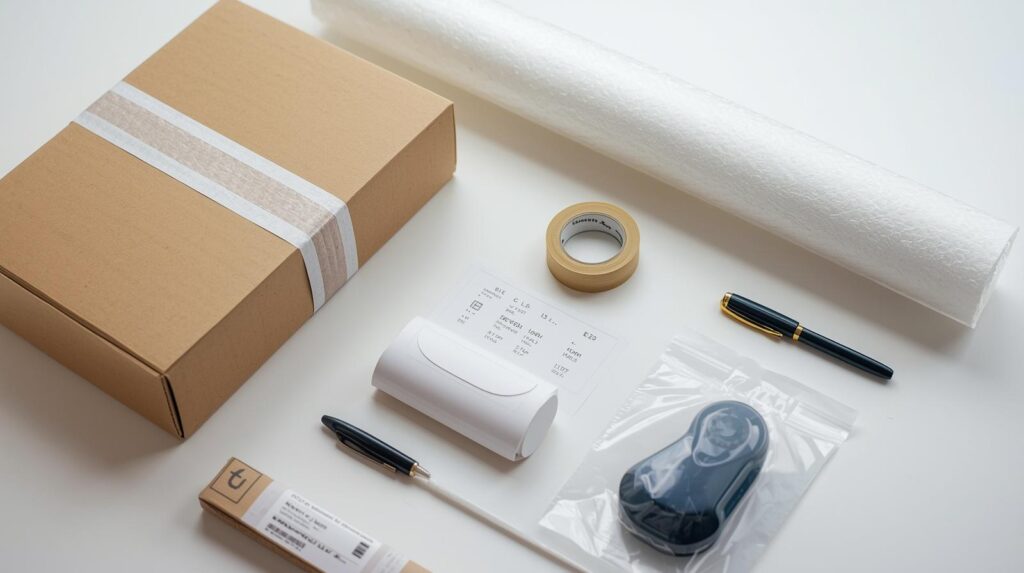
That’s it. Let’s get into it.
Step 1: Pack Your Parcel Properly
Good packing is the single biggest thing you can do to make sure your item arrives safely. Courier parcels go through sorting machines, conveyor belts, and multiple hands — so don’t skimp on this step.
Here’s how to pack it right:

- Use a sturdy box that’s the right size for your item — not too big, not too small. Too much empty space means the item shifts around and can break.
- Wrap fragile items in bubble wrap — at least 2–3 layers. For electronics or glassware, wrap each piece individually.
- Fill empty space with crumpled newspaper, foam peanuts, or old cloth to prevent movement inside the box.
- Seal all edges with strong tape — don’t just tape the middle flap. Run tape along all seams, including the corners.
- Don’t use old boxes with old labels on them — this confuses sorting systems. Remove or cover any old barcodes or addresses.
💡 Pro tip: If you’re shipping something fragile, write “FRAGILE” clearly on at least two sides of the box. Most couriers will handle it with extra care.
Step 2: Weigh and Measure Your Parcel
Courier charges in India are calculated based on either the actual weight or the volumetric weight of the courier parcel— whichever is higher. So, you need to know both.
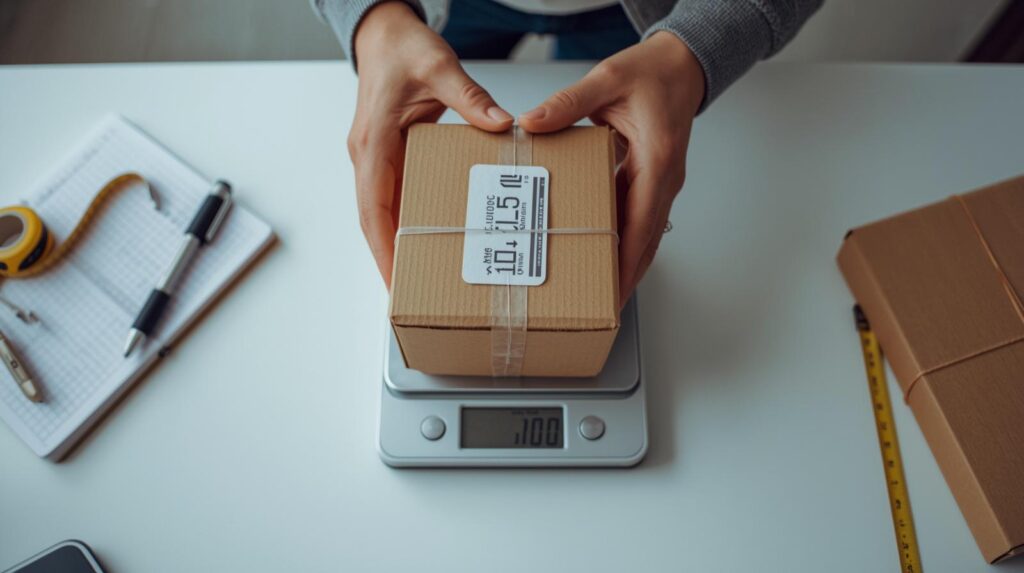
Actual weight: Weigh the packed parcel on a scale (in kg).
Length (cm) × Width (cm) × Height (cm) ÷ 5000
For example, a box that is 30cm × 20cm × 10cm has a volumetric weight of:
30 × 20 × 10 ÷ 5000 = 1.2 kg
If the actual weight is 0.8 kg but the volumetric weight is 1.2 kg, you’ll be charged for 1.2 kg. This catches a lot of first-time shippers off guard — especially for light but bulky items like clothing, toys, or pillows.
Step 3: Write the Address Correctly
This is one of the most common mistakes people make. A wrong or incomplete address is the #1 reason courier parcels get delayed or returned.
Here’s exactly how to write the address on a courier parcel:
Recipient’s Address (Front/Top of the parcel):
To,
[Full Name of Recipient]
[House/Flat No., Building Name, Street Name]
[Locality / Area Name]
[City], [State] – [PIN Code]
Mobile: [10-digit phone number]
Example:
To,
Priya Sharma
Flat 4B, Sai Residency, MG Road
Koramangala
Bengaluru, Karnataka – 560034
Mobile: 9876543210
Sender’s Address (Back/Bottom of the parcel):
From,
[Your Full Name]
[Your Address]
[City], [State] – [PIN Code]
Mobile: [Your phone number]

A few important things to remember:
- Always include the 6-digit PIN code — this is what couriers use to route your courier parcel to the right sorting facility
- Always include a phone number for both sender and recipient — delivery agents call when they can’t find the address
- Write the address in block letters or print it if your handwriting is unclear
- If writing by hand, use a permanent marker or ballpoint pen — not pencil or gel pen that can smudge
- Stick the address inside a clear plastic pouch or cover it with transparent tape so it doesn’t get wet or torn in transit
Step 4: Choose the Right Courier Service
This is where most people feel lost. There are dozens of courier companies in India — Delhivery, DTDC, Blue Dart, Xpressbees and more. Each has different rates, coverage, and delivery speeds.
The main things to compare:
| Factor | What to look for |
| Delivery speed | Standard (3–7 days) vs Express (1–2 days) |
| Rate (per kg) | Varies by courier, zone, and weight |
| Pin code coverage | Not all couriers reach every area |
| Tracking | Real-time vs basic updates |
| Pickup | Door pickup vs drop-off at branch |

The easiest way to compare all of this at once? Use a courier aggregator like Shipeasy.
Instead of checking each courier’s website separately, Shipeasy shows you rates from multiple courier partners side by side for your specific pickup pin code, delivery pin code, and parcel weight. You can pick the cheapest option, the fastest one, or the best-rated — all from a single dashboard. 👉 Compare courier rates on Shipeasy — it’s free
Step 5: Book Your Shipment
Once you’ve chosen your courier, it’s time to book. You have two options:
Option A: Book Online (Recommended)
Booking online is faster, cheaper, and more convenient. Here’s how it works on Shipeasy:
- Enter your pickup pin code and delivery pin code
- Enter your parcel weight and dimensions
- Compare rates from multiple courier partners
- Select your preferred courier and pay online
- Enter the sender and recipient details
- Get a shipping label — print it or write the AWB number on your parcel
- Schedule a pickup or drop your parcel at the nearest courier point

Option B: Walk Into a Courier Branch
If you prefer the offline route, you can walk into any courier company’s branch or franchise with your packed and labelled courier parcel. They’ll weigh it, give you a rate, and issue a receipt with your tracking number (also called AWB number or consignment number).
Step 6: Hand Over the Courier Parcel and Get Your Tracking Number

Whether you book online or walk in, make sure you get a tracking number (AWB number / consignment number) before you leave. This is your proof of booking and lets you track your courier parcel at any time. Save it — you’ll need it if anything goes wrong, and your recipient will thank you for sharing it with them.
Step 7: Track Your Shipment
Once booked, most couriers update the tracking status within a few hours. Here are the common status updates you’ll see and what they mean:
| Status | What it means |
| Picked up | Courier has collected the parcel from you |
| In transit | Parcel is moving through the courier network |
| Out for delivery | Delivery agent is on the way to the recipient |
| Delivered | Parcel has reached the recipient |
| Delivery attempted | Agent tried but couldn’t deliver — will retry |
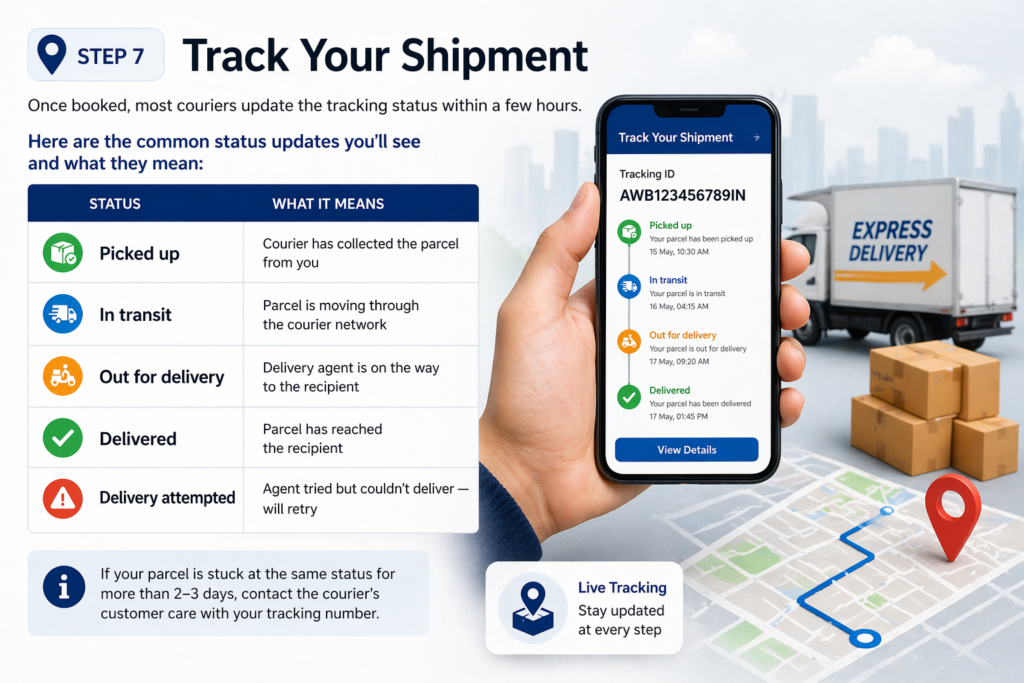
If your parcel is stuck at the same status for more than 2–3 days, contact the courier’s customer care with your tracking number.
Common Mistakes to Avoid
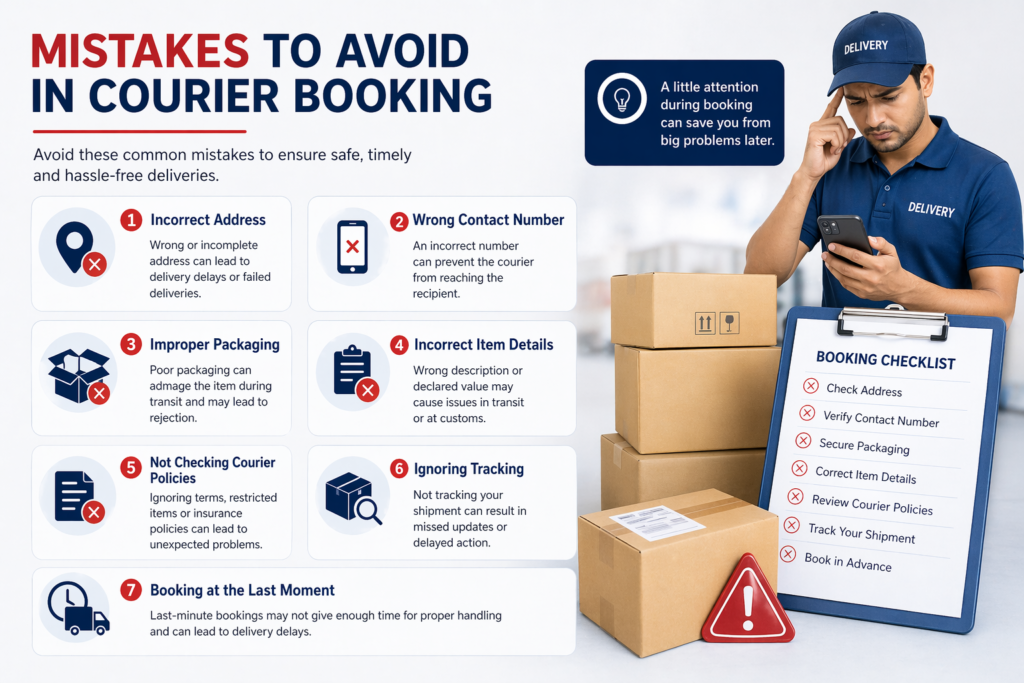
- ❌ Incomplete address — always include house number, street, locality, city, state, PIN, and phone
- ❌ No sender address — if delivery fails, the parcel needs to come back to you
- ❌ Under-packing fragile items — one layer of bubble wrap is rarely enough
- ❌ Ignoring volumetric weight — light but bulky items often cost more than you expect
- ❌ Not checking pin code serviceability — confirm the courier reaches the destination before booking
Sending Courier Parcel Regularly? There’s a Smarter Way
If you’re shipping more than a handful of courier parcels a month — whether for a small business, an online store, or a side hustle — doing it manually every time is a waste of time and money.

Shipeasy is built for exactly this. As a courier aggregator, Shipeasy helps you:
✅ Compare rates from multiple top couriers in seconds
✅ Book bulk shipments from one dashboard
✅ Get automatic pickup scheduling
✅ Track all your orders in one place
✅ Access discounted rates not available on courier websites directly
No more switching between tabs. No more manual rate calculations. Just faster, cheaper shipping.
👉 Start shipping with Shipeasy — Free to sign up
Frequently Asked Questions
Q: How much does it cost to send a courier in India?
It depends on the courier, weight, and distance. For a 500g parcel within the same city, rates typically start from ₹30–₹40. Interstate shipments for the same weight usually range from ₹60–₹120. Using a courier aggregator like Shipeasy helps you find the cheapest available rate.
Q: Can I send a courier without going to a branch?
Yes! Most courier companies offer door pickup when you book online. Simply schedule a pickup time and the delivery agent will come to you.
Q: What items cannot be sent by courier in India?
Couriers typically don’t accept cash, hazardous materials, firearms, perishables (without special handling), and certain liquids. Always check the courier’s prohibited items list before booking.
Q: How long does courier delivery take in India?
Within the same city: 1–2 days. Metro to metro: 2–3 days. Tier 2/3 cities: 3–5 days. Remote areas: 5–7 days. Express services can shorten these timelines significantly.
Q: What if my parcel is lost or damaged?
Most couriers offer basic insurance. When booking through Shipeasy, you can also opt for shipment protection to cover the value of your item
Wrapping Up
Sending a courier parcel in India isn’t complicated once you know the steps. Pack well, address clearly, pick the right courier, and track it until it lands safely.
And if you want to make the whole process faster, cheaper, and less stressful — give Shipeasy a try. It takes the guesswork out of choosing a courier and puts the best rates right at your fingertips.
👉 Try Shipeas for free — Compare, book, and track in minutes
Was this guide helpful? Share it with someone who’s shipping for the first time!