
The top D2C Brands in India 2026.— boAt, Mamaearth, Lenskart, Wakefit, SNITCH, and Sugar Cosmetics have built something most founders underestimate: a world-class logistics operation that makes every delivery a brand experience. Over 250 million Indians now shop directly from brands across fashion, beauty, wellness, and home décor, bypassing traditional retail entirely.
But here is what most coverage of India’s top D2C brands gets wrong: it focuses on marketing, fundraising, and product innovation while completely ignoring the operational engine underneath. In 2026, D2C brands are shifting from rapid customer acquisition to operational excellence. Success will depend on mastering the post-purchase experience.
The brands that have built lasting businesses in India’s D2C space — boAt, Mamaearth, Lenskart, Wakefit, SNITCH, Bewakoof, Sugar Cosmetics, Licious — didn’t just win on great products and smart ads. They won because they built logistics operations that could scale without breaking, deliver reliably to 19,000+ pin codes, and recover failed deliveries before they became permanent losses.
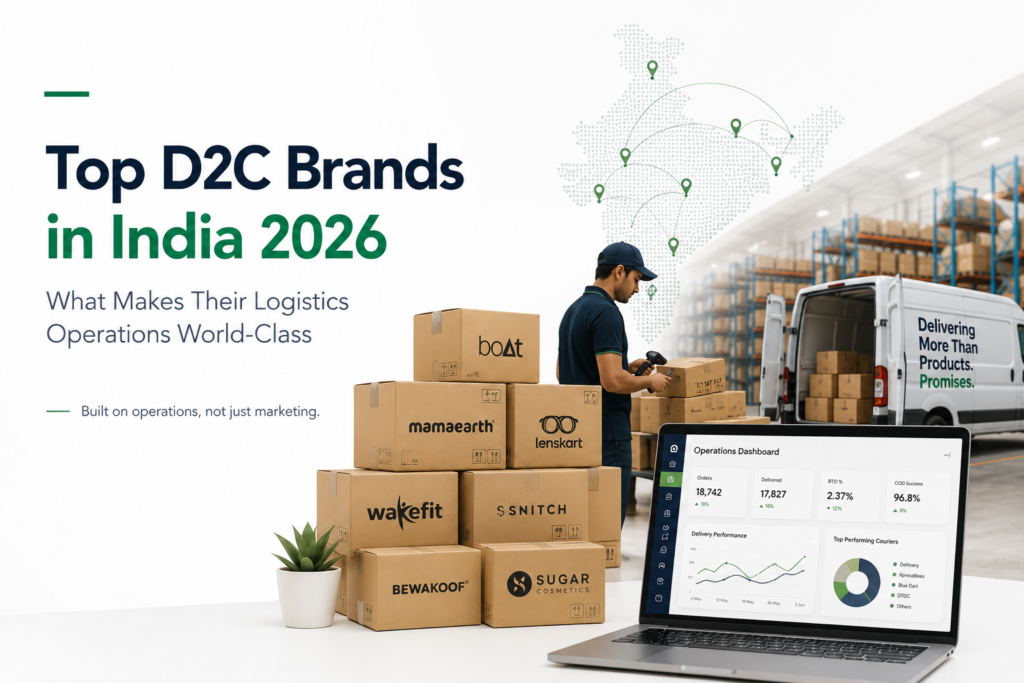
This guide breaks down India’s top D2C brands in 2026, what they sell, why they won, and specifically — what their shipping and logistics operations look like under the hood. Whether you’re building a D2C brand from scratch or scaling past your first 1,000 orders, this is the operational playbook you need.
The D2C Logistics Reality in India
Before we look at individual brands, it is worth understanding the operational environment every D2C brand in India navigates.
Industry estimates put RTO rates for Indian e-commerce shipments at 20–30% for certain categories, particularly cash-on-delivery orders. At those levels, the cost of a failed delivery isn’t just the reverse logistics charge. It is inventory tied up in transit, working capital locked in unsettled COD, and a customer who may never return.
In a market where 80% of consumers won’t return after a single poor shipping experience, logistics has become the technical backbone needed to turn delivery into a retention engine.
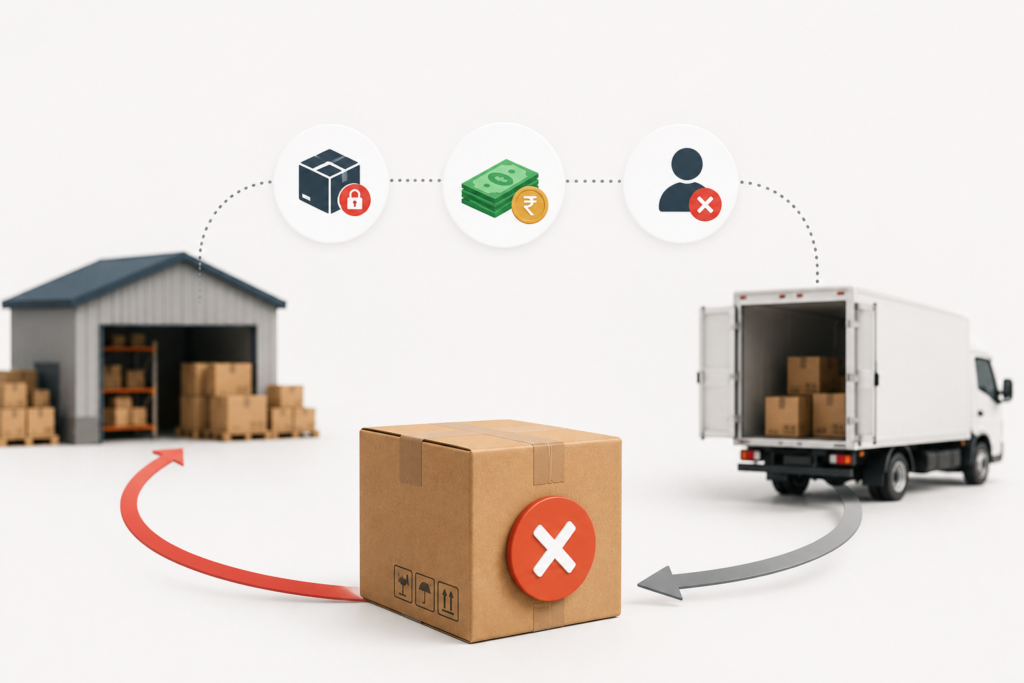
The brands that have figured this out share three operational characteristics:
They don’t rely on a single courier. The honest reality is that no single logistics company covers every pin code, every delivery speed, and every price point perfectly. The businesses that ship most efficiently use 2–4 carriers simultaneously, routing each order to the best carrier for that specific pin code, weight, and delivery speed.
They treat logistics as a growth lever, not a cost centre. Faster, more reliable delivery timelines surface at checkout and influence purchase decisions. Improved delivery predictability reduces customer support load.
They automate NDR management. Closed-loop NDR management — where automated IVR, SMS and WhatsApp workflows engage customers when a delivery attempt fails — turns failed deliveries from sunk costs into recoverable orders.
Now let’s look at how India’s top D2C brands built their operations.
1. boAt — Consumer Electronics & Audio
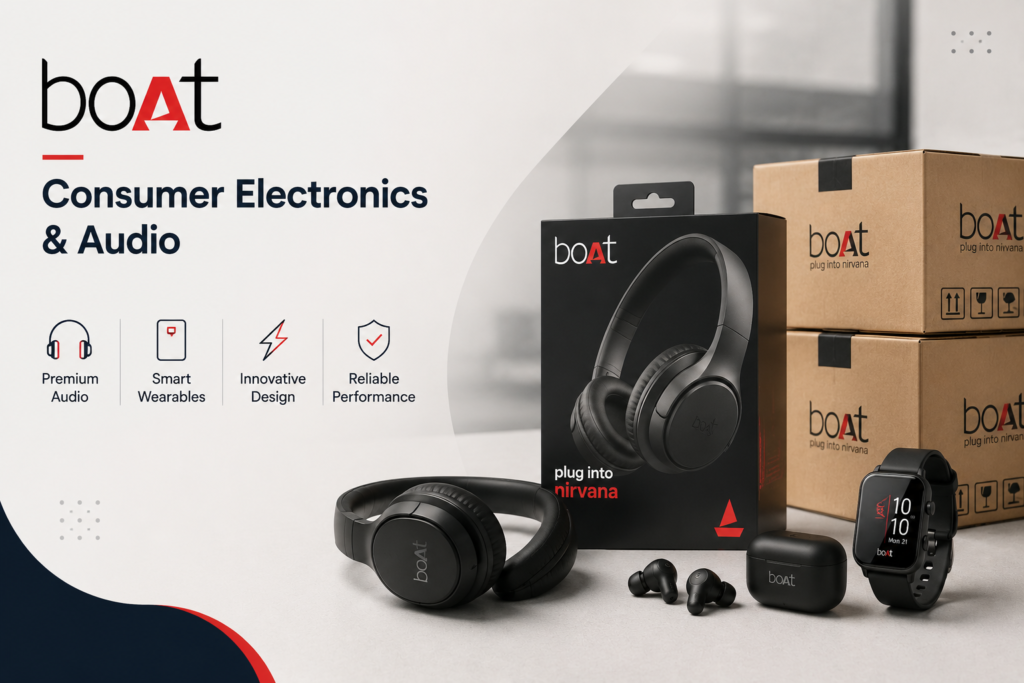
Founded: 2016 | Category: Consumer electronics, audio accessories
Revenue: ₹3,000+ crore | Status: Unicorn
Why boAt Won
boAt identified a simple, powerful insight: Indian consumers wanted affordable, stylish audio products that could take daily wear and tear. International brands like JBL and Sony dominated the premium segment. boAt owned the ₹500–₹3,000 sweet spot with products that looked and felt premium without carrying import-level pricing.
boAt remains a leader in consumer electronics not only because of its pricing but also because of its strong brand. Its distinctive design language, aggressive influencer marketing, and relentless product cadence kept it perpetually relevant.
The Logistics Operation
boAt operates at scale that requires military-grade logistics precision. Shipping hundreds of thousands of orders per month across India’s full geographic range — from Mumbai and Delhi to Northeast states and remote Tier 3 towns — demands multi-carrier architecture by necessity, not choice.
What boAt’s logistics setup looks like:
- Multi-carrier routing with Delhivery as primary for most interstate express lanes, Blue Dart for high-value premium accessories, and regional partners for Tier 2/3 city penetration
- Air waybill automation at scale — label generation, pickup scheduling, and carrier assignment handled through an integrated shipping platform rather than manually
- Dedicated returns management pipeline — electronics have specific testing and refurbishment requirements before resale, making reverse logistics more complex than apparel
The lesson for new D2C brands: Electronics have high declared value, which means insurance and careful packaging aren’t optional. Underdeclaring product value to save on insurance is a common mistake that costs brands significantly when damage claims arise.
2. Mamaearth — Clean Beauty & Personal Care
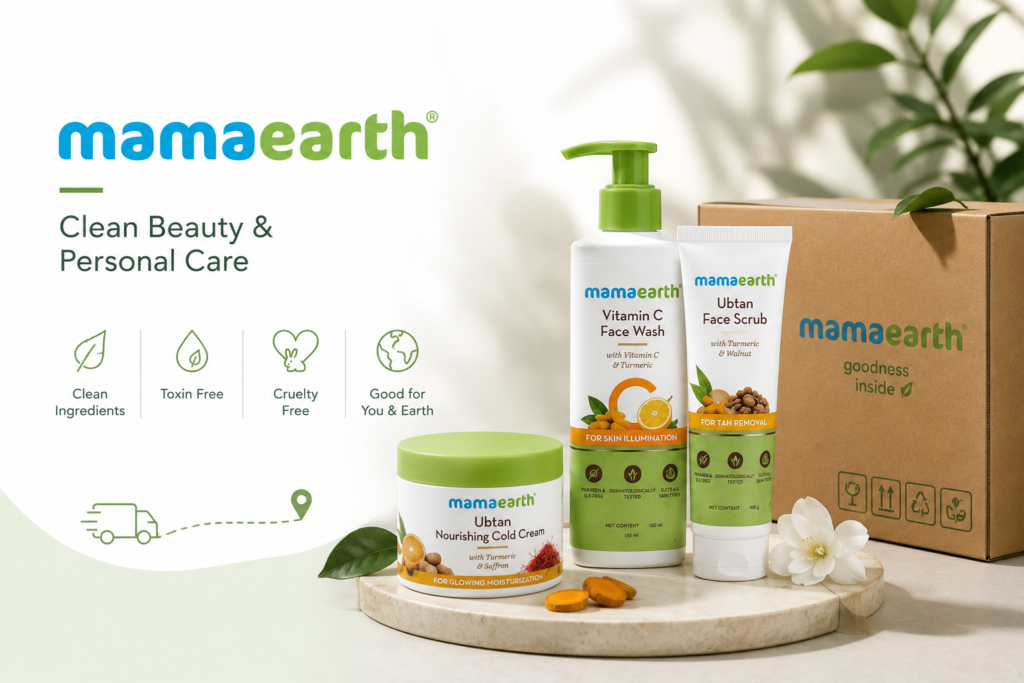
Founded: 2016 | Category: Skincare, haircare, baby care
Revenue: ₹2,000+ crore | Status: Listed (Honasa Consumer)
Why Mamaearth Won
Mamaearth began with toxin-free baby care and later grew into a complete personal care range for adults. The brand’s timing was near-perfect — it arrived just before India’s clean beauty movement went mainstream, with a clear answer already prepared when consumers started asking the question.
Mamaearth did not create the clean beauty movement. They showed up just before it exploded, with a clear answer already ready.
The Logistics Operation
Beauty and personal care has specific shipping challenges that Mamaearth has had to solve at scale: liquid products require secondary sealing, glass bottles need careful padding, and products have expiry dates that create FIFO inventory pressure.
What Mamaearth’s logistics setup looks like:
- Regionalised warehousing to reduce average transit distance — multiple fulfillment centres across India so orders reach customers faster and at lower per-unit shipping cost
- Strict packaging standards for liquid products — tamper-evident seals, internal cushioning, and outer box reinforcement are non-negotiable at their scale
- Category-specific courier routing — lightweight serums and face washes routed to cost-efficient carriers; fragile glass-bottled products routed to couriers with better handling standards
- High repeat purchase rate means subscription and auto-replenishment logistics are optimised separately from one-time purchase fulfillment
The lesson for new D2C brands: Mamaearth’s clean packaging and unboxing experience is a direct extension of its brand values. For beauty brands, packaging that arrives pristine is not a logistics detail — it is brand communication. Every leaking bottle is a broken brand promise, not just a returns cost.
3. Lenskart — Eyewear
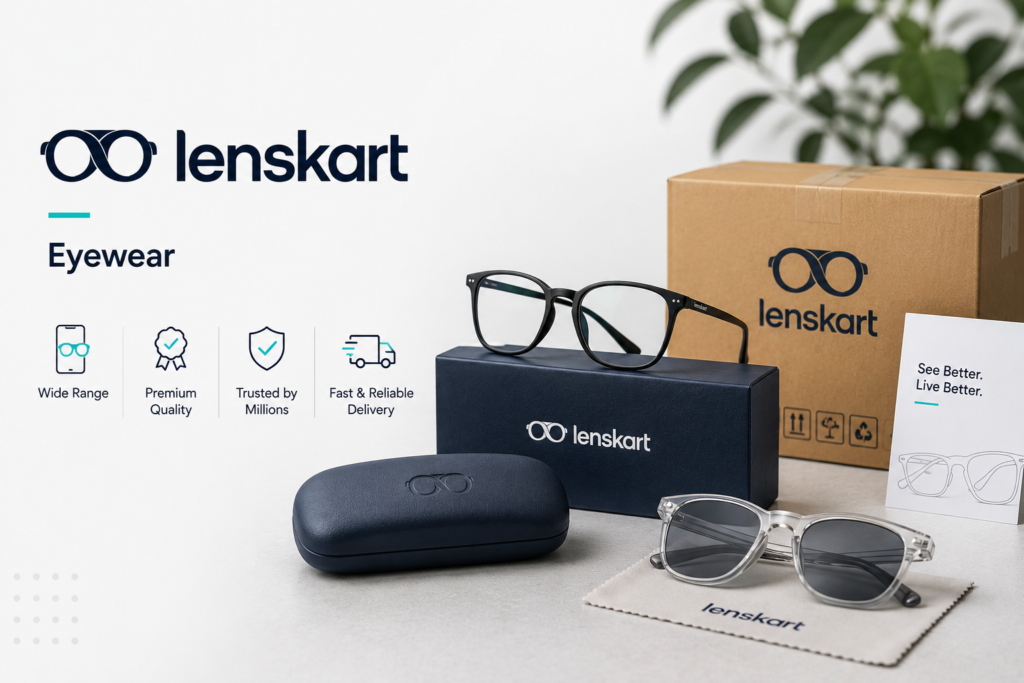
Founded: 2010 | Category: Prescription eyewear, sunglasses, contact lenses
Revenue: ₹5,000+ crore | Status: Unicorn
Why Lenskart Won
Lenskart looked at the experience of buying glasses and decided it was broken. Virtual try-on, AI-powered recommendations, easy home delivery — the tech was real and actually useful, not just a press release. But what built Lenskart wasn’t the app feature. It was 1,000-plus physical stores, consistent pricing, and service that didn’t fall apart after the first purchase.
The Logistics Operation
Lenskart ships a product that is both high-value and custom-manufactured — prescription lenses are made-to-order, which means the logistics operation begins not at dispatch but at the manufacturing stage. This is fundamentally different from most D2C brands that ship pre-made inventory.
Lenskart had to face logistical issues such as the management of order fulfillment and returns as the company started to scale. The delivery of prescribed eyewear on time and handling fast-rising returns complicated the logistics and customer service, prompting considerable investment in logistics and customer service infrastructure.
What Lenskart’s logistics setup looks like:
- Integrated manufacturing-to-dispatch workflow — optical labs connected directly to the fulfillment and dispatch system so orders move from prescription confirmation to shipping with minimal manual handoffs
- Precision packaging for fragile, high-value product — custom hard cases, foam inserts, and double-boxing as standard, not optional
- Express delivery prioritised — prescription eyewear customers have urgent, functional need. Lenskart invests in faster delivery SLAs than most D2C categories require
- Returns management built for exchange-heavy behaviour — customers frequently return frames after trying on prescription lenses. A smooth exchange process is central to their retention strategy
The lesson for new D2C brands: If you are shipping made-to-order or custom products, integrate your production and fulfillment systems early. The biggest source of delays in custom D2C products isn’t the courier — it’s the handoff gap between manufacturing completion and dispatch initiation.
4. Wakefit — Sleep & Home Products
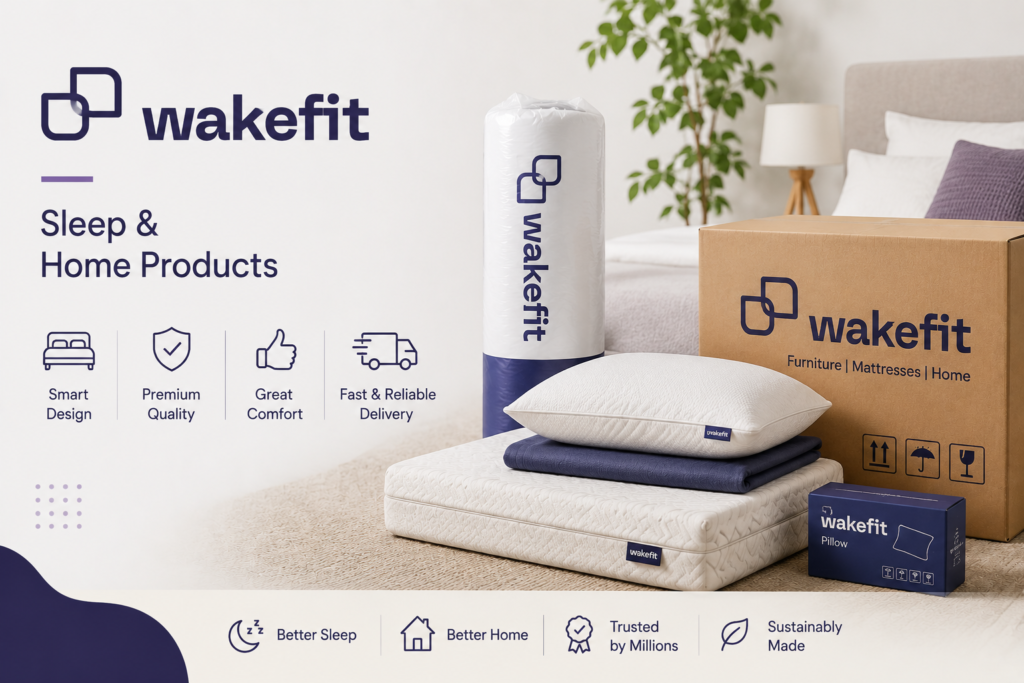
Founded: 2016 | Category: Mattresses, pillows, furniture, home accessories
Revenue: ₹600+ crore
Why Wakefit Won
Buying a mattress online sounds risky. You can’t try it in a store. You don’t know how it will feel in a week. Wakefit understood this concern completely and answered it with a 100-day trial policy. Return it if you don’t love it. No questions. The trial was a bet that the product was genuinely good enough to win on honesty.
With over ₹600 crore revenue and a pan-India logistics network, Wakefit proved that high-involvement D2C is viable in India when combined with value-driven service.
The Logistics Operation
Wakefit ships some of the most challenging products in all of Indian D2C: mattresses that weigh 15–30 kg, furniture that requires assembly, and bulky pillows and bedding that trigger extreme volumetric weight charges. Their logistics operation is built around this reality.
What Wakefit’s logistics setup looks like:
- Dedicated large-item shipping partners — standard courier networks are not built for 25 kg mattresses. Wakefit uses specialised freight-forwarding logistics partners for furniture and mattress delivery alongside standard couriers for accessories and small items
- Compression packaging technology — mattresses are vacuum-compressed and rolled before packaging, reducing dimensions dramatically and making standard courier delivery possible for a product class that would otherwise require dedicated truck dispatch
- Assembly-ready delivery coordination — for furniture items, delivery is coordinated with installation, requiring more sophisticated last-mile scheduling than standard drop-and-go courier delivery
- Returns by appointment — the 100-day trial works because Wakefit’s reverse logistics for large items is professionally managed. A mattress pickup requires a different operational playbook than returning a t-shirt
The lesson for new D2C brands: If your product is bulky, calculate volumetric weight before you set your price. (Length × Breadth × Height in cm) ÷ 5000 is the formula. A mattress that appears to weigh 20 kg actual weight may be charged at 40+ kg volumetrically. Build this into your margin model from day one.
5. SNITCH — Men’s Fast Fashion
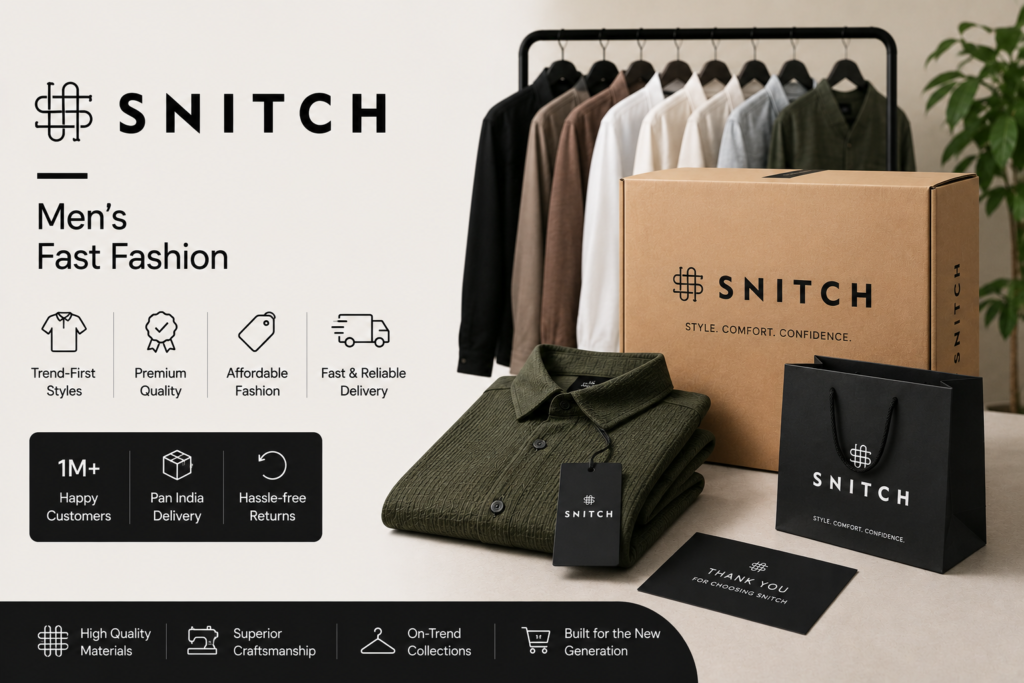
Founded: 2018 | Category: Men’s apparel, fast fashion
Why SNITCH Won
SNITCH emerged at a time when men’s fashion in India was becoming trend-sensitive and fast-moving. The brand capitalised on rising demand for affordable, globally inspired styles. SNITCH gained visibility through high-frequency product launches promoted aggressively on Instagram and performance marketing channels. SNITCH’s success relied on speed — both in launching new styles and fulfilling orders quickly.
The Logistics Operation
Fashion is one of the most logistics-intensive D2C categories — high order volume, high return rates, and COD-heavy order mix create a perfect storm of operational complexity. SNITCH’s growth required a shipping operation that could handle volume spikes during product launches, manage 20–30% return rates efficiently, and keep COD remittance fast enough to fund ongoing inventory purchases.
What SNITCH’s logistics setup looks like:
- Multi-carrier routing with aggregator platform — managing 15+ courier relationships through a single dashboard rather than separate contracts, enabling automated carrier selection by zone and order value
- Returns infrastructure built for speed — apparel returns need to be inspected, repackaged, and restocked quickly to maintain inventory availability for the next product launch cycle
- COD as primary payment method — Tier 2/3 city buyers who fuel SNITCH’s growth outside metros predominantly order COD. Fast COD remittance (T+2 to T+4) is critical for cash flow management at high order volumes
- NDR automation — when a delivery attempt fails, automated WhatsApp and SMS workflows engage the customer within hours to reschedule rather than waiting for the courier to attempt again independently
The lesson for new D2C brands: In fashion, your returns rate is a function of your product photography and sizing guide as much as your logistics setup. Invest in accurate size charts, real-model photography, and detailed product descriptions before you invest in returns infrastructure — prevention is always cheaper than processing.
6. Bewakoof — Casual Fashion & Lifestyle
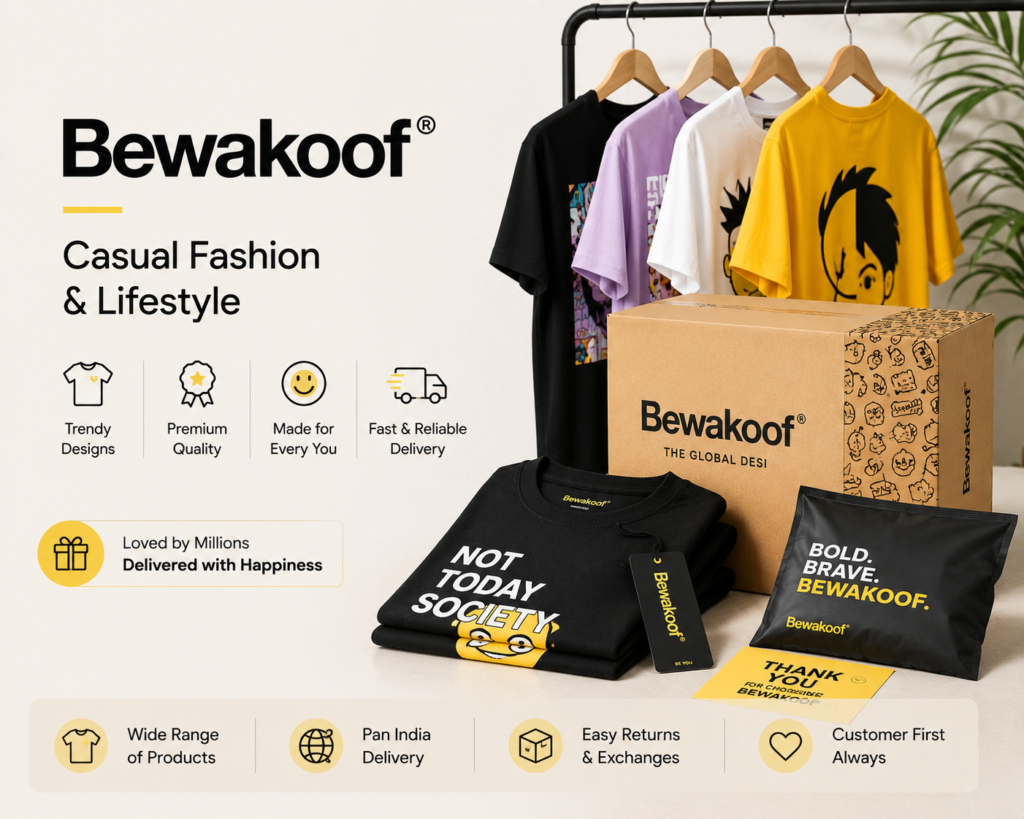
Founded: 2012 | Category: T-shirts, casual wear, lifestyle accessories
Why Bewakoof Won
Most fashion brands try to look aspirational. Bewakoof tried to be funny. Irreverent t-shirts, social media that felt like a friend talking — not a marketing team — and prices that made buying two or three pieces easy. The brand built a loyal customer base not on glamour, but on personality. Tone is a real strategy.
The Logistics Operation
Bewakoof built its business on affordable fashion at high volume — a model that only works if logistics costs are kept low. Their operation is optimised for cost efficiency above all else.
What Bewakoof’s logistics setup looks like:
- Economy surface shipping as default — for low-value orders (₹299–₹599 t-shirts), air express shipping eats too much margin. Surface shipping at 4–6 days is acceptable for price-sensitive buyers and significantly cheaper
- Poly mailer packaging standardisation — all apparel ships in lightweight poly mailers, not boxes. The difference in packaging cost and weight across millions of annual shipments is substantial
- Bundle shipping to increase AOV — Bewakoof actively promotes “buy 3, get discount” offers partly because bundling 3 t-shirts into one shipment reduces per-unit shipping cost dramatically versus 3 separate orders
- Zone-based carrier optimisation — different couriers perform better on different state-to-state routes. Automated routing to the best performer by lane saves 10–20% on per-shipment costs at scale
7. Sugar Cosmetics — Beauty
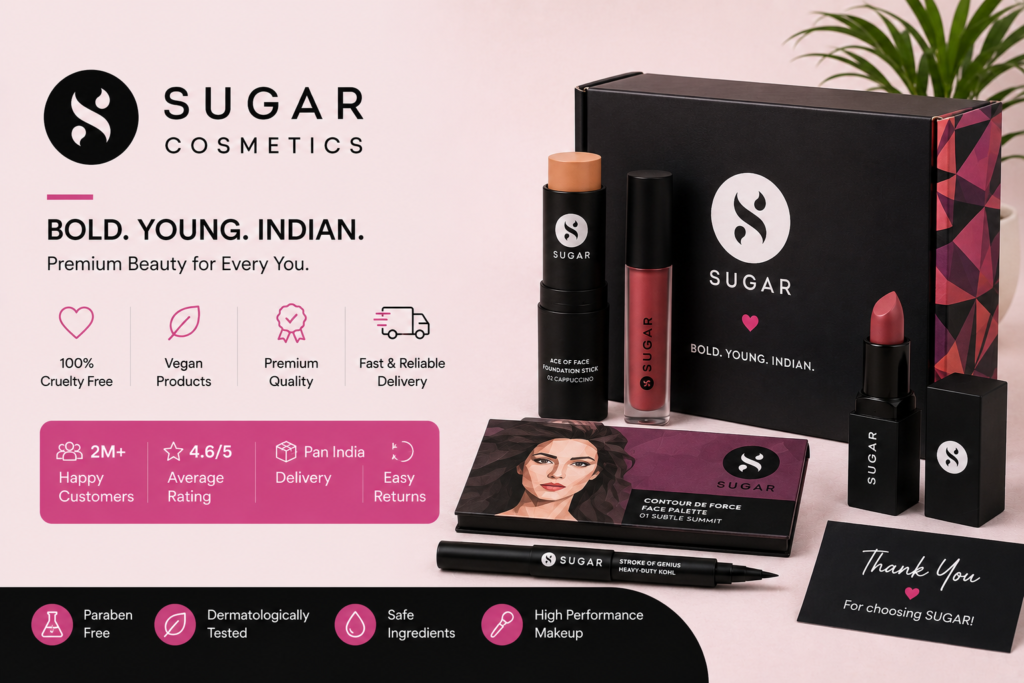
Founded: 2015 | Category: Cosmetics, lipsticks, foundations, eye makeup
Why Sugar Cosmetics Won
Vineeta Singh noticed something the big cosmetics companies had missed: women in Tier 2 and Tier 3 cities did not want drugstore basics. They wanted bold, high-performance products — but at prices they could actually afford. Sugar Cosmetics filled this gap with a product range that matched its bold visual identity.
The Logistics Operation
Cosmetics present specific packaging challenges — products are fragile, often contain pigments that stain if leaked, and customer expectations around unboxing are unusually high. Sugar’s logistics reflects its brand positioning.
What Sugar Cosmetics’s logistics setup looks like:
- Premium outer packaging as brand investment — Sugar treats its shipping box as an extension of its brand identity. Matte finish branded boxes with tissue paper and branded inserts are standard, not optional
- Fragile product protection — lipstick bullets can break in transit, compact mirrors crack, and liquid foundations leak. Internal packaging is designed to prevent these failure modes regardless of how roughly the parcel is handled at sorting centres
- Strong returns prevention — unlike apparel, cosmetics have very low return rates (1–5%) since opened products cannot be resold. Investment is focused on preventing damage-in-transit returns rather than processing post-delivery returns
- Tier 2/3 delivery focus — a significant portion of Sugar’s growth comes from non-metro customers discovering the brand online. Couriers with strong Tier 2/3 coverage (XpressBees, Delhivery) are prioritised over premium express options for this customer segment
8. Licious — Fresh Meat & Seafood
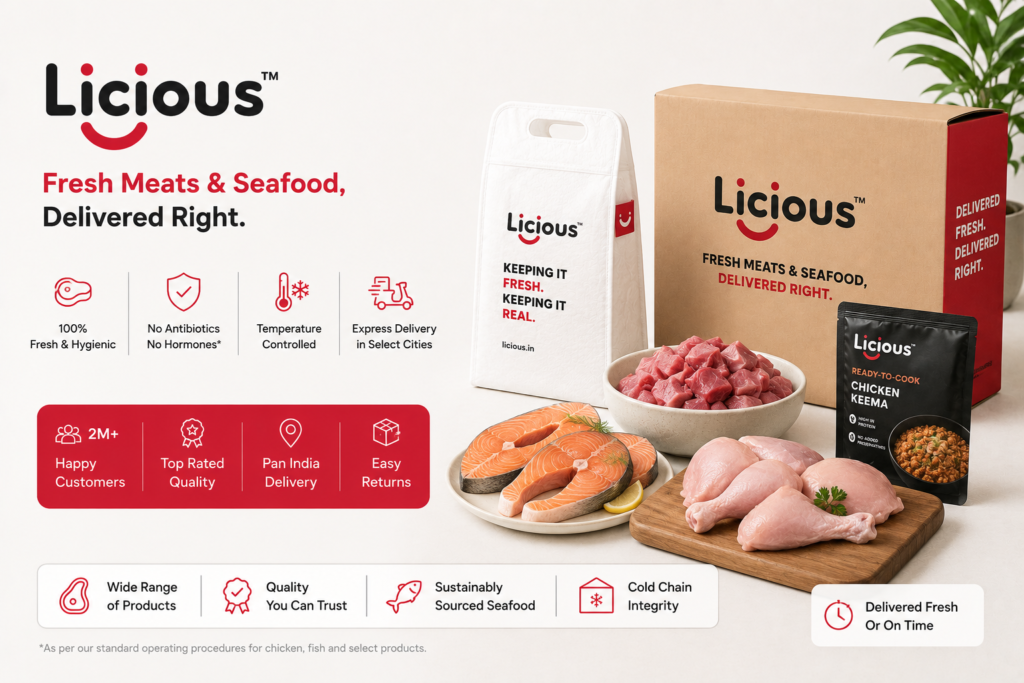
Founded: 2015 | Category: Fresh meat, seafood, ready-to-cook products
Why Licious Won
Licious is transforming quality and delivery in the food and beverage sector. It identified a specific gap — Indians wanted high-quality, fresh, butcher-standard meat without the hygiene uncertainty of traditional wet markets. Licious delivered on both product quality and the cold chain infrastructure to support it.
The Logistics Operation
Licious operates arguably the most complex logistics infrastructure of any D2C brand in India. Fresh meat and seafood must be maintained at specific temperatures throughout the delivery chain — from storage to pickup to last-mile delivery. There is no room for error.
What Licious’s logistics operation looks like:
- City-by-city expansion model — unlike most D2C brands that launch nationally, Licious expands city by city specifically because cold chain infrastructure must be in place before operations start. It cannot ship nationwide without local cold chain
- Owned last-mile delivery in most markets — Licious does not rely on standard courier networks for its primary delivery. It operates its own temperature-controlled last-mile fleet because standard couriers cannot guarantee cold chain integrity
- Same-day and scheduled delivery slots — customers choose a delivery slot at checkout. This reduces failed delivery rates to near-zero because someone is always home when the order arrives
- Dark kitchen network — Licious operates processing facilities in each city it serves, minimising transit time from cutting to customer and reducing temperature exposure duration
The lesson for new D2C brands: If your product has temperature or freshness requirements, do not attempt to solve this with standard courier packaging alone. Gel packs buy you 24–48 hours. Beyond that, you need dedicated cold chain infrastructure. Launch in your city first, prove the model, then expand.
The 5 Logistics Principles That Separate India’s Top D2C Brands
Looking across all eight brands above, five operational principles emerge consistently:
1. They Use Multi-Carrier Architecture From Early On
For most of the last decade, an Indian e-commerce founder making a logistics decision had two real options: sign with one of the big national couriers and accept whatever performance variance came with it, or attempt to manage three or four courier relationships in parallel and absorb the operational cost of doing so. Both paths had ceilings.
India’s top D2C brands found a third path: shipping aggregators that manage multiple carrier relationships through a single platform, with automated routing that picks the optimal courier for each order.
2. They Measure RTO as a Business KPI, Not an Operational Problem
Brands using multi-courier allocation and NDR management workflows have reported RTO reductions of 15–25%. For a brand shipping 10,000 orders a month, even a 10% reduction in RTO translates into measurable savings in reverse logistics, inventory holding costs and working capital efficiency.
Top D2C brands track RTO rate per courier, per zone, per product category, and per payment method. They manage it the way they manage marketing spend — with data, experimentation, and continuous optimisation.
3. They Invest in NDR Management Before They Need It
AI-driven NDR management helps brands reduce RTO rates by up to 54% and transforms delivery into a retention engine.
Acting on every failed delivery attempt within 24 hours — through automated WhatsApp, SMS, and IVR — recovers a significant percentage of orders that would otherwise become permanent RTOs.
4. They Treat Packaging as a Brand Investment, Not Just a Cost
Across boAt, Mamaearth, Sugar Cosmetics, and Licious, packaging investment is proportional to brand positioning. Budget packaging on a premium product sends a conflicting message at the most important brand touchpoint — the moment of unboxing.
5. They Build Logistics Infrastructure Ahead of Volume
Brands that invest early in scalable operations gain the ability to move faster, serve wider markets, and respond better to demand shifts. The brands that scramble to fix their logistics infrastructure after rapid growth spend twice as much and lose customer trust they can never fully recover.
What Does This Mean for Your Brand?
You don’t need to be boAt or Mamaearth to build world-class logistics operations. The same principles — multi-carrier routing, RTO management, NDR automation, data-driven carrier selection — are accessible to brands shipping 50 orders a month through the right platform.
As D2C brands scale, shipping stops being a back-office task and starts becoming a core operational system. What works at 20 orders a day breaks at 200. What feels manageable with one warehouse becomes chaotic with three.
The question is not whether you need to take logistics seriously. The question is whether you start building the right infrastructure now — when it costs you an hour to set up — or wait until a logistics crisis forces you to fix it mid-scale.
Build Your Logistics Foundation with ShipEasy
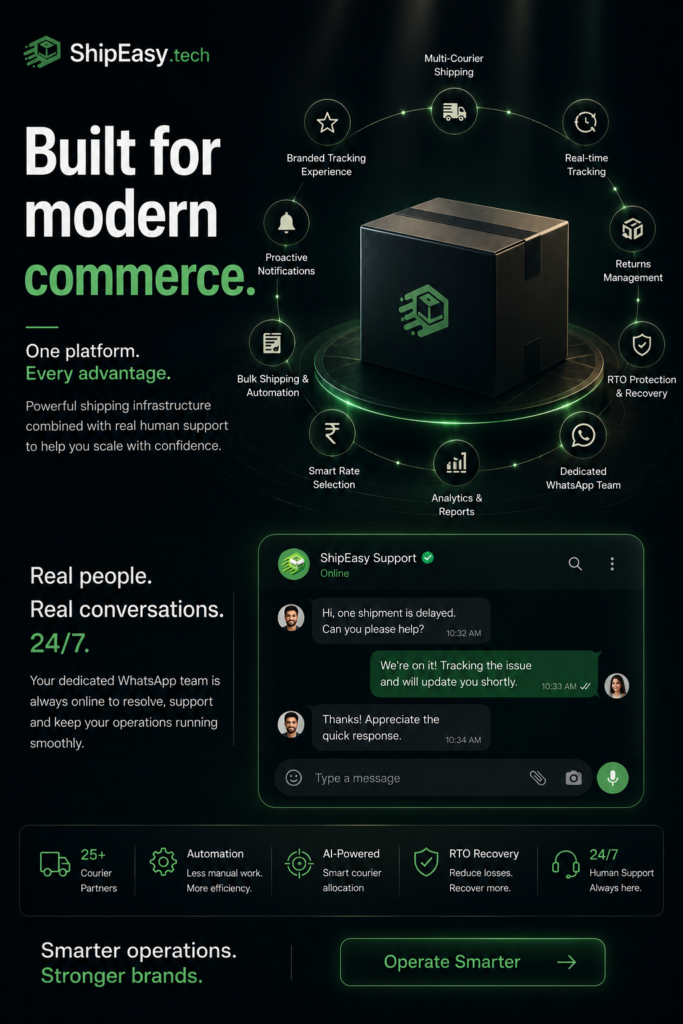
ShipEasy is a courier aggregator built for Indian D2C brands at every stage of growth. The same multi-carrier infrastructure that India’s top brands rely on — rate comparison, automated carrier selection, COD management, NDR automation, unified tracking — available to you from your very first order.
What you get with ShipEasy:
- Multiple courier partners — Delhivery, DTDC, Blue Dart, XpressBees, Amazon Shipping and more compared in real time
- Automated carrier selection — the best courier for each order selected automatically based on pin code, weight, and delivery speed
- COD management — all collections tracked with remittance visibility and T+2 to T+4 settlement
- NDR automation — act on failed deliveries within 24 hours before they become RTOs
- Bulk order processing — generate all shipping labels in one upload
- Single tracking dashboard — all shipments across all carriers in one place
Whether you’re at 10 orders a day or 10,000, ShipEasy gives you the logistics infrastructure that India’s best D2C brands built — without building it yourself.
👉 Start building your D2C logistics foundation with ShipEasy → shipeasy.tech
Frequently Asked Questions
Which are the top D2C brands in India in 2026?
India is now home to 50,000+ digital-first brands with four unicorns — boAt, Mamaearth, Licious, and Lenskart — and several deep-pocketed players like Pepperfry, Wakefit, Sugar Cosmetics, Country Delight, and Bluestone. Leading brands span fashion (SNITCH, Bewakoof), beauty (Mamaearth, Sugar Cosmetics), wellness (Wakefit, Lenskart), and food (Licious, Blue Tokai).
What makes a D2C brand’s logistics operations world-class?
World-class D2C logistics in India combines multi-carrier routing (2–4 couriers managed through an aggregator), automated NDR management that recovers failed deliveries within 24 hours, fast COD remittance for healthy cash flow, and packaging that protects the product while reinforcing the brand experience.
How do top D2C brands in India manage high RTO rates?
Brands using multi-courier allocation and NDR management workflows have reported RTO reductions of 15–25%. The key practices are automated delivery confirmation via WhatsApp and SMS, pin-code-level carrier routing to couriers with the highest delivery success for each zone, COD order verification before dispatch, and address validation at checkout.
How can a new D2C brand build a logistics operation like boAt or Mamaearth?
Start with a courier aggregator that gives you access to multiple carriers through one dashboard — this is what all major D2C brands use rather than managing separate courier contracts. Set up NDR automation from day one. Track RTO rate by courier and zone from your first 100 orders. And treat your packaging as a brand investment, not a cost to minimise.
What is the biggest logistics mistake D2C brands make in India?
Committing to a single courier and staying loyal to it regardless of performance. No single courier is optimal for all pin codes, all product weights, or all delivery speed requirements. The brands that ship most efficiently use 2–4 carriers and route intelligently — a practice made simple by courier aggregator platforms.
Brand data, revenue figures, and logistics details in this article are sourced from publicly available information, industry reports, and media coverage as of May 2026. Operational details are based on available public information and industry standards for each product category.