
Starting an e-commerce business in India in 2026 is one of the best decisions you can make. India’s digital commerce market is racing toward $100 billion, Tier 2 and Tier 3 cities are coming online at record speed, and the window to build a niche brand before the big players crowd in is still very much open.
But the most common mistake new sellers make is starting with the wrong product.
They pick something broad — “clothing” or “skincare” — without realising they’re walking into a category where hundreds of established brands have already spent crores building recognition. The result: high advertising costs, price wars, and shrinking margins.
The smarter play is to go niche first. A focused product — one that solves a specific problem for a specific audience — costs less to market, builds loyalty faster, and has a much better chance of ranking on Google, Amazon, and Flipkart without a huge ad budget.
This guide covers most profitable ecommerce products in india categories for new e-commerce sellers in India in 2026. For each one, you’ll find the market size and growth rate, typical pricing, who your customers are, how competitive the space is, what’s driving demand, and what you need to know before you start.

How to Read This Guide
Each product category is rated on three parameters that matter most to a new seller:
- Entry barrier — How easy is it to start? (Low / Medium / High)
- Competition level — How crowded is the market? (Low / Medium / High)
- Repeat purchase potential — Will customers buy again? (Low / Medium / High)
A category with Low Entry Barrier + Low/Medium Competition + High Repeat Purchase is the ideal starting point for a new seller.
1. Ayurvedic & Herbal Supplements
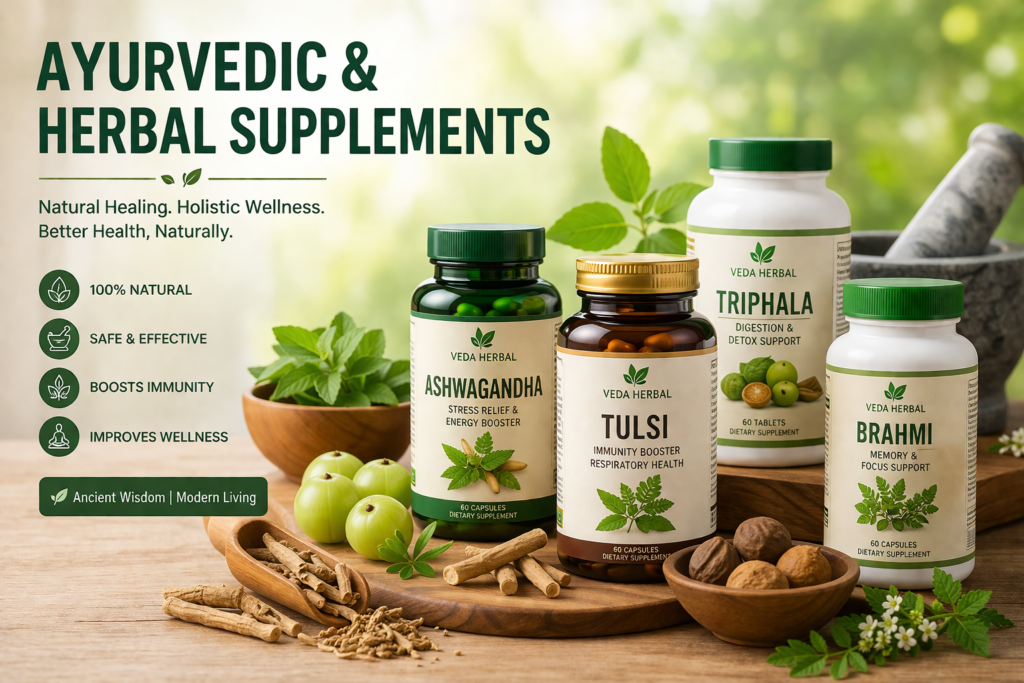
Entry barrier: Medium | Competition: Medium | Repeat purchase: ⭐⭐⭐⭐⭐
Market Overview The India ayurvedic products market was valued at ₹1,01,751 crore in 2025 and is projected to grow at a CAGR of 15.52% to reach ₹3,72,875 crore by 2034. This is not a niche — it is one of the fastest-growing wellness categories in the country, driven by a massive shift toward preventive health, natural ingredients, and distrust of synthetic chemicals.
What makes this exciting for new sellers is that within this large market, there are dozens of underserved sub-niches: stress management supplements, women’s hormonal balance products, gut health formulations, Ayurvedic gummies for Gen Z, and sports recovery blends using traditional herbs like ashwagandha, shatavari, and brahmi.
What’s Selling
Ashwagandha capsules, chyawanprash variants, triphala powder, immunity boosters, moringa supplements, Ayurvedic sleep aids, herbal protein powders, and nutraceutical gummies (the fastest-growing format among millennials and Gen Z who are, as one market report puts it, “pill-tired”).
Typical Pricing
| Product | Selling Price Range | Approximate COGS | Gross Margin |
| Ashwagandha capsules (60ct) | ₹299 – ₹799 | ₹80 – ₹180 | 55 – 70% |
| Herbal immunity booster | ₹249 – ₹599 | ₹60 – ₹150 | 60 – 75% |
| Ayurvedic gummies (30ct) | ₹349 – ₹899 | ₹100 – ₹220 | 65 – 75% |
| Nutraceutical protein powder | ₹699 – ₹1,799 | ₹200 – ₹500 | 55 – 70% |
Target Customers
- 18–35 year olds seeking immunity, sleep, energy, and stress relief
- 35–55 year olds managing chronic conditions, joint health, and preventive care
- Women looking for hormonal balance, skin, and hair health products
- Fitness enthusiasts seeking natural, plant-based performance support
Demand is strong across metros and Tier 2 cities alike. Rural India is also emerging as a significant market for trusted herbal formulations from brands with regional credibility.
What’s Driving Growth
Post-pandemic health consciousness hasn’t faded — it has deepened. The combination of Ayurveda’s ancient credibility with modern formats (gummies, sachets, ready-to-mix) is creating products that younger consumers actually enjoy using. The 18–35 age group now constitutes the largest consumer base for nutraceuticals in India.
What to Watch Out For
FSSAI registration is mandatory for food supplements in India. Manufacturing standards are regulated. If you’re white-labelling from a third-party manufacturer, verify their FSSAI license, test certificates, and ingredient sourcing. Claims on packaging are regulated — overpromising on health outcomes can lead to compliance issues.
Seller Tip
Start with a single, well-researched SKU rather than launching a full range. Ashwagandha is the #1 search term in this category — a premium, clean-label ashwagandha capsule with transparent sourcing is a lower-risk starting point than a 10-product range.
2. Herbal & Functional Teas
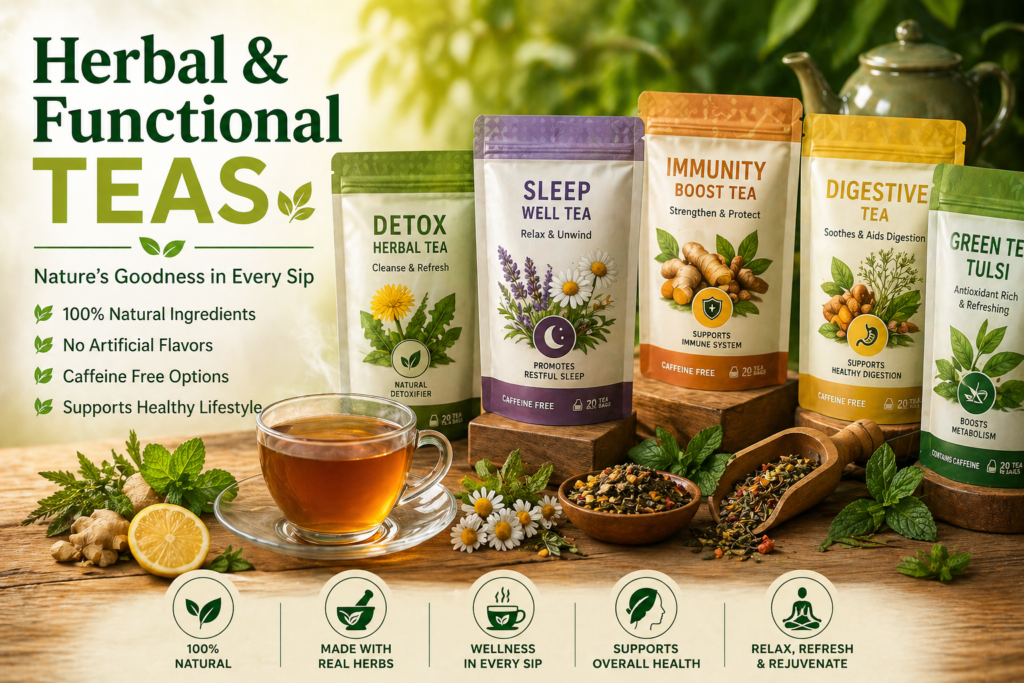
Entry barrier: Low | Competition: Low–Medium | Repeat purchase: ⭐⭐⭐⭐⭐
Market Overview
India’s herbal products market was valued at $64.8 billion in 2024 and is growing at a CAGR of 7.1%. Within it, herbal teas are the fastest-growing retail sub-category — increasingly a staple in urban Indian daily routines. Brands like Vahdam, Teabox, Blue Tea, and Chaayos have proven the market at scale, but the niche sub-segments (butterfly pea flower tea, adaptogenic blends, sleep teas, immunity kadha in tea form) are still wide open for new brands.
What’s Selling
Tulsi-ginger immunity tea, butterfly pea flower (color-changing) tea, chamomile sleep tea, peppermint digestive tea, ashwagandha-based stress relief blends, herbal kadha mixes, and curated gift sets.
Typical Pricing
| Product | Selling Price | Approximate COGS | Gross Margin |
| Herbal tea (25 bags) | ₹199 – ₹499 | ₹50 – ₹120 | 65 – 75% |
| Loose leaf herbal blend (50g) | ₹249 – ₹599 | ₹60 – ₹130 | 65 – 78% |
| Gift set (3–4 varieties) | ₹599 – ₹1,499 | ₹150 – ₹400 | 60 – 75% |
| Functional adaptogen blend | ₹349 – ₹799 | ₹80 – ₹180 | 65 – 78% |
Target Customers
- Urban women aged 25–45 focused on wellness, sleep, and self-care
- Work-from-home professionals seeking stress relief and focus
- Health-conscious consumers replacing sugary beverages
- Gift buyers (herbal tea sets are strong gifting products, especially during Diwali and New Year)
What’s Driving Growth
The shift away from sugar-loaded beverages, the rise of “wellness as a lifestyle” among millennials, and the growing interest in functional ingredients (adaptogens, nootropics, sleep aids) are fuelling category growth. The visual appeal of butterfly pea tea and colour-changing blends has made herbal teas a viral-friendly product on Instagram and YouTube.
Why This Works for New Sellers
Tea has extremely low entry barriers — you can start private-labelling with a small minimum order quantity (MOQ) from established blenders, build a strong brand story around sourcing and wellness, and test the market with an investment of ₹50,000–₹1,50,000. It is lightweight to ship (reducing courier costs), has a long shelf life (reducing wastage risk), and drives strong repeat purchases.
Seller Tip
The packaging is 50% of the product in this category. Customers buy herbal tea as much for how it looks on their kitchen shelf as for what’s inside. Invest in premium, eco-friendly packaging before you launch — it directly affects your conversion rate and return rate.
3. Organic & Clean Beauty (Skincare)
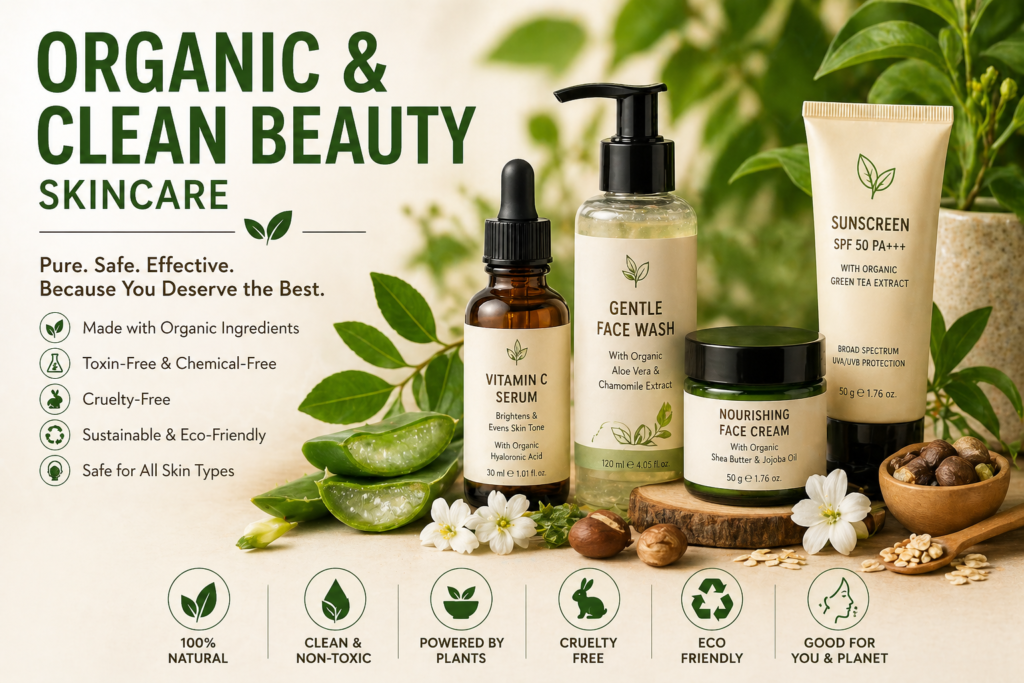
Entry barrier: Medium | Competition: Medium–High | Repeat purchase: ⭐⭐⭐⭐⭐
Market Overview
India’s D2C beauty and personal care market is massive, with the skincare segment holding a 30.5% share. The organic and clean beauty sub-segment is growing at over 10% CAGR — significantly faster than the overall market. Consumers are shifting away from products containing parabens, sulphates, and synthetic fragrances, toward formulations built on neem, turmeric, aloe vera, rosehip, and other natural actives.
The opportunity for new sellers lies not in “skincare broadly” but in hyper-specific sub-niches: skincare for Indian skin tones, Ayurvedic face oils, clean sunscreens for Indian climate, minimal ingredient baby-safe skincare, or organic men’s grooming.
What’s Selling
Vitamin C serums with natural actives, Ayurvedic face oils, clay face masks, neem-tulsi cleansers, rosehip seed oil, natural sunscreen with SPF 50, herbal hair growth oils, and clean ingredient lip care.
Typical Pricing
| Product | Selling Price | Approximate COGS | Gross Margin |
| Natural face serum (30ml) | ₹499 – ₹1,299 | ₹100 – ₹280 | 60 – 78% |
| Ayurvedic face oil (30ml) | ₹399 – ₹999 | ₹80 – ₹220 | 65 – 80% |
| Clay face mask (100g) | ₹299 – ₹699 | ₹60 – ₹150 | 65 – 78% |
| Natural sunscreen SPF 50 | ₹449 – ₹999 | ₹120 – ₹260 | 60 – 73% |
Target Customers
- Urban women aged 20–40 with high skin awareness and ingredient literacy
- Sensitive skin and acne-prone consumers avoiding harsh chemicals
- First-time skincare buyers in Tier 2 cities discovering clean beauty
- Men aged 22–35 entering the skincare routine market for the first time
Competition Reality Check
This is the most competitive niche on this list. Mamaearth, Plum, WOW Skin Science, MCaffeine, Juicy Chemistry, and dozens of other well-funded brands are fighting for the same customer. Winning here requires a very specific differentiation — not “natural skincare” broadly, but something like “Ayurvedic skincare for oily Indian skin in humid climates” or “5-ingredient minimalist skincare for sensitive skin.”
Seller Tip
If you’re entering this category, your angle must be extremely specific. Don’t launch a full skincare range — pick one hero product that solves one specific skin concern, build deep content around it (ingredient deep-dives, before/after content, dermatologist quotes), and let the product prove itself before expanding.
4. Men’s Grooming & Personal Care
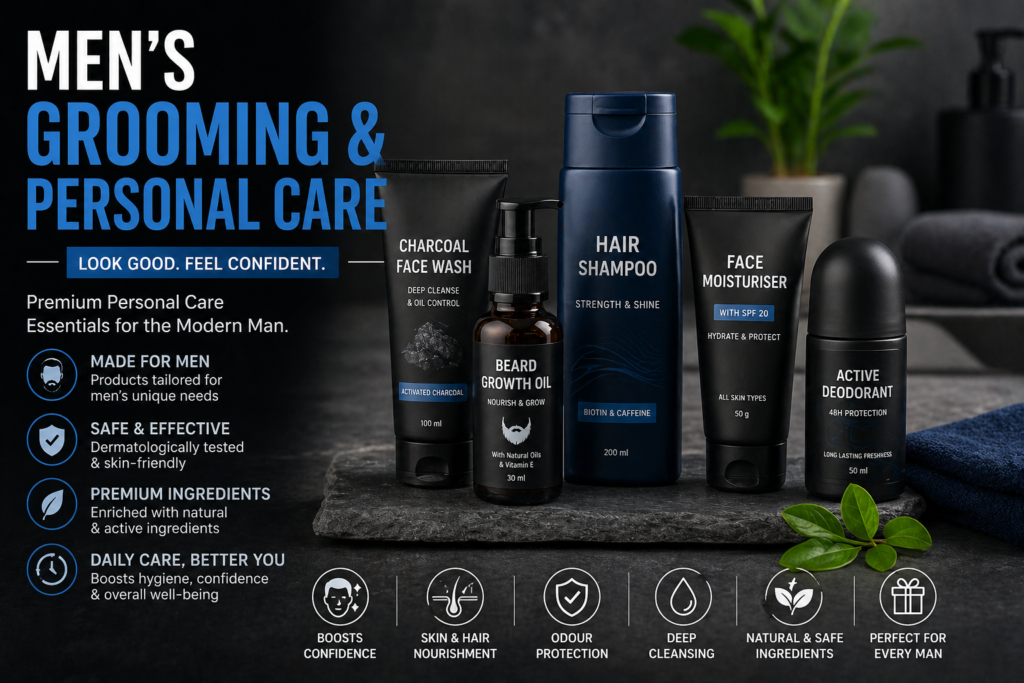
Entry barrier: Medium | Competition: Medium | Repeat purchase: ⭐⭐⭐⭐⭐
Market Overview
Men’s grooming in India is the single fastest-growing personal care sub-category, with a CAGR of 15.5%. The category started with shaving — and has now expanded into skincare, haircare, beard grooming, body care, and fragrances for men. Brands like Beardo, The Man Company, Bombay Shaving Company, and MCaffeine have validated the market at scale.
But the mid-market and regional gaps are still wide open. Most successful brands target urban, metro consumers. A brand targeting college students, blue-collar professionals, or Tier 2 men who want effective but affordable grooming products faces significantly less competition.
What’s Selling
Beard growth oil, activated charcoal face wash, anti-dandruff hair serum, clay hair styler, natural deodorant, body perfume / deo spray, under-eye cream for men, and lip balm marketed specifically to men.
Typical Pricing
| Product | Selling Price | Approximate COGS | Gross Margin |
| Beard growth oil (30ml) | ₹349 – ₹899 | ₹70 – ₹180 | 65 – 80% |
| Men’s face wash (100ml) | ₹199 – ₹499 | ₹40 – ₹100 | 65 – 80% |
| Natural deodorant | ₹249 – ₹599 | ₹60 – ₹130 | 65 – 78% |
| Hair serum for men | ₹299 – ₹699 | ₹60 – ₹150 | 65 – 78% |
Target Customers
- Men aged 18–35 in metros and Tier 2 cities becoming aware of personal grooming
- College students and young professionals seeking affordable, effective products
- Beard culture enthusiasts (a growing community in India)
- Men who buy gifts for themselves (grooming kits are a high-conversion gifting product)
What’s Driving Growth
Social media normalisation of male grooming, rising disposable incomes among young professionals, fitness culture expanding awareness of body and skin health, and influencer marketing on YouTube and Instagram reaching audiences in non-metro cities.
Seller Tip
Men’s grooming is uniquely suited to combo / kit selling. A “starter beard grooming kit” (oil + comb + wax) at ₹699 outconverts individual products in this category because it reduces decision fatigue and increases average order value in a single transaction. Plan your product line around kits from day one.
5. Eco-Friendly & Sustainable Products
Entry barrier: Low–Medium | Competition: Low–Medium | Repeat purchase: ⭐⭐⭐⭐
Market Overview
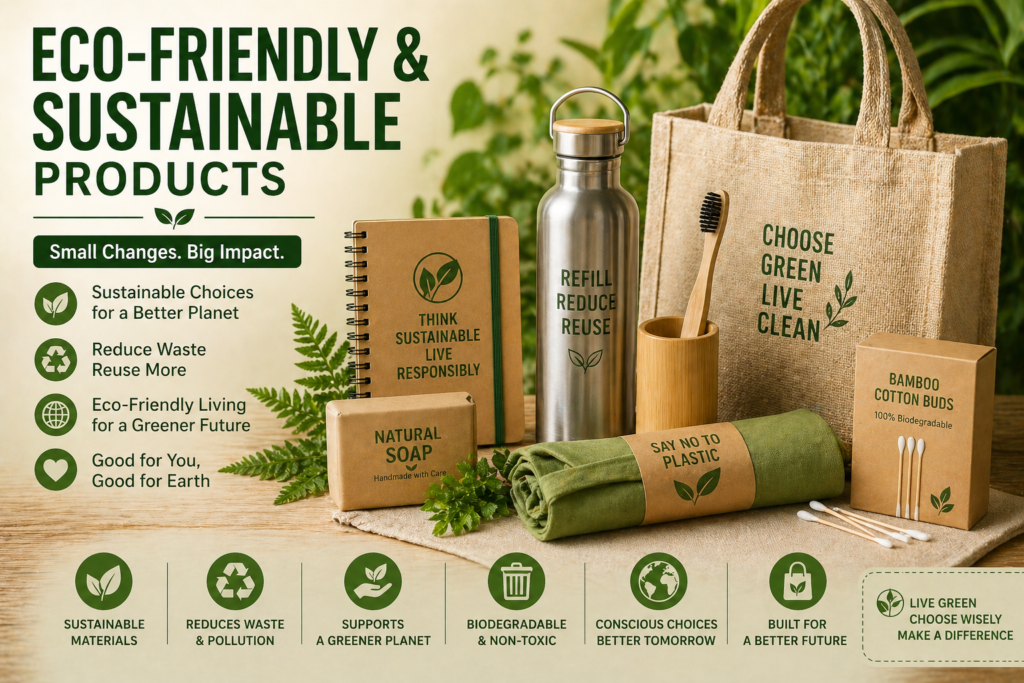
India’s sustainable consumer products market is early-stage but accelerating, driven by Gen Z and millennial buyers who actively seek out alternatives to plastic and chemical-heavy products. Key sub-categories include bamboo-based products, biodegradable packaging, reusable household items, natural cleaning products, and zero-waste personal care.
Brands like Bambooloo (bamboo toothbrushes), The Organic World and Saathi (biodegradable sanitary napkins) have shown this market is real and growing. The key insight: eco-friendly products command a premium — buyers in this category are less price-sensitive than the general consumer.
What’s Selling
Bamboo toothbrushes, reusable beeswax food wraps, stainless steel water bottles and tiffins, natural cleaning concentrates (replacing plastic-bottled cleaners), compostable garbage bags, seed paper stationery, organic cotton produce bags, and bamboo kitchen utensil sets.
Typical Pricing
| Product | Selling Price | Approximate COGS | Gross Margin |
| Bamboo toothbrush (4-pack) | ₹249 – ₹499 | ₹60 – ₹110 | 65 – 78% |
| Beeswax food wraps (3-pack) | ₹399 – ₹799 | ₹100 – ₹200 | 60 – 75% |
| Natural cleaning concentrate | ₹299 – ₹599 | ₹60 – ₹130 | 65 – 78% |
| Compostable garbage bags | ₹199 – ₹349 | ₹50 – ₹90 | 65 – 75% |
Target Customers
- Urban millennials and Gen Z (ages 20–35) with environmental awareness
- Young parents seeking chemical-free alternatives for their household
- Corporate gifting buyers seeking sustainable gift options
- Schools, offices, and institutions with sustainability initiatives
What’s Driving Growth
Growing awareness of plastic pollution, social media content around zero-waste living, government restrictions on single-use plastics, and a generation of buyers who actively check whether brands align with their values.
Seller Tip
Story and mission sell in this category as much as the product itself. Your brand’s “why” — where you source materials, how much plastic you’re preventing, your own sustainability practices — should be prominent on your website, packaging, and social content. Buyers in this niche are highly engaged and vocal on social media, making word-of-mouth a powerful (and free) acquisition channel.
6. Functional & Healthy Snacks
Entry barrier: Medium | Competition: Low–Medium | Repeat purchase: ⭐⭐⭐⭐⭐
Market Overview
Food and beverages is structurally the best D2C category for one reason: repeat purchases are built into the product. Customers eat their products. They need more. The India nutraceutical market is valued at $38.77 billion in 2025, growing rapidly. Within food, the functional snack sub-category — snacks that taste good AND deliver a health benefit — is the fastest-growing segment.
Brands like GO DESi (desi snacks with clean ingredients), Yoga Bar (protein bars), and Slurrp Farm (healthy kids food) have demonstrated significant D2C scale. But hyper-regional flavours, gut health snacks, high-protein Indian-flavoured options, and low-sugar sweets are still significantly underserved.
What’s Selling
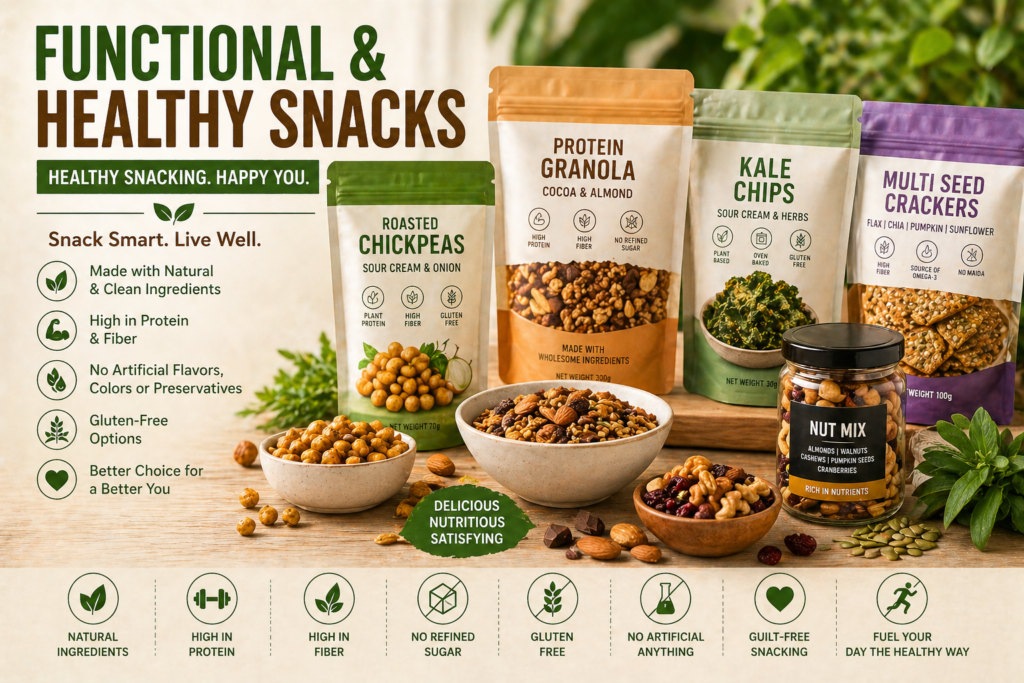
Roasted makhana (fox nuts) in flavoured variants, multigrain chikki, ragi cookies, protein-fortified laddoos, millet-based namkeen, low-sugar dark chocolate with Indian spices, dried fruit and nut mixes, and seed-based energy bars.
Typical Pricing
| Product | Selling Price | Approximate COGS | Gross Margin |
| Flavoured makhana (100g) | ₹149 – ₹349 | ₹40 – ₹90 | 60 – 73% |
| Protein laddoo (6-pack) | ₹299 – ₹699 | ₹80 – ₹180 | 60 – 73% |
| Multigrain energy bar | ₹35 – ₹99 each | ₹10 – ₹25 | 65 – 75% |
| Millet namkeen (150g) | ₹129 – ₹299 | ₹35 – ₹80 | 65 – 73% |
Target Customers
- Health-conscious urban consumers aged 25–45 replacing junk snacks
- Parents seeking nutritious school tiffin alternatives for children
- Fitness community looking for clean, high-protein Indian-flavoured snacks
- Corporate office buyers for healthy desk snacks
What’s Driving Growth
Growing rejection of maida, refined sugar, and artificial preservatives among educated urban consumers, combined with a preference for Indian flavours and ingredients over imported protein bars. Makhana, millet, and ragi are seeing demand growth of 20–30% year-on-year.
Key Regulatory Note
FSSAI registration is mandatory for food products in India, even for home-based food businesses above a certain scale. Apply for your FSSAI license early — it takes 7–30 days and is a prerequisite for selling on Amazon, Flipkart, and most courier aggregator platforms for food shipments.
Seller Tip
Subscription boxes and monthly snack hampers dramatically increase customer lifetime value in this category. A customer who buys once might spend ₹350. The same customer on a monthly subscription spends ₹350 × 12 = ₹4,200 per year — with nearly zero incremental acquisition cost. Design your product line with a subscription model in mind from day one.
7. Pet Care Products
Entry barrier: Low–Medium | Competition: Low | Repeat purchase: ⭐⭐⭐⭐⭐
Market Overview
India’s pet care market is projected to double from $3.5 billion to $7 billion by 2028, with pet ownership rising from 26 million to 32 million between 2019 and 2024. The D2C pet food sector alone has 60+ active startups in India, but the non-food accessories and grooming sub-category remains dramatically underserved.
Pet parents in India are increasingly treating pets as family members — spending on premium food, grooming, accessories, healthcare, and experiences. The emotional nature of this buying relationship means premium pricing is accepted and return rates are lower than almost any other category.
What’s Selling
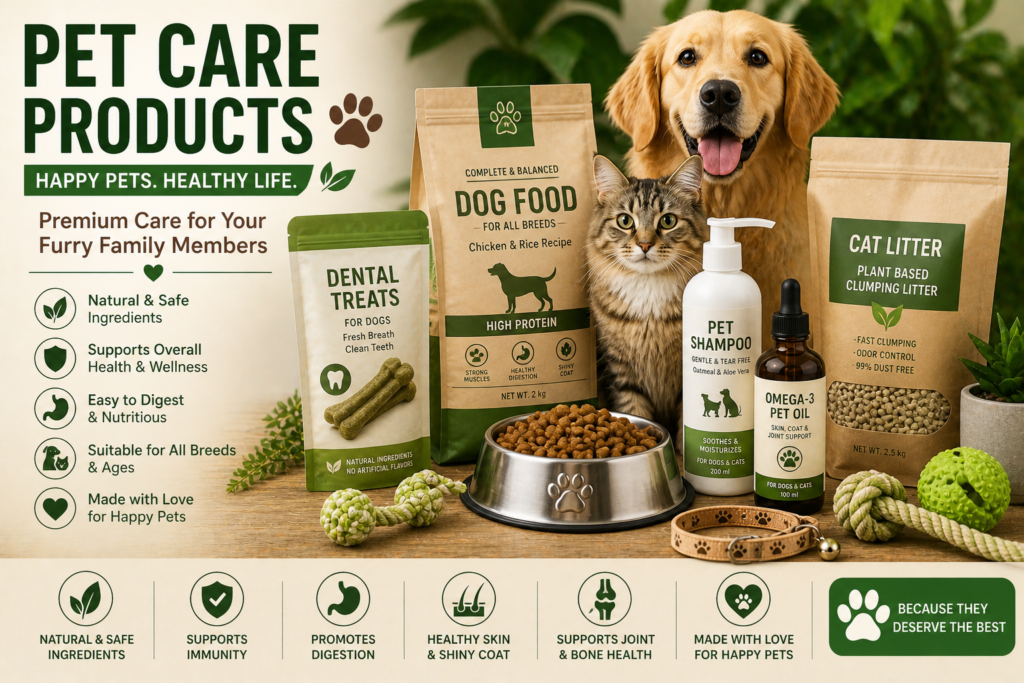
Natural pet treats (Himalayan cheese chews, freeze-dried meat treats), grain-free pet food, pet grooming kits, organic pet shampoo, pet supplements (joint care, omega oils, probiotics), personalised pet accessories (collars, ID tags, bandanas), and calming aids for anxious pets.
Typical Pricing
| Product | Selling Price | Approximate COGS | Gross Margin |
| Natural dog treats (100g) | ₹199 – ₹499 | ₹50 – ₹120 | 60 – 75% |
| Pet grooming kit | ₹399 – ₹999 | ₹100 – ₹250 | 60 – 75% |
| Organic pet shampoo | ₹299 – ₹699 | ₹70 – ₹160 | 65 – 78% |
| Pet supplement (omega oil) | ₹349 – ₹799 | ₹80 – ₹200 | 60 – 75% |
Target Customers
- Urban pet parents aged 25–40 in metros and Tier 1 cities
- First-time dog and cat owners (a growing demographic post-pandemic)
- Premium pet parents who already spend on veterinary care and premium food
- Pet community members active in Facebook groups, Reddit, and Instagram
Seller Tip
Pet parents are among the most research-driven buyers in any D2C category. They read ingredient labels. They check for certifications. They trust community recommendations over ads. This means content marketing — educational Instagram posts, YouTube videos about pet nutrition, honest ingredient transparency — is more effective than paid advertising in this category. Build community first.
8. Home Organisation & Storage Products
Entry barrier: Low | Competition: Low–Medium | Repeat purchase: ⭐⭐⭐
Market Overview
India’s home and kitchen products market is growing rapidly, fuelled by a generation of first-time home buyers and renters in their 20s and 30s who want stylish, functional spaces. The “home organisation” trend — popularised globally by Marie Kondo and locally by home tour content on Instagram and YouTube — has created strong demand for storage and organisation products that look good, not just work well.
This is a high-volume, moderate-margin category with a strong discovery-to-purchase pathway on visual platforms like Instagram and Pinterest.
What’s Selling
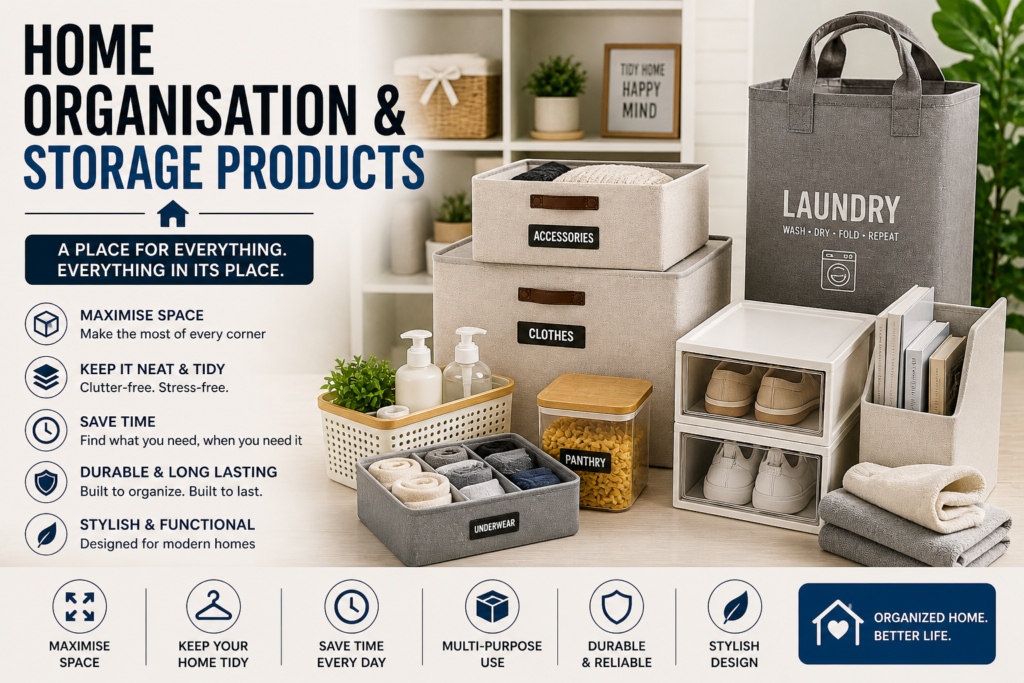
Modular drawer organisers, wardrobe dividers, under-bed storage boxes, spice rack organisers, cable management systems, pegboard wall organisers, bamboo kitchen storage canisters, refrigerator organiser sets, and bathroom shelf systems.
Typical Pricing
| Product | Selling Price | Approximate COGS | Gross Margin |
| Wardrobe organiser set | ₹499 – ₹1,299 | ₹150 – ₹350 | 55 – 70% |
| Spice rack organiser | ₹299 – ₹699 | ₹80 – ₹180 | 60 – 74% |
| Under-bed storage box | ₹399 – ₹999 | ₹100 – ₹250 | 60 – 75% |
| Refrigerator organiser set | ₹349 – ₹799 | ₹80 – ₹200 | 60 – 75% |
Target Customers
- Urban renters and homeowners aged 22–38 setting up their first independent home
- New brides and newly married couples setting up households
- Parents organising children’s rooms and study spaces
- Work-from-home professionals organising their home offices
Why Low Competition?
Most organised home products in India are imported from China and sold generically without brand identity or quality differentiation. A brand that focuses on a specific room (e.g., “kitchen organisation specialists”) with consistent aesthetics, quality materials, and content-driven marketing faces very little direct competition at the branded level.
Seller Tip Bundle and set selling is essential in this category. A single under-bed box priced at ₹399 is hard to build a business around. A “Complete Bedroom Organisation Kit” priced at ₹1,499 with 5–6 products bundled together has a higher average order value, lower per-unit shipping cost, and a stronger perceived value proposition.
9. Stationery & Journalling Products
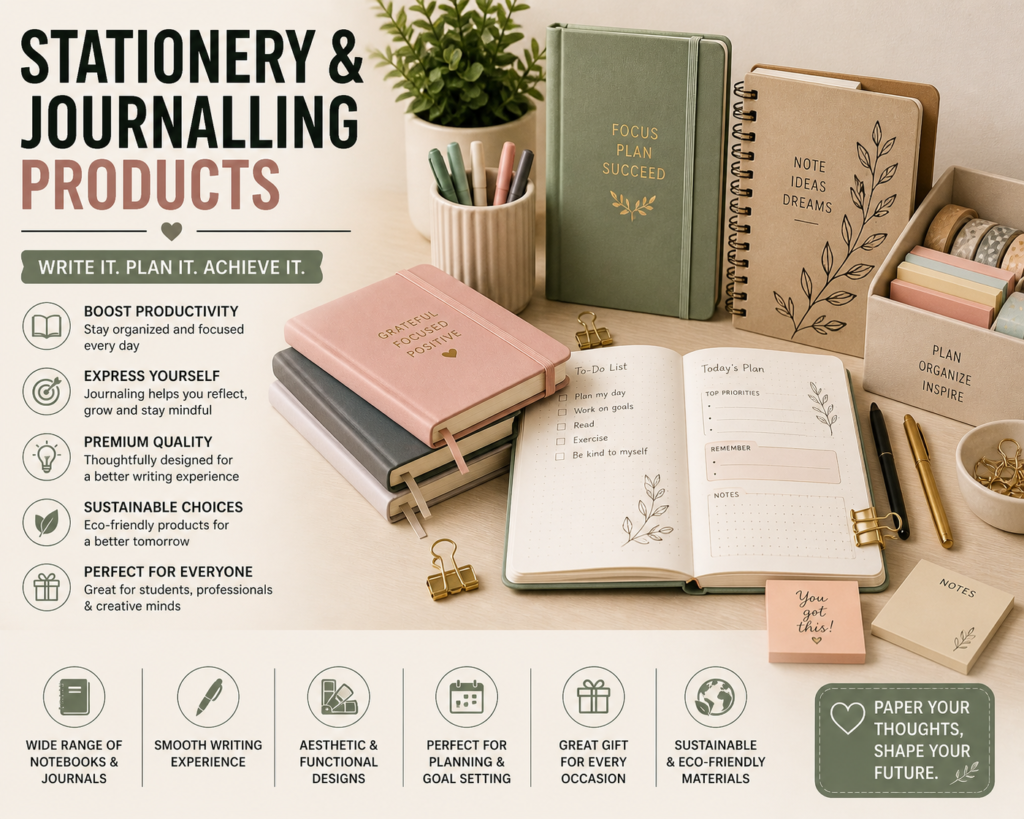
Entry barrier: Low | Competition: Low | Repeat purchase: ⭐⭐⭐⭐
Market Overview
Stationery is quietly having a renaissance in India. Driven by the journalling trend on social media (bullet journalling, gratitude journalling, aesthetic desk setups), a growing community of students, creative professionals, and wellness-focused millennials is spending significantly more on premium notebooks, pens, stickers, washi tape, and organisation tools than previous generations.
This is a niche with extremely low competition at the branded level, strong community engagement, and a passionate buyer base that spends repeatedly and shares their purchases online.
What’s Selling
Hardbound dot-grid journals, clear acrylic desk organisers, washi tape sets, aesthetic planner stickers, brush pens and calligraphy sets, personalised name journals, Hobonichi-style planners adapted for Indian academic calendars, and Kindle / tablet stands for study setups.
Typical Pricing
| Product | Selling Price | Approximate COGS | Gross Margin |
| Dot-grid hardbound journal | ₹299 – ₹799 | ₹70 – ₹180 | 60 – 77% |
| Washi tape set (10 rolls) | ₹199 – ₹499 | ₹50 – ₹120 | 60 – 75% |
| Brush pen set (12 colours) | ₹399 – ₹999 | ₹100 – ₹250 | 60 – 75% |
| Academic planner (annual) | ₹499 – ₹1,299 | ₹120 – ₹320 | 60 – 76% |
Target Customers
- Students and college-goers aged 16–24 inspired by study-with-me YouTube and Instagram content
- Working professionals aged 24–35 interested in productivity and journalling
- Artists and creative professionals with aesthetic desk setup interests
- Gifting buyers looking for thoughtful, affordable gifts for students
Why This Is Underrated
Stationery has no FSSAI compliance requirements, no cold chain challenges, and no fragility issues for most products. It ships cheaply in poly mailers or padded envelopes, returns are rare, and the community is highly active on social media. For a new seller with a limited budget, stationery is one of the lowest-risk categories to test a brand.
Seller Tip
The journalling community on Instagram is tightly knit and loves finding and sharing new brands. Sending free samples to 20–30 stationery influencers (“studygram” accounts with 5K–50K followers) can generate significant organic reach for a fraction of the cost of paid advertising.
10. Baby & Toddler Niche Products
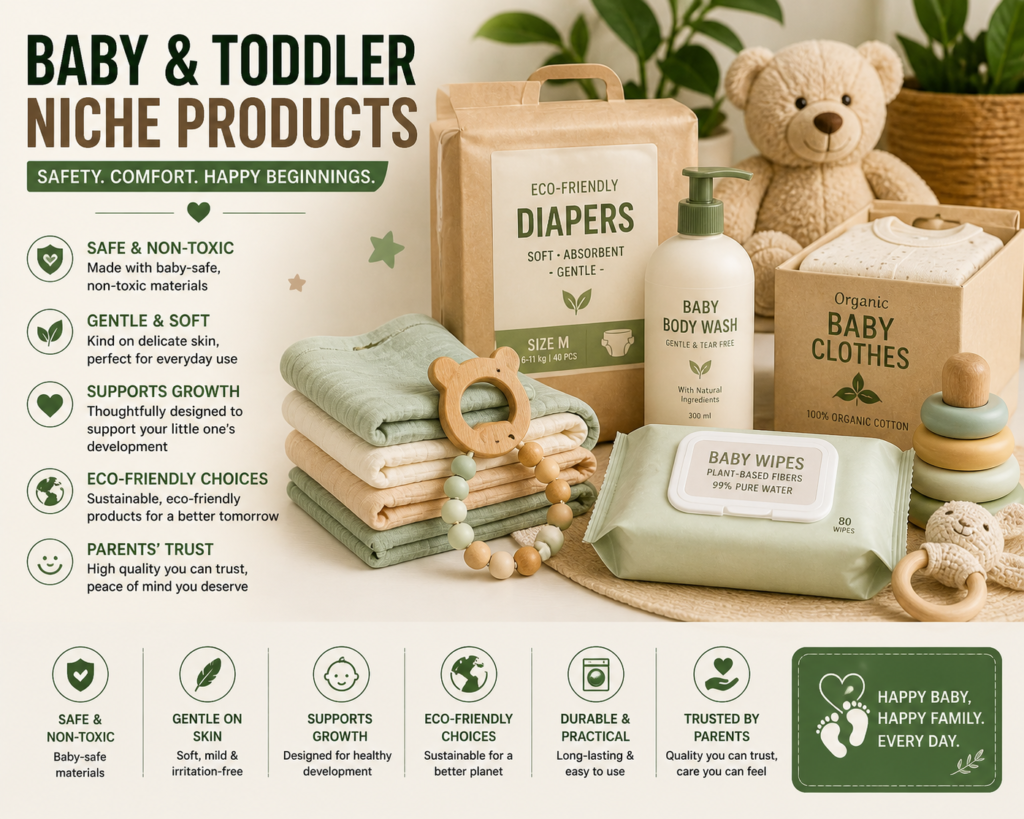
Entry barrier: Medium | Competition: Low–Medium | Repeat purchase: ⭐⭐⭐⭐⭐
Market Overview
India’s baby care products market was valued at $12.73 billion in 2022 and is expected to grow at a CAGR of 17.25% to reach $38.51 billion by 2029. But most of this market is dominated by a few large players (Himalaya, Sebamed, Johnson’s) in the broad categories of diapers, baby wash, and powder. The niche opportunity lies in the premium, organic, and safety-focused sub-segments that large brands have been slow to serve.
Young millennial parents are the most research-driven buyers in any category. They read every ingredient label. They trust other parents’ recommendations above all advertising. And they will pay a significant premium for products they believe are genuinely safe for their child.
What’s Selling
Organic cotton baby clothing sets, toxin-free baby skincare (wash, lotion, oil), wooden and silicone sensory toys, BPA-free feeding accessories (plates, spoons, sippy cups), muslin swaddle blankets, baby food makers and storage sets, and Montessori-inspired learning toys.
Typical Pricing
| Product | Selling Price | Approximate COGS | Gross Margin |
| Organic cotton onesie set | ₹599 – ₹1,499 | ₹150 – ₹380 | 60 – 75% |
| Toxin-free baby wash (200ml) | ₹299 – ₹699 | ₹70 – ₹170 | 60 – 77% |
| Silicone feeding set | ₹499 – ₹1,299 | ₹130 – ₹320 | 60 – 75% |
| Muslin swaddle set (3-pack) | ₹699 – ₹1,499 | ₹180 – ₹380 | 60 – 75% |
Target Customers
- New parents aged 25–38 in urban and Tier 1 markets
- Gifting buyers for baby showers, naming ceremonies, and first birthdays
- Health-conscious parents who research ingredients and prefer natural alternatives
- Parents of toddlers (1–3 years) seeking developmental toys and feeding accessories
What’s Driving Growth
Millennial parents are having children later and spending significantly more per child than previous generations. The organic and toxin-free sub-segment is growing at 20%+ CAGR, fuelled by awareness of chemicals in conventional baby products and a cultural shift toward premium childcare.
Seller Tip
Trust signals are everything in baby products. Invest early in getting relevant certifications (OEKO-TEX for fabrics, BPA-free certification for plastics, FSSAI for baby food), displaying them prominently, and building a review base from real parents. A brand with 500 verified reviews from happy parents will outconverts a brand spending 10x more on advertising.
Quick Comparison: All 10 Niches at a Glance
| Niche | Market CAGR | Avg. Gross Margin | Entry Barrier | Competition | Repeat Purchase |
| Ayurvedic Supplements | 15.52% | 60–75% | Medium | Medium | ⭐⭐⭐⭐⭐ |
| Herbal & Functional Teas | 7.1% (herbal) | 65–78% | Low | Low–Medium | ⭐⭐⭐⭐⭐ |
| Organic Skincare | 10%+ | 60–78% | Medium | Medium–High | ⭐⭐⭐⭐⭐ |
| Men’s Grooming | 15.5% | 65–80% | Medium | Medium | ⭐⭐⭐⭐⭐ |
| Eco-Friendly Products | Growing | 60–78% | Low–Medium | Low–Medium | ⭐⭐⭐⭐ |
| Functional Snacks | 20%+ (segment) | 60–75% | Medium | Low–Medium | ⭐⭐⭐⭐⭐ |
| Pet Care | 25–30% | 60–78% | Low–Medium | Low | ⭐⭐⭐⭐⭐ |
| Home Organisation | Growing | 55–75% | Low | Low–Medium | ⭐⭐⭐ |
| Stationery & Journalling | Growing | 60–77% | Low | Low | ⭐⭐⭐⭐ |
| Baby & Toddler (organic) | 17.25% | 60–77% | Medium | Low–Medium | ⭐⭐⭐⭐⭐ |
How to Validate Your Niche Before Investing
Before you spend money on inventory, validate demand with these four steps:
Step 1 — Search volume check: Enter your product keyword on Google Keyword Planner or Semrush. If a keyword gets 1,000+ monthly searches in India with a KD (keyword difficulty) below 30, there’s real organic demand without impossible competition.
Step 2 — Amazon and Flipkart scan: Search your product on Amazon.in. If you find 5–20 products with 50–200 reviews each (not 5,000 reviews), the category has demand but isn’t yet dominated. That’s your window.
Step 3 — Social media listening: Search your product niche on Instagram and YouTube. Are creators making content about it? Are they getting engagement? Content volume is a leading indicator of consumer interest.
Step 4 — Small-batch test: Before ordering bulk inventory, start with a minimum viable batch — 50 to 100 units. Sell them through Instagram, WhatsApp, or a basic website. Real purchase data is worth more than any research tool.
Before You Start Selling: Get Your Shipping Right
One of the most overlooked costs for new e-commerce sellers in India is shipping. Most new sellers either overpay (by sticking with a single courier) or underprice their shipping in their product listings — and lose margin on every order.
Here’s the quick framework for new sellers:
- Calculate the chargeable weight of your product (actual weight vs. volumetric weight — use whichever is higher)
- Use a courier aggregator to compare rates across multiple couriers before booking, rather than committing to one provider
- Factor RTO (Return to Origin) cost into your margin calculation — for COD-heavy categories, RTO rates of 20–35% mean you need to price with this buffer built in
- For fragile or liquid products, add ₹20–₹50 to your packaging cost estimate to cover proper protective packaging
ShipEasy is a courier aggregator built for exactly this stage of your business. Compare rates from 15+ courier partners — Amazon, Delhivery, XpressBees, Ekart and more — with a single search. No minimum volume, no long-term contract. Just smarter shipping from your first order.
👉 Start comparing shipping rates free on ShipEasy → shipeasy.tech
Frequently Asked Questions
Which niche product is best for a beginner e-commerce seller in India in 2026?
Herbal teas, stationery, and eco-friendly products offer the lowest entry barriers — low MOQ, no regulatory complexity (except FSSAI for food), easy to ship, and strong demand from engaged online communities. Pet care and men’s grooming are also strong options with low competition relative to their growth rates.
How much investment do I need to start a niche product business in India?
Most of the categories in this guide can be started with ₹30,000–₹1,50,000 for a small initial inventory run, basic packaging, and an Instagram or Shopify presence. Food and supplement categories require FSSAI registration (₹100–₹7,500 depending on scale). Keep your first batch small and validate demand before scaling.
Do I need a GST number to sell online in India?
If your annual turnover exceeds ₹20 lakhs (₹10 lakhs in some states), GST registration is mandatory. Most e-commerce platforms (Amazon, Flipkart) require GST registration regardless of turnover. If you’re starting out, register early — it avoids complications later.
Which platforms should I sell niche products on in India?
Start with Amazon.in and your own Instagram page simultaneously. Amazon provides demand discovery and trust; Instagram builds community and brand identity. As you scale, add Flipkart, your own Shopify/WooCommerce website, and WhatsApp commerce for repeat customers.
How do I handle returns and RTO as a new seller?
For COD orders, always confirm the order via WhatsApp before shipping. Use a courier aggregator that provides NDR (Non-Delivery Report) management — this lets you act on failed delivery attempts before they become full RTOs. For fragile or liquid products, invest in proper packaging — damaged products generate returns that are entirely preventable.
Market data in this article is sourced from publicly available industry reports as of April 2026. Pricing and margin estimates are indicative and vary based on sourcing, branding, and operational scale. Always validate your specific product and market before making investment decisions.