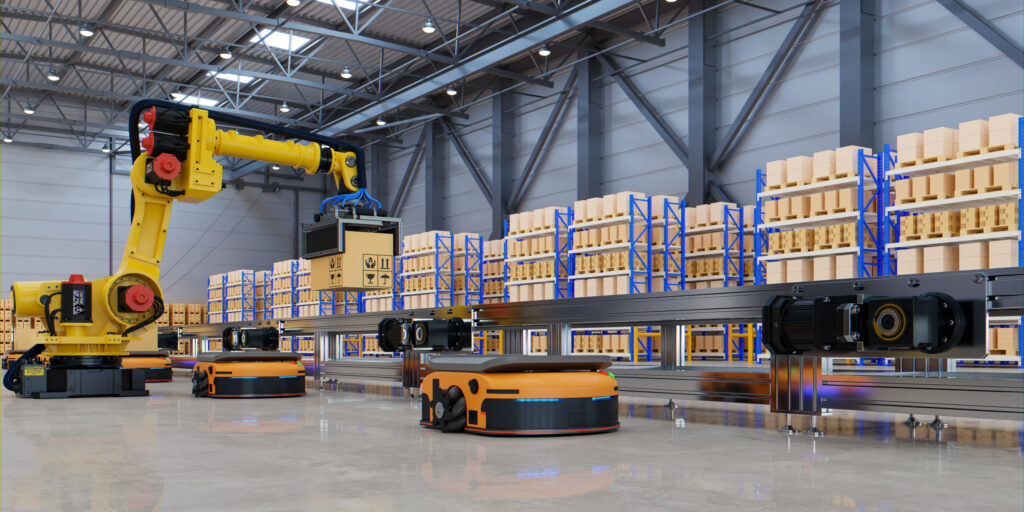
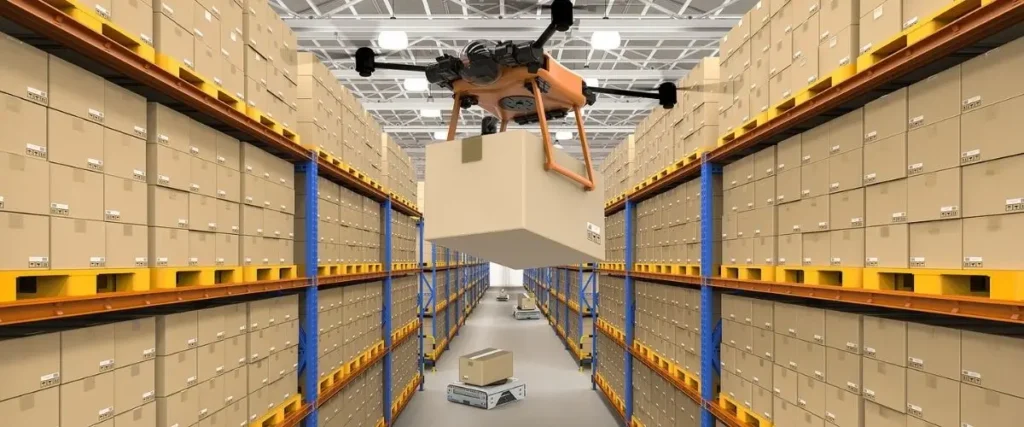
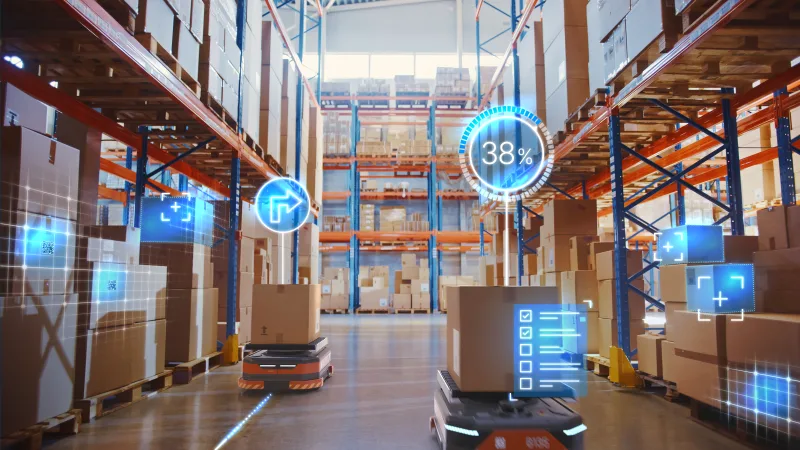
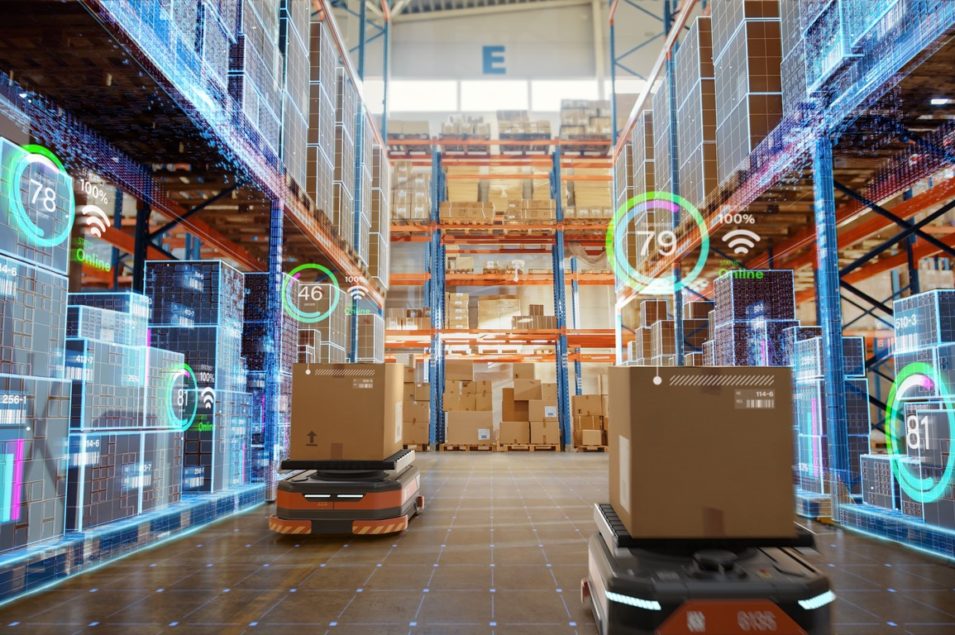
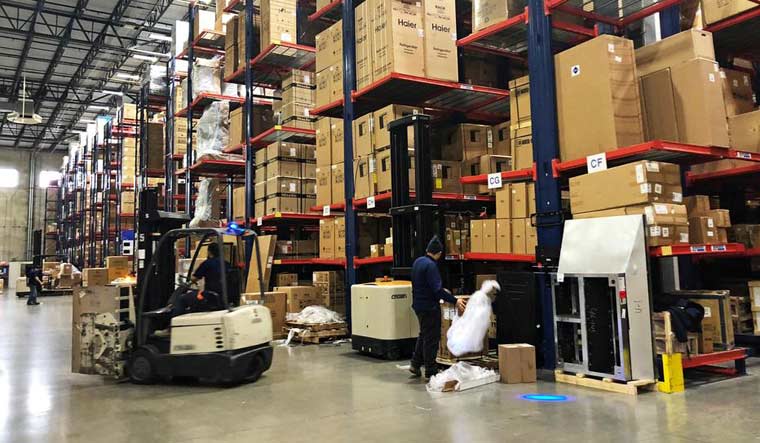
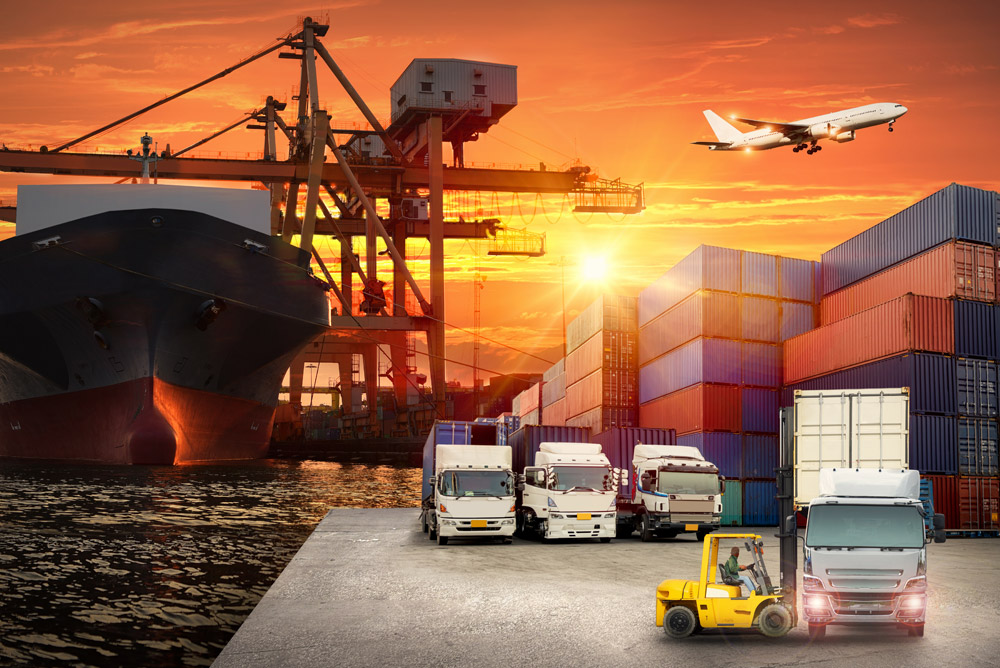
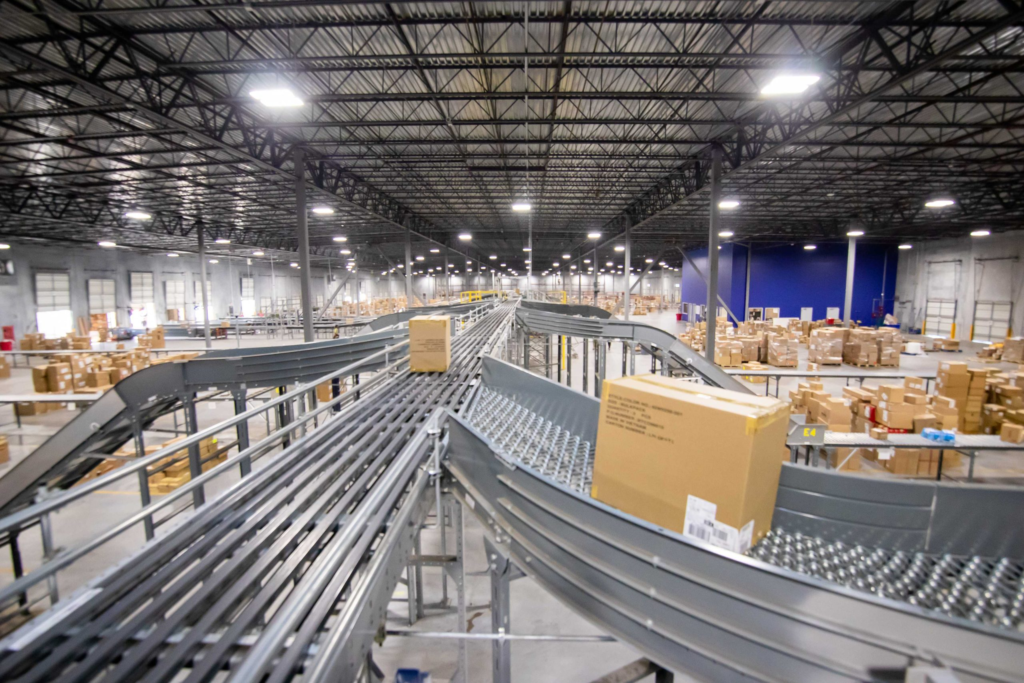
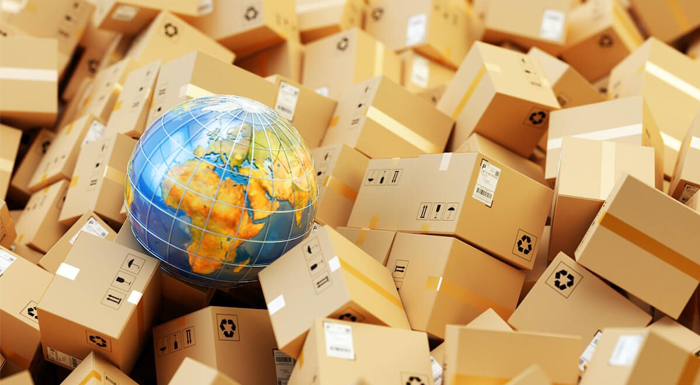
Shipping time is an important consideration for both consumer happiness and corporate efficiency in the quick world of e-commerce and logistics. Bulk order processing is one of the best strategies to increase shipment speed and optimize operations. Businesses can cut shipping times in half, save operating expenses, and increase overall productivity by managing several orders at once instead of processing them one at a time.
This article will discuss the advantages of processing bulk orders, how it operates, and how companies may use it to ship more quickly and effectively.
Table of Contents
What Is Bulk Order Processing?
Managing and completing several orders at once compared to finishing one at a time is known as bulk order processing. Manufacturers, logistics companies, and e-commerce companies that handle large shipping volumes would find this procedure of special benefit.
Key aspects of bulk order processing include:
Bulk shipment: Collection, packaging, and shipping several orders at one time.
Automated order placing: Finding orders for quick processing that have identical shipping options, destinations, or products.
Integrated software solutions: Improving bulk order handling through automation and artificial intelligence.
Businesses can significantly minimize the amount of time spent on each order by utilizing bulk order processing, which will decrease delays and boost productivity.
The Challenges of Traditional Order Processing
Companies that process individual orders manually deal with a number of mistakes:
1. Time-Consuming Processes
Delivery is slowed down by picking, packaging, and labeling each order individually.
Moving between storage facilities takes up additional time for warehouse staff.
Higher chance of blockages, particularly at busy times of the year.
2. Higher Labor Costs
Order processing requires extra staff members.
Higher overtime costs when sales are at their highest levels.
3. Increased Risk of Errors
Packing and shipping errors are more likely when every purchase is handled manually.
Returns, refunds, and unhappy customers are the results of human error.
4. Slower Shipping Times
Delivery delays have an impact on consumer demands.
Delivery delays brought on by ineffective processing might harm a company’s reputation.
Bulk order processing addresses these challenges by introducing automation, efficiency, and strategic batching techniques.
How Bulk Order Processing Reduces Shipping Time
1. Streamlined Picking and Packing
Requiring making separate journeys, warehouse employees can pick up many goods for various orders in a single run when bulk order processing is used.
Batch picking: Employees select products for several orders at once.
Zone picking: Employees only select goods inside a specified area before handing the order off to another group to finish.
Wave picking: Wave picking is the process of grouping orders according to criteria like product category or delivery time.
These methods help reduce the total time spent on order fulfillment, improving efficiency.
2. Automated Labeling and Documentation
Delivery may be slowed significantly if shipping labels and invoices are printed separately. Bulk processing assists companies to:
Create shipping labels in bulk and print them off.
Create and print packaging documents and invoices automatically.
For quicker order tracking and verification, use barcode scanning.
This automation significantly speeds up the shipping process.
3. Faster Order Sorting and Shipping Carrier Coordination
Bulk processing enables businesses to group orders by:
shipping option (overnight, quicker, or regular).
Destination (orders are transported together to the same region).
Product type (collections of parcels of similar sizes can be packaged and dispatched).
Businesses can reduce delays and improve shipping logistics by carefully arranging orders.
4. Reduction in Manual Labor
Employees can concentrate on more strategic duties when bulk order processing is automated, which eliminates the need for manual entry.
Warehouse management systems (WMS) powered by AI aid in order processing optimization.
Delivery is accelerated by automated packaging stations and conveyor belts.
Real-time shipping updates are ensured by integration with carriers.
Key Benefits of Bulk Order Processing
1. Faster Shipping and Delivery
Businesses may complete more orders in less time and guarantee faster deliveries by cutting down on the processing time for each order.
2. Cost Savings on Labor and Operations
less time needed for order processing.
decreased demand for more warehouse workers during busy times.
reduced shipping expenses as a result of carriers’ bulk discounts.
3. Improved Order Accuracy
Picking, packing, and labeling errors are decreased through automation.
Selecting methods driven by AI improves order processing.
3. Blockchain for Transparent Order Tracking
Businesses can now trace large shipments in real-time thanks to blockchain technology, which improves supply chain security.
4. Drone and Autonomous Vehicle Deliveries
Drone deliveries and bulk processing have the potential to completely transform last-mile logistics and greatly reduce shipment times.
Conclusion
For companies trying to improve their logistical operations, bulk order processing is innovative. Businesses can cut shipping times in half, save money, and improve customer satisfaction by utilizing automation, batch processing, and smart shipping strategies.
Using bulk order processing can provide you with a competitive advantage and guarantee quicker, more effective delivery, regardless of your size.
Customers need streamlined, quick, and dependable delivery services in the fast-paced world of e-commerce today. Businesses must provide excellent shipping service to keep ahead of the competition, which is increasing at a rate that is explosive. The ability to process, ship, and deliver orders 24×7 is one of the most important components of this, as it maximizes both customer pleasure and operational efficiency.
This article will discuss the importance of 24×7 shipping support for e-commerce success, its advantages for both consumers and businesses, and how organizations can successfully implement it.
Table of Contents
The Growing Demand for 24×7 Shipping Support in E-commerce success
1. Changing Customer Expectations
Consumers of today have grown use to rapid satisfaction. Customers demand immediate delivery of orders and real-time updates because businesses like Shipeasy are setting the standard for lightning-fast deliveries.
Delivery the same day or the next day is now expected and not a luxury.
No matter the time zone they are in, customers want real-time support and monitoring updates.
Shipping delays can result in irate customers, bad reviews, and a decline in their loyalty.
2. Global Reach and Time Zone Differences
E-commerce is a global business that serves clients in many time zones. Therefore, regular business hours are no longer acceptable.
Even if the warehouse is located in Asia or Europe, a customer placing an overnight order from the US wants their order to be handled right away.
Providing round-the-clock shipping assistance guarantees that companies can swiftly serve global markets.
3. Holiday and Peak Season Demands
During seasonal shopping seasons like Black Friday, Cyber Monday, and festive periods, e-commerce enterprises notice a surge in orders. Without 24-hour shipping assistance, companies run the risk of delayed deliveries and unhappy clients.
Orders placed at the last minute must be processed immediately.
Companies must guarantee continuous processing of orders in order to stay profitable.
Benefits of 24×7 Shipping Support for E-commerce Businesses
1. Increased Customer Satisfaction
Speed and dependability are important to customers when they shop online. No matter the time of day, a shipping support system that is available 24×7 guarantees that their needs are satisfied.
Consumers get their purchases more quickly.
Transparency is increased through improved order monitoring and real-time support.
Fewer headaches as a result of delay in delivery.
2. Competitive Advantage Over Rivals
The e-commerce sector is extremely competitive. Companies who provide round-the-clock shipping assistance have an advantage over companies that simply work during regular business hours.
A better customer experience is produced by quicker deliveries.
Companies are able to serve a larger market, including global markets.
Brands that emphasize effectiveness and usability are preferred by more consumers.
For online retailers, shop abandonment is a major problem. Slow shipment times are one of the main causes of this.
Customers are encouraged to finish orders when real-time shipment information are provided.
When customers notice choices for immediate achievement, they are more likely to complete their order.
Customer service is available around the clock to assist with last-minute shipping issues and avoid cart abandonment.
4. Maximized Sales and Revenue
Higher sales volumes are produced by companies that run around 24/7. Continuous income generation is made possible by 24×7 shipping support, as opposed to restricting order processing to certain hours.
Orders can be placed at any time by foreign and late-night shoppers.
Companies can grow their clientele and benefit from international marketplaces.
Quicker delivery promotes recurring business and develops durable client loyalty.
Reducing waiting through continuous order processing.
Improved replacement and stock management based on current demand.
Automated fulfillment systems lead to more effective warehouse operations.
How to Implement 24×7 Shipping Support in Your E-commerce Business
1. Partnering with Reliable 24×7 Logistics Providers
For continuous shipping assistance, selecting the correct logistics partner is important. Seek out suppliers who provide:
24-hour warehouse operations
Capabilities for international shipping
Route optimization driven by AI for quicker delivery
Tracking and assistance services in real time
2. Automation and AI-powered fulfillment Centers
The secret to efficiently managing continual shipping support is automation. Investment in:
Order management systems powered by AI for quicker processing.
Automatic warehouse robots for faster delivery and packaging.
To avoid stock shortages, use intelligent tracking of stocks.
3. Providing Round-the-Clock Customer Support
Real-time resolution of shipping-related customer problems is required. Put into practice:
Chatbot and live chat service for immediate shipping help.
Call centers open 24/7 to answer questions about deliveries.
Timely email and SMS order status updates.
4. Real-Time Tracking and Transparency
Customers value transparency in shipping. Offer:
GPS-enabled tracking to follow the status of orders.
Automated alerts for each shipment phase.
Predictive delivery updates driven by AI to control requirements.
5. Multiple Shipping Options and Flexibility
Allow clients to select the shipping option that best matches their needs:
For urgent orders, quick shipping is available.
Standard shipping for customers on a budget.
For ultimate functionality, same-day and overnight alternatives are available.
6. Leveraging Data Analytics for Shipping Optimization
Analyze shipping data to improve efficiency:
Determine the busiest shipping times and adjust employees levels accordingly.
Utilize insights from AI to forecast changes in demand.
Use dynamic pricing techniques according to the pace of delivery.
Challenges of 24×7 Shipping Support and How to Overcome Them
1. Higher Operational Costs
Additional structures employees, and resources are needed to run a logistics business 24/7. To cut expenses:
Reduce manual labor by automating warehouse processes.
Discuss shipping costs in bulk with logistics companies.
Utilize logistics technologies driven by AI to optimize delivery routes.
2. Workforce Management
It can be difficult to guarantee that employees are available at all times. Among the solutions are:
Putting in place shift-based staffing to provide ongoing coverage.
Providing rewards for working nights in order to increase output.
Using chatbots driven by AI to answer common questions.
3. Inventory Stockouts and Supply Chain Disruptions
Advance planning is necessary to manage the stock for continuous shipping:
To avoid shortages, use continuous stock tracking.
Use predictive analytics for predicting demand.
Create backup vendors to avoid shortages.
Future Trends in 24×7 E-commerce Shipping
1. Drone Deliveries and Autonomous Vehicles
Faster last-mile delivery will be made possible by drones.
Delivery vans with self-driving capabilities can decrease dependency on human drivers.
2. AI-Driven Logistics Optimization
Delivery efficiency and route planning will both be enhanced by machine learning.
AI will forecast spikes in demand and adjust resource allocation accordingly.
3. Blockchain-Powered Secure Shipping
Blockchain will guarantee shipment records that cannot be modified.
It will enhance the transparency of the supply chain and avoid fraud.
Conclusion
24×7 shipping service is no longer a luxury but a need for e-commerce success. Companies that use 24/7 delivery will increase revenue, improve customer happiness, and obtain a competitive advantage in the marketplace.
E-commerce companies may guarantee prompt, effective, and dependable deliveries at any time and from any location by utilizing automation, artificial intelligence, and intelligent logistics.
Security and tracking are now essential elements in the fast-paced world of e-commerce logistics to guarantee effective operations, lower losses, and boost consumer happiness. The logistics sector is currently experiencing a change thanks to the Internet of Things (IoT), which offers automated monitoring, real-time tracking, and improved security measures. Businesses can streamline their supply chains, reduce risks, and guarantee on-time delivery with this technology-driven approach.
This blog will discuss the future of smart logistics, its advantages, and how IoT is changing monitoring and security in e-commerce logistics.
Table of Contents
The Role of IoT in E-commerce Logistics
A network of interconnected devices that exchange data and communicate in real time is known as the Internet of Things (IoT). IoT-enabled sensors, GPS trackers, RFID tags, and AI-powered analytics are key elements in logistics that increase supply chain visibility, lower fraud, and improve security in general.
Package tracking in real time
Using predictive analytics to plan journeys more effectively
Control of stocks that is automated
Preventing theft and keeping an eye on security
Transparent delivery lead to an enhanced client experience.
Logistics companies can use IoT to solve typical issues including warehouse poor leadership, mistakes, shipment theft, and misplacements.
Enhancing Security in E-commerce Logistics with IoT
One of the most important issues in e-commerce logistics is security. Businesses lose a lot of money because of mistakes in security, from warehouse crimes to false claims. Businesses are successfully battling these problems with the use of IoT-driven security solutions.
1. GPS-Enabled Real-Time Tracking
Logistics companies can keep an eye on their fleet in real time with IoT-powered GPS trackers. This enhances fleet management, guarantees delivery route optimization, and deters package theft. Additional protection is offered by features like GPS tracking, which send out notifications when a package switches off its intended path.
Benefits:
Stops theft and uninvited entrance
Uses the best routes to cut down on fuel use.
Improves performance monitoring and driver responsibility
2. RFID and Smart Tagging
Smart barcodes and Radio Frequency Identification (RFID) tags assist companies in monitoring the flow of merchandise both inside warehouses and while it is being transported. RFID increases the effectiveness of inventory audits and guarantees that no illegal entry takes place.
Benefits:
Real-time shipment tracking and identification
Reduce order fulfillment manual errors
Real-time shipment tracking and identification
Reduce order fulfillment manual errors
Stops the spread of fake goods
3. AI-Powered Video Surveillance
IoT-integrated AI cameras provide 24/7 surveillance of warehouses, sorting centers, and delivery hubs. AI-powered motion detection alerts security personnel about suspicious activities in real-time.
Benefits:
Decreases theft and errors in security
Improves remote monitoring and tracking
Increases warehouse employees’ responsibility
4. Smart Locks and Biometric Authentication
Only authorized staff may access storage facilities, delivery vehicles, and goods thanks to biometric security and IoT-enabled smart locks.
Benefits:
Stops unwanted entry
Improves last-mile delivery operations’ security
Access logs are used to increase responsibility.
5. Temperature and Condition Monitoring
IoT sensors offer real-time environmental conditions and status reporting to organizations that deal with sensitive medical devices, electronics, and unstable goods in order to prevent damage and spoiling.
Benefits:
Makes ensuring that safety rules are followed.
Minimizes costs brought on by impact on the environment
Improves quality control procedures
Improving Tracking in E-commerce Logistics with IoT
Complete visibility into logistics operations is possible with IoT-powered tracking solutions. Companies can improve customer satisfaction, forecast delivery dates, and keep an eye on shipments.
1. Smart Fleet Management
Logistics companies can track cars, keep an eye on driver conduct, and optimize routes for quicker delivery thanks to the Internet of Things. By providing regular service, predictive analytics lowers downtime and boosts productivity.
Benefits:
Lowers operating expenses
Improves the quality of deliveries
Increases traffic safety by using driver monitoring
2. Blockchain Integration for Secure Tracking
IoT and blockchain technology work together to provide secure tracking records, which lowers fraudulent activities like fraudulent shipments and misplaced packages.
Benefits:
Increases the accessibility of the supply chain
Decreases delivery fraud
Guarantees that shipment records are correct.
3. Drone-Based Last-Mile Delivery Tracking
Drones with IoT capabilities are being utilized for last-mile deliveries in remote parts. These drones guarantee quick and effective deliveries by offering real-time tracking.
Benefits:
Shortens the last-mile delivery period
Improves accessibility to challenging areas
Increases client satisfaction
4. Automated Warehousing
Logistic companies can track, pick, and pack goods more effectively with the use of IoT-enabled robots and automated sorting systems. Automated warehouses improve accuracy and production by reducing the need for human interaction.
Benefits:
Minimizes human error in the delivery of orders
Boosts the effectiveness of warehouses
Improves tracking by updating inventory in real time.
5. Customer-Facing Tracking Solutions
IoT-based tracking solutions allow customers to track their orders in real time, giving them predicted delivery timelines and minimizing the number of customer requests.
Benefits:
Increases consumer confidence and accessibility
Decreases the number of unsuccessful delivery attempts
Boosts client satisfaction and brand loyalty
Future of IoT in E-commerce Logistics
E-commerce logistics appear to have a bright future because to developments in blockchain, IoT, and AI. Logistics operations will become even more efficient with the deployment of 5G technology, which will enhance IoT-based real-time tracking and security systems.
Upcoming Trends in IoT-Enabled Logistics:
AI-Powered Future Logistics: Businesses will be able to forecast demand and improve inventory control with the aid of machine learning.
Autonomous Vehicles: IoT-enabled self-driving trucks will reduce the need for human intervention in logistics.
Edge Computing for Faster Data Processing: IoT sensor performance will increase with customized data processing.
Improved Cybersecurity Measures: To stop data breaches, IoT-driven logistics solutions will incorporate improved protection.
Conclusion
IoT is transforming e-commerce logistics with improved tracking and security features. AI-powered security systems, automated inventory management, and real-time tracking have made it possible for businesses to reduce losses, maximize delivery, and enhance customer happiness. Logistics companies must use these technologies as IoT develops further in order to remain competitive in the ever-changing e-commerce sector.
Businesses can guarantee a smooth, safe, and effective supply chain with IoT-powered logistics, revolutionizing the way goods are shipped around the world.
AI-Powered Courier Platforms: Revolutionizing the Delivery Industry
The logistics and courier sector is adopting state-of-the-art technologies in the era of digital transformation in order to streamline operations, minimize expenses, and improve client experiences. Artificial intelligence (AI) has become a game-changer among these developments, providing solutions that enhance decision-making, expedite procedures, and satisfy the expanding needs of on-demand delivery and e-commerce. Real-time package transportation from Point A to Point B is being redefined by AI-powered courier platforms, which are no longer a sci-fi idea.
The main characteristics, advantages, and difficulties of AI-powered courier platforms or smart delivery systems are examined in this blog, along with their revolutionary effects on the logistics industry.
Table of Contents
The Role of AI in Courier Platforms
The ability of artificial intelligence (AI) to analyze vast amounts of data, spot trends, and reach conclusions faster and more accurately than humans makes it special. With the help of these tools, courier services may streamline every facet of delivery, including load management, route planning, client communications, tracking, and even predictive analytics.
Dynamic Route Optimization AI algorithms calculate the most efficient routes for delivery by analyzing traffic patterns, weather conditions, and real-time road updates. This reduces delivery times and fuel consumption, lowering operational costs and carbon footprints.
Demand Forecasting AI models use past data, seasonal patterns, and outside variables to forecast delivery demand. Businesses can scale operations during busy periods and utilize resources more efficiently.
Smart Parcel Sorting Machine learning (ML) systems enhance sorting operations in warehouses, ensuring packages are organized and dispatched quickly without manual errors.
Real-Time Tracking and Visibility AI-powered systems provide or AI-powered courier platforms end-to-end visibility of shipments, allowing customers and businesses to track parcels in real time. This increases transparency and builds trust.
Customer Interaction and Support Customer issues about delivery status, delays, or return procedures are easily handled by chatbots and AI assistants, which provide prompt answers.
Improved Efficiency and Cost Savings AI lowers the time and expenses related to manual interventions by automating repetitive processes and streamlining operations. By itself, dynamic route optimization can reduce transportation expenses for courier services by up to 30%.
Enhanced Customer Experience Real-time tracking, accurate delivery timelines, and proactive communication elevate customer satisfaction. Features like delivery rescheduling or address adjustments further personalize the experience.
Sustainability AI-driven route optimization minimizes unnecessary travel, reducing fuel consumption and emissions. Sustainability has become a priority for businesses and consumers alike, and AI-powered platforms support greener operations.
Scalability AI systems can handle vast amounts of data, making them ideal for scaling operations during periods of high demand, such as holidays or sales events.
Error Reduction From accurate parcel sorting to minimizing delivery delays, AI reduces human errors, improving overall reliability and service quality.
Fraud Detection Platforms for couriers with AI capabilities can spot data irregularities, assisting businesses in spotting and stopping fraudulent activity such as fabricated claims for misplaced shipments or illegal access to delivery networks.
Examples of AI in Action
Amazon’s Delivery Network Amazon uses AI-powered courier platforms extensively in its delivery operations. Machine learning powers its dynamic routing and drone delivery systems, ensuring packages reach customers swiftly and efficiently.
DHL’s Predictive Analytics DHL leverages AI for demand forecasting and predictive maintenance of its delivery fleet, reducing downtime and improving overall efficiency.
Uber Freight and Postmates These platforms use AI to match deliveries with the nearest available drivers, balancing supply and demand in real-time for faster and more cost-effective services.
FedEx SenseAware FedEx has incorporated AI into its SenseAware technology, offering customers real-time updates on package location and condition, including temperature and humidity monitoring.
Challenges in Implementing AI-Powered Courier Platforms
While the advantages are clear, integrating AI into courier operations comes with its own set of challenges:
High Initial Investment Developing and deploying AI-powered systems requires significant financial resources. Small and midsized courier companies may struggle to afford these technologies.
Data Privacy Concerns Handling sensitive customer and logistics data requires robust security measures to prevent breaches and ensure compliance with data protection regulations.
System Integration Legacy systems in traditional courier companies may not be compatible with modern AI solutions, requiring costly upgrades or replacements.
Skill Gaps Implementing and maintaining AI systems demand skilled personnel, including data scientists and AI specialists, which may not be readily available.
Dependence on Data Quality The effectiveness of AI depends on the quality and volume of data. Inaccurate or incomplete data can lead to suboptimal decision-making and operational inefficiencies.
The rapid advancements in AI and its applications in logistics indicate that the future of courier platforms will be even more transformative. Here are some trends to watch:
Autonomous Delivery Vehicles Self-driving delivery trucks and drones are set to revolutionize the last-mile delivery process, significantly reducing costs and delivery times.
Predictive Maintenance AI systems will monitor vehicle performance in real time, predicting and preventing breakdowns before they occur.
Hyper-Personalized Deliveries Advanced AI will offer customers hyper-personalized delivery options based on their preferences, such as specific delivery times or secure drop-off points.
Blockchain Integration Combining AI with blockchain will enhance transparency and security in supply chains, ensuring tamper-proof records of delivery operations.
Green Logistics AI will play a pivotal role in achieving sustainability goals, enabling carbon-neutral or even carbon-negative delivery practices.
How Businesses Can Prepare for the AI Revolution
To harness the benefits of AI-powered courier platforms, businesses must take proactive steps:
Make an investment in data infrastructure.
Create reliable systems to efficiently gather, store, and analyze data.
Work Together with Technology Providers
Collaborate with AI solution suppliers to have access to state-of-the-art technology without having to start from scratch.
Upskill workers to collaborate with AI systems, guaranteeing a smooth transition between machine intelligence and human knowledge.
Before expanding to whole operations, start small by implementing AI in particular domains, such as customer service or route optimization.
Pay Attention to Compliance
Make sure AI applications follow industry standards and data protection legislation.
Conclusion
AI-powered courier platforms represent the next frontier in logistics, offering unparalleled efficiency, accuracy, and customer satisfaction. By addressing current challenges and embracing emerging trends, courier companies can stay ahead of the competition and meet the evolving demands of the modern marketplace.
As the technology advances, it has the potential to completely transform the delivery sector and usher in a day where packages travel more quickly, sustainably, and intelligently than ever before. This AI-driven development promises to transform logistics from a service to a seamless experience for both customers and enterprises.
COD (Cash On Delivery) mode of payment is the most preferred method in India for online purchases. These COD orders are the major factor responsible for packages getting RTO in eCommerce (Return-to-Origin). Customers get relaxed after selecting COD as their payment option, they don’t get impulsive as they would for their pre-paid order. Less eagerness leads to less energy to receive the order.
If there occurs any difficulty, in-order delivery or the customer is not available to receive the order, they don’t bother much (as their money isn’t stuck), thereby taking advantage of either rejecting the order or refusing the payment. There exist multiple reasons why COD is the major preference of Indian consumers as compared globally, simultaneously involving increased chances of RTO in e-commerce.
Table of Contents
What is Return To Origin (RTO)?
Return To Origin (RTO) refers to the situation where the delivery of an order is unsuccessful, typically after several attempts, for various reasons. When an order is marked as RTO, it signifies that it is being returned to the seller or the warehouse from where it originated.
Understanding RTOs and the associated challenges is crucial in finding effective solutions to address them.
What is causing the shipment to return to the seller?
The challenge posed by RTO varies across countries, spanning from developed economies to emerging ones.
In countries such as the U.S., known for firm e-commerce infrastructure, the primary concerns for merchants revolve around maintaining customer loyalty and ensuring cybersecurity. With a predominant use of prepaid orders, the RTO percentage tends to be significantly lower.
In contrast, countries like India witness a higher likelihood of RTO due to the prevalent use of cash-on-delivery (COD) payment methods for online purchases. This payment mode introduces uncertainty for customers, leading to increased instances of orders not being received as expected.
Why are RTO Orders Difficult to Handle?
In the realm of e-commerce, the Cash On Delivery (COD) payment method reigns supreme as customers opt to settle their payments upon receiving their orders, mirroring the traditional brick-and-mortar store experience.
This payment flexibility grants customers the liberty to reject delivery or withhold payment upon receipt, resulting in a higher incidence of Return To Origin (RTO) cases. This trend is particularly pronounced among first-time online shoppers who harbor low confidence in the process, leading to Fear about product quality, delivery safety, and potential damages.
Despite their reservations, the allure of trying online shopping at least once often overrides their Doubt, especially when coupled with the security of COD, which shields them from potential monetary losses or fraud.
Furthermore, the limitations in last-mile delivery infrastructure across various Indian pin codes increase the challenges. Many Tier-3 and Tier-4 cities remain underserved by e-commerce brands and carriers, leading to delays, stuck shipments, failed deliveries, cancellations, and subsequent RTO instances.
What factors motivate consumers to return items?
Understanding your customers’ needs and preferences is paramount for any direct-to-consumer (D2C) e-commerce brand. It’s crucial to delve into why customers are returning their orders and why some orders result in Return to Origin (RTO) scenarios. Beyond just considering cash-on-delivery (COD) orders and their associated RTO rates, it’s essential to explore the various reasons why customers may refuse delivery or return their orders.
Before coming up with solutions, it’s imperative to focus on understanding the root causes behind these behaviors. This involves investigating why customers might be dissatisfied with their orders, leading them to return them to the manufacturer. By gaining insights into the reasons for returns and RTOs, businesses can tailor their strategies to address these issues effectively.
A Few Tips to Significantly Reduce RTO in eCommerce in 2024.
The eCommerce sector has seen exponential growth, particularly for direct-to-consumer (D2C) brands. However, the persistent challenge of increasing Return to Origin (RTO) rates poses a significant obstacle for these businesses. In light of this, let’s explore how Shipeasy can play a pivotal role in mitigating RTO percentages effectively.
This is how ShipeasyTech can assist D2C eCommerce brands in decreasing their RTO percentage in 2024.
1. Enhance Shipping Efficiency:
To fight the significant portion of return-to-origin (RTO) orders stemming from delayed deliveries, Direct-to-Consumer (D2C) brands must streamline their shipping processes. Expedited shipping ensures timely delivery, fostering customer satisfaction and reducing the likelihood of seeking alternatives.
2. Elevate Post-Purchase Engagement:
Deliver an exceptional post-purchase experience by staying connected with customers and offering prompt assistance whenever needed. Real-time notifications regarding order status updates—from transit to delivery—enable customers to stay informed and engaged. Additionally, proactive alerts regarding delivery delays or exceptions further enhance customer experience.
3. Reduce RTO Risks:
To reduce the risk associated with high RTO in eCommerce percentages, consider blacklisting customers who exhibit a pattern of Cash on Delivery (COD) orders resulting in refusal upon delivery. This proactive measure helps deter potential RTO incidents and promotes more reliable transactions.
4. Address Human Errors:
Recognize that human errors, such as incomplete or inaccurate address and contact details, are commonplace in online purchases. Implement flexible systems capable of identifying and flagging such errors. Rather than categorizing them as risky orders outright, engage customers to verify and rectify the information. Alternatively, offers the option to save addresses and details in customer profiles for seamless future transactions.
5. Verify COD orders via automatic IVR calls:
70% of e-commerce customers in India, UAE, and the Middle East opt for Cash on Delivery (COD) payments, making it a predominant choice. However, verifying COD orders efficiently is crucial for businesses.
Traditionally, businesses relied on email verification, which often resulted in delayed responses due to low open rates. Instead of exploring similar verification methods like SMS, businesses are now turning to Interactive Voice Response (IVR) for a faster and more effective solution.
IVR offers a swift, straightforward, and widely accessible approach to COD order verification. Particularly beneficial for large-scale operations, IVR minimizes manual intervention by automating repetitive tasks.
6. Conversion from cash on delivery (COD) to prepaid:
Converting Cash on Delivery (COD) orders to prepaid ones has become crucial in the area of online shopping, where customers often make impulsive purchases, even of unnecessary items, to return them later.
Recognizing the challenges faced by brands due to Return to Origin (RTO) orders with COD payments, ShipeasyTech offers a solution by assisting e-commerce companies in converting COD orders to prepaid before delivery. This service boasts a success rate of up to 15% reduction RTO in ecommerce.
ShipeasyTech’s COD to prepaid application allows you to engage with your customers effectively through notifications sent via WhatsApp and SMS, encouraging them to prepay for their orders. Additionally, last-minute discounts are offered to Encourage customers further.
7. Detection of risky orders:
Detecting fraudulent orders has become increasingly challenging for eCommerce websites due to the surge in digital transactions, resulting in significant financial losses. A considerable portion of customers engage in fraudulent behavior by either providing incorrect addresses or consistently refusing delivery, often to return items.
Recognizing this risk, ShipeasyTech offers assistance to eCommerce companies in reducing operational expenses associated with fulfilling fake orders through advanced fraud detection techniques. This proactive approach enables businesses to identify and prevent fraudulent transactions before fulfillment, potentially reducing costs by up to 30%.
8. Communication in real-time:
Effective post-purchase communication is crucial RTO in eCommerce, ensuring customers feel informed and satisfied. Nothing delights customers more than receiving real-time updates on their order status.
With ShipeasyTech, you not only keep your customers informed about the progress of their orders but also leverage the platform with the highest message opening rates.
The ShipeasyTech-Shipping Automation app enables you to send order notifications directly to your customers via WhatsApp. Additionally, it provides a convenient order lookup page link, allowing customers to access further details about their orders effortlessly.
How order lookup page can help?
The enhanced Order Lookup page provides customers with comprehensive functionalities beyond basic order tracking, empowering them to:
1. Prepay for their order, facilitating payment in advance for Cash on Delivery (COD) orders.
2. Cancel their order at their discretion.
3. Request a re-attempt for delivery, enabling them to ensure successful receipt of their order.
9. Automate the generation of non-delivery reports.
On numerous occasions, orders have failed to reach their delivery destinations due to either incorrect delivery information or customers not being present to receive their orders.
In such instances, the undelivered orders are returned to the sender (RTO) if delivery is not reattempted.
With ShipeasyTech’s fulfillment automation app, users can generate comprehensive non-delivery reports for all unsuccessful delivery attempts, providing insights into the reasons behind the failures.
The app also facilitates communication with customers to arrange re-delivery attempts for orders that were previously unsuccessful.
ShipeasyTech’s innovative approach has resulted in a significant reduction of up to 30% in RTO in eCommerce instances through the use of non-delivery reports and re-delivery attempts.
Optimizing Cash on Delivery (COD) orders before fulfillment.
The e-commerce landscape has experienced significant transformations, particularly in developing nations such as India, where Cash on Delivery (COD) remains the current payment method.
Businesses initially embraced COD to penetrate markets where digital payment infrastructure was underdeveloped. While this approach facilitated growth to some extent, it also brought about operational challenges and increased danger to fraud, resulting in a surge of Return to Origin (RTO) instances.
The mounting RTO rates have inflicted substantial financial losses on e-commerce enterprises. Consequently, there’s an urgent need for Direct-to-Consumer (D2C) brands to streamline COD orders, even if they cannot be eliminated.
Outlined below are several strategies for optimizing COD orders before the fulfillment process:
Customer History Analysis
In the area of eCommerce, a diverse array of customers exists, ranging from those who embrace digital transactions and prefer pre-paid methods to those who are more Undecided and opt for Cash on Delivery (COD).
Brands can with great care Examine closely customer purchase past events, especially noting instances where customers have previously selected COD but failed to accept delivery. In such cases, brands have the option to either blacklist these customers from COD payments or verify their intent before proceeding with fulfillment.
Making Use of over eight years of industry expertise and handling more than 8 million monthly orders, ShipeasyTech has significantly improved fraud detection for various Direct-to-Consumer (D2C) e-commerce brands, boasting an impressive accuracy rate of 85%.
Customer Contact and Address Verification
A considerable number of customers from Tier 3 & 4 cities typically opt for COD payment when making online purchases. Therefore, it is imperative to encourage them to accurately input their addresses, including nearby landmarks, during the order placement process.
To enhance order accuracy and minimize risks, brands can adopt address validation software akin to industry giants such as Amazon and Flipkart.
Identification of Risky Orders
Deploying sophisticated software capable of automatically highlighting potentially risky orders based on factors such as customer purchase history and incorrect addresses or pin codes is essential.
By promptly identifying order risks, brands can make informed decisions regarding order handling before proceeding with fulfillment and shipping processes.
Stay Transparent with Shipment Updates
It’s crucial to keep your customers informed about the status of their orders, whether they’re on schedule or facing delays. While delays can sometimes be expected, maintaining open communication with your customers is key. Encourage patience and assure them that their orders will arrive, even if it’s beyond the estimated delivery date.
Offer Prepaid Options for Cash on Delivery (COD)
Empower your customers by providing them with the flexibility to prepay for COD orders at any point before delivery. Offering prepaid options can significantly reduce the chances of failed deliveries, ultimately helping to lower the rate of returns to origin (RTO).
Utilizing Multiple Communication Channels
Utilize various communication channels such as SMS, email, and WhatsApp to keep your customers informed throughout their post-purchase journey. Whether it’s confirming their order, providing updates on its status, issuing refunds, or offering last-minute discounts, reach out through their preferred medium. With a high opening rate of 99%, WhatsApp notifications are particularly effective for engaging customers and driving conversions.
With over 8 years of industry experience since 2015, our strategies are backed by robust data analytics to ensure effective communication and customer satisfaction.
Conclusion
The predominant challenge encountered by e-commerce entrepreneurs in India revolves around cash-on-delivery (COD) orders, a concern echoed by over 90% of businesses.
While COD without a doubt contributes significantly to the success of e-commerce ventures in India, it also exposes them to subsequent financial losses.
Tips to Convert COD Orders to Prepay
The issue at hand prompts the question: how can this problem be effectively addressed? Specifically, how can the volume of COD (Cash on Delivery) orders be minimized?
The solution to the latter query has been previously deliberated upon. Here’s a refined proposal to tackle your predicament: transition COD orders into prepaid orders.
Now, let’s explore strategies to Encourage customers to opt for prepaid transactions instead of COD.
Boost customer incentives by providing complimentary gifts or additional discounts for prepaid orders.
By presenting a more enticing deal, customers can take hold of the advantages of opting for prepaid transactions. For instance, providing an additional 5% discount, a 5% cashback, or a coupon for 5% off their next purchase exclusively for prepayment can be highly appealing.
Enhance the value proposition by offering complimentary shipping.
Granting free shipping to customers who opt for prepaid orders not only boosts the majority of prepaid transactions but also instills an awareness among customers regarding the added expense associated with cash-on-delivery (COD) shipping methods.
Implement a minimum order value requirement for COD transactions.
By establishing a minimum order value, such as Rs.1000, for COD payments, brands can encourage customers to either opt for prepaid orders or forego shopping altogether. This strategy prompts customers to weigh the benefits of prepaid transactions against the limitations of COD.
Expand the range of payment choices to accommodate various customer preferences.
Ensure that all viable payment gateways, including Razorpay, Cashfree, credit cards, debit cards, UPI, and bank transfers, are readily available. This comprehensive approach ensures a seamless payment experience for customers, reducing any potential obstacles in the checkout process.
The world of logistics and distribution has undergone a remarkable transformation in recent years, thanks to the advent of robotics and automation. Logistics robots have become instrumental in streamlining operations, enhancing efficiency, and revolutionizing the way products move through supply chains. In this comprehensive article, we will explore the pivotal role that robotics plays in optimizing distribution, from warehouse management to last-mile delivery, and how logistics robots are shaping the future of the industry.
Table of Contents
Understanding Logistics Robots
Logistic robots encompass a wide range of automated machines and systems designed to perform tasks related to the movement, handling, and tracking of goods within the logistics and supply chain ecosystem. These robots are equipped with cutting-edge technologies, including artificial intelligence (AI) and machine learning (ML), that enable them to execute complex tasks with precision and efficiency.
The deployment of logistic robots is seen as a response to the growing demands of the industry, such as increased e-commerce orders, the need for rapid and accurate deliveries, and the ongoing pursuit of cost reduction and operational efficiency. By integrating these advanced machines, companies can address these challenges and ensure the seamless flow of goods from manufacturer to consumer.
The Role of Logistics Robots in Warehouse Management
Inventory Management
One of the primary functions of logistics robots in warehouse management is inventory control. Accurate and real-time tracking of inventory levels is crucial to ensure timely replenishment and efficient order fulfillment. Logistic robots equipped with sensors and RFID technology can navigate the warehouse, conduct regular stock counts, and provide up-to-the-minute data on inventory levels. This not only reduces the risk of overstocking or stockouts but also enables better decision-making for restocking and order processing.
Order Picking and Packing
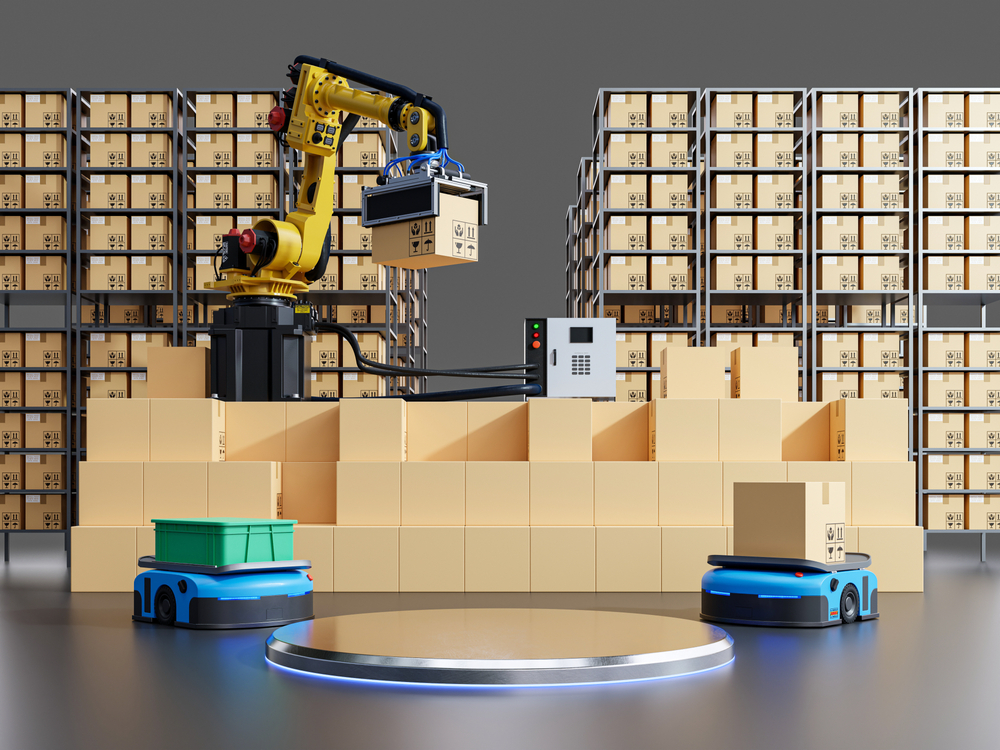
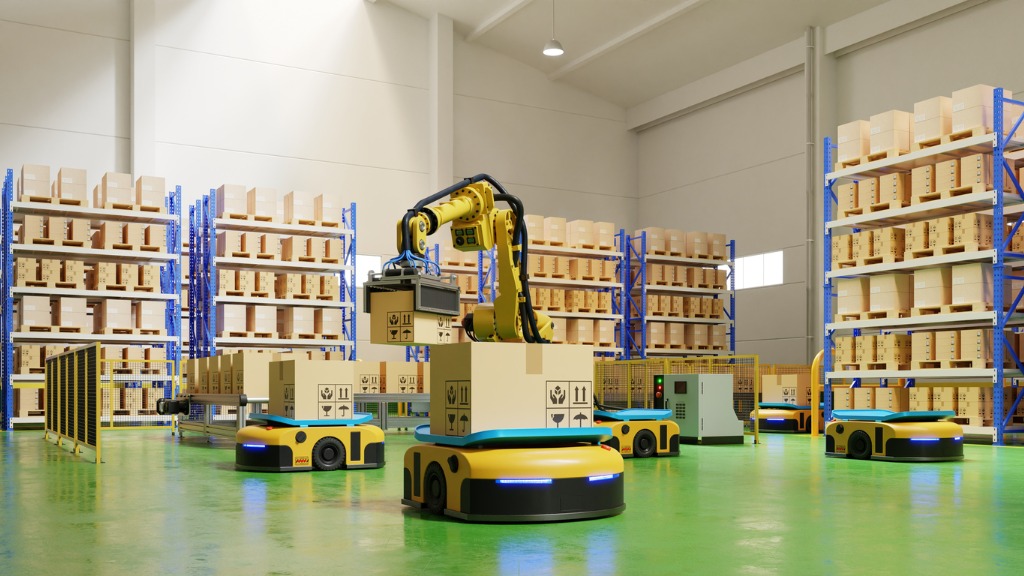
Factory automation with automated guided vehicles and robotic arms in transportation will increase transport with safety. 3D rendering
Logistic robots are highly efficient at order picking and packing, a task that traditionally requires substantial human labor. Advanced robotic systems employ AI and ML algorithms to optimize the order-picking process. These robots can identify the most efficient routes through the warehouse, minimize travel time, and ensure that the correct items are picked and packed accurately. This results in faster order processing, reduced errors, and improved customer satisfaction.
Load Transportation
The movement of heavy loads within a warehouse is strenuous and can pose safety risks for human workers. Logistic robots, however, are designed to handle these tasks with ease. Autonomous mobile robots (AMRs) equipped with load-carrying capabilities can transport pallets, containers, and goods from one location to another, reducing the physical strain on workers and allowing them to focus on more complex tasks. This not only enhances warehouse safety but also improves productivity.
Autonomous Shelf Replenishment
Maintaining organized and accessible shelves is vital for efficient warehouse management. Logistic robots are programmed to autonomously replenish shelves with products as they are depleted. They can identify empty spaces on shelves and refill them with the appropriate items. This real-time replenishment ensures that products are readily available for order fulfillment and minimizes delays caused by manual restocking processes.
The Impact of Logistics Robots on Distribution Centers
Improved Speed and Efficiency
Distribution centers are the heart of supply chain operations, and logistic robots play a pivotal role in ensuring the efficient movement of goods. Robots are capable of working 24/7 without fatigue, resulting in a significant increase in the speed and efficiency of distribution center operations. They can handle tasks such as unloading trucks, sorting products, and preparing orders with unparalleled speed and precision.
Space Optimization
Logistic robots can optimize the use of space within distribution centers. They are designed to navigate in confined spaces and can efficiently stack and retrieve products from shelves. This ability to make the most of available storage space is invaluable in densely packed distribution centers, reducing the need for expansion and leading to cost savings.
Streamlined Cross-Docking
Cross-docking is a logistics strategy where products are transferred directly from inbound to outbound trucks with minimal storage time. Logistic robots can facilitate this process by quickly unloading incoming shipments and routing products to the appropriate outbound trucks. This accelerates the distribution process, reduces storage costs, and minimizes the risk of product damage.
Enhanced Traceability
Traceability is a critical aspect of distribution, especially when dealing with perishable or high-value goods. Logistic robots equipped with tracking technology and sensors can provide end-to-end visibility throughout the distribution process. They can record information about the condition and location of products, ensuring that any issues or discrepancies can be quickly identified and addressed.
The Role of Logistics Robots in Last-Mile Delivery
Autonomous Delivery Vehicles
Logistics robots extend their influence to the last mile of delivery through autonomous delivery vehicles. These vehicles are equipped with advanced AI systems that allow them to navigate urban environments, avoid obstacles, and make autonomous deliveries. The use of autonomous vehicles in the last mile not only reduces delivery costs but also contributes to the reduction of greenhouse gas emissions by optimizing delivery routes and schedules.
Parcel Sorting
Parcel sorting centers play a crucial role in the last-mile delivery process. Logistic robots can efficiently sort parcels based on their size, weight, and destination. The automation of this task ensures that parcels are directed to the correct delivery routes, minimizing errors and delays. Customers receive their orders faster, leading to higher satisfaction levels.
Drone Deliveries
The integration of logistic robots and drones has brought about a new era in last-mile delivery. Drones are capable of delivering packages to remote or hard-to-reach areas quickly. They are particularly useful in emergencies or for delivering medical supplies. The combination of logistics robots and drones expands the reach of last-mile delivery services and improves their responsiveness.
Challenges and Considerations in Implementing Logistics Robots
While logistic robots offer numerous advantages, their implementation is not without challenges and considerations. Companies need to address the following aspects to ensure the successful integration of logistics robots into their operations:
Initial Investment: Acquiring and deploying logistics robots can involve a significant upfront investment. Companies must carefully assess the costs and benefits to justify this investment.
Integration with Existing Systems: Compatibility with existing warehouse management systems (WMS) and enterprise resource planning (ERP) systems is crucial for a seamless integration of logistics robots. Ensuring that these systems can communicate effectively with the robots is essential.
Workforce Training: Training employees to work alongside logistics robots is vital. Workers should be prepared to collaborate with robots and understand their roles in the evolving logistics landscape.
Maintenance and Support: Logistics robots require regular maintenance to ensure their optimal performance. Companies need to have maintenance and support plans in place to minimize downtime and disruptions.
Data Security: The use of AI and ML in logistics robots generates substantial data. Protecting this data from security breaches and ensuring compliance with data protection regulations is a significant concern.
Ethical and Regulatory Considerations: Companies must navigate ethical issues surrounding the use of automation, such as the potential impact on human jobs and safety. Additionally, they should stay informed about evolving regulations related to robotics and automation in the logistics sector.
The Future of Logistics Robots
The future of logistic robots is promising, with continuous advancements in technology and increased adoption across industries. Here are some key trends and developments that will shape the future of logistics robots:
Human-Robot Collaboration: Logistic robots will increasingly collaborate with human workers, working side by side to enhance productivity. Humans will focus on tasks that require creativity, problem-solving, and decision-making, while robots handle repetitive and physically demanding work.
Artificial Intelligence and Machine Learning: Logistic robots will become more intelligent, leveraging AI and ML to improve their ability to navigate complex environments, adapt to changing circumstances, and make real-time decisions.
Enhanced Mobility: Future logistic robots will have improved mobility, enabling them to navigate a wide range of terrains, including outdoor environments. This will expand their applicability in various logistics and delivery scenarios.
Customization and Scalability: Logistic robots will be more customizable and scalable, allowing companies to adapt and expand their robotic fleets to meet specific operational needs.
Sustainability: The integration of logistics robots in delivery and distribution will contribute to sustainability efforts by optimizing delivery routes and reducing emissions. This aligns with the growing emphasis on eco-friendly logistics practices.
Conclusion
Logistics robots are a transformative force in the world of distribution and supply chain management. Their role in warehouse management, distribution centers, and last-mile delivery is reshaping the industry by improving efficiency, reducing costs, and enhancing customer satisfaction. As logistic robots continue to evolve and integrate advanced technologies, they will play a pivotal role in the future of logistics and distribution, contributing to a more efficient, sustainable, and connected global supply chain network.
The optimization of distribution with logistic robots is not just a choice but a necessity for companies looking to stay competitive and meet the ever-increasing demands of the modern consumer. The ability to adapt and embrace these advanced technologies will determine the success of businesses in the logistics industry and beyond. Logistic robots are more than just machines; they are the architects of a smarter, more efficient, and agile supply chain ecosystem.
In today’s fast-paced world, the demand for efficient and streamlined supply chain management has never been greater. Two key terms that often come up in discussions about optimizing the movement of goods are “warehouse automation” and “Logistics Automation.” While these terms may sound similar, they refer to distinct aspects of the supply chain. Understanding the differences between warehouse automation and logistics automation is essential for businesses looking to improve their operations and stay competitive in the modern marketplace.
Table of Contents
Warehouse Automation: Streamlining Operations in the Four Walls
Warehouse automation focuses on the automation of processes within the physical confines of a warehouse or distribution center. This includes everything from receiving goods, storing them, and then picking, packing, and shipping them to customers. Warehouse automation solutions are designed to optimize and simplify these internal operations, leading to increased efficiency, accuracy, and cost savings.
1349338733
Key Components of Warehouse Automation:
Automated Storage and Retrieval Systems (AS/RS): AS/RS systems use robots and conveyors to automatically store and retrieve items, reducing the need for human intervention and minimizing the risk of errors.
Pick and Pack Systems: Automation is applied to the process of selecting products from inventory and packing them for shipment, leading to faster and more accurate order fulfillment.
Conveyor Systems: Conveyor belts are used to transport goods efficiently within the warehouse, reducing manual handling and speeding up processes.
Robotic Systems: Autonomous robots, guided by AI and sensors, can navigate the warehouse to perform tasks such as inventory counting, restocking, and order picking.
Automated Guided Vehicles (AGVs): AGVs are mobile robots used for material transport, helping to move products between different parts of the warehouse.
Barcode and RFID Systems: These technologies are crucial for tracking and managing inventory, ensuring accurate stock levels, and improving order accuracy.
Advantages of Warehouse Automation:
Improved Efficiency: Warehouse automation reduces the need for manual labor, which can be slow and error-prone. This results in faster order processing and reduced labor costs.
Enhanced Accuracy: Automated systems are highly precise, minimizing the risk of errors in order picking, packing, and inventory management.
Optimized Space Utilization: AS/RS systems, for instance, can maximize vertical space in the warehouse, allowing for more products to be stored in a smaller footprint.
Reduced Operational Costs: Automation can lead to savings on labor, space, and energy costs, contributing to a more cost-effective warehouse operation.
Scalability: Automation systems can be scaled up or down to match the needs of the business, making it easier to adapt to changing market conditions.
While warehouse automation primarily focuses on processes within the physical warehouse, logistics automation takes a broader view, encompassing the entire supply chain from end to end.
Logistics Automation: Coordinating the Supply Chain
Logistics automation, on the other hand, encompasses a wider range of processes, including those that occur outside the walls of a warehouse or distribution center. It is about orchestrating and optimizing the flow of goods from the manufacturer to the end customer, involving various modes of transportation, inventory management, demand forecasting, and more.
Key Components of Logistics Automation:
Transportation Management Systems (TMS): TMS software helps manage the movement of goods from point A to point B, optimizing routes, reducing transportation costs, and ensuring timely deliveries.
Inventory Management Systems: These systems monitor and control inventory levels, ensuring that products are available when needed without excessive stockpiling.
Demand Forecasting: Accurate demand forecasting helps businesses anticipate customer needs and adjust their supply chain accordingly, reducing the risk of overstock or stockouts.
Order Management Systems (OMS): OMS solutions track and manage orders from the moment they are placed until they are delivered, ensuring seamless order processing and customer satisfaction.
Warehouse Management Systems (WMS): WMS software bridges the gap between warehouse operations and logistics, facilitating real-time coordination between the two.
Track and Trace Technologies: Technologies like GPS and RFID allow for real-time tracking of shipments, improving visibility and transparency throughout the supply chain.
Advantages of Logistics Automation:
Enhanced Visibility: Logistics automation provides real-time visibility into the entire supply chain, allowing businesses to make informed decisions and respond to issues promptly.
Reduced Transportation Costs: Optimized routes and efficient transportation management result in lower shipping costs and faster deliveries.
Inventory Optimization: Automated inventory management ensures that products are available when needed, reducing carrying costs and preventing stockouts.
Improved Customer Satisfaction: seamless order processing, accurate delivery estimates, and proactive issue resolution all contribute to higher customer satisfaction levels.
Adaptability: Logistics automation allows businesses to adapt to changing market conditions and customer preferences more effectively.
Overlap and Synergy
While warehouse automation and logistics automation have distinct focuses, they are not mutually exclusive. In fact, they often complement each other, creating a synergy that results in a highly efficient and responsive supply chain.
1. Warehouse Management System (WMS): WMS software is a prime example of a technology that bridges the gap between warehouse automation and logistics automation. It allows for real-time communication and coordination between the warehouse and the broader supply chain. For instance, if a logistics hiccup causes a delay in the arrival of goods, the WMS can adjust warehouse priorities to ensure that critical orders are still processed on time.
2. Robotics and AGVs: Autonomous robots and AGVs used in warehouse automation can seamlessly integrate into logistics automation by handling the movement of goods within the warehouse and helping with transportation to and from the warehouse.
3. Data Integration: Both warehouse and logistics automation generate a wealth of data that can be analyzed and used to improve operations. Data analytics and reporting tools can provide insights into performance, helping businesses make informed decisions and optimize their supply chain further.
Challenges in Implementing Automation
Implementing warehouse and logistics automationis not without its challenges. While the benefits are substantial, it’s essential to be aware of potential roadblocks and address them effectively.
1. High Initial Costs: Automation systems can be expensive to implement, requiring a significant upfront investment in technology and infrastructure. However, these costs should be weighed against the long-term benefits and cost savings.
2. Integration Complexity: Integrating different automation systems and ensuring they work seamlessly together can be a complex task. It often requires expertise in both automation technologies and supply chain management.
3. Workforce Transition: Transitioning from a manual labor-intensive operation to automation may require retraining or reassigning existing employees, and it can be met with resistance from the workforce.
4. Scalability: Ensuring that automation systems can scale to accommodate growth or seasonal fluctuations in demand is a critical consideration. Scalability requires careful planning to avoid bottlenecks or underutilization of resources.
5. Technological Obsolescence: As technology evolves rapidly, the risk of automation systems becoming outdated is a concern. It’s essential to choose systems that can adapt and evolve with the business.
Warehouse Automation vs. Logistics Automation: Making the Choice
When deciding between warehouse automation and logistics automation, it’s crucial to consider the specific needs and challenges of your business. In some cases, it may be beneficial to prioritize one type of automation over the other, but often a combination of both will yield the best results.
When to Prioritize Warehouse Automation:
If your business primarily deals with the efficient storage, picking, packing, and shipping of products from a centralized location,
Order accuracy, speed, and labor cost reduction are top priorities.
If you have a high volume of repetitive tasks that can be automated within the four walls of your warehouse,
To prioritize logistics automation:
If your supply chain involves multiple locations, transportation, and complex coordination between them.
Demand forecasting, route optimization, and transportation cost reduction are critical factors.
If you need end-to-end visibility and control over your entire supply chain, from manufacturing to the customer’s doorstep.
The Ideal Scenario: A Holistic Approach
In many cases, the ideal scenario involves adopting both warehouse and logistics automation in a coordinated and holistic manner. By doing so, businesses can achieve seamless end-to-end automation that optimizes the entire supply chain, from raw materials to final delivery. This approach can enhance operational efficiency, reduce costs, improve customer satisfaction, and create a more agile and adaptable business.
For example, a clothing retailer with both physical stores and an online presence may benefit from warehouse automation to efficiently manage inventory and fulfill online orders, while also leveraging logistics automation to optimize transportation routes and coordinate the delivery of products to various locations.
Conclusion
In conclusion, while the terms “warehouse automation” and “logistics automation” may sound similar, they represent different facets of supply chain management. Warehouse automation focuses on streamlining processes within a physical warehouse, improving internal operations, and reducing manual labor. Logistics automation, on the other hand, takes a broader view of the entire supply chain, encompassing transportation, inventory management, demand forecasting, and more.
Both forms of automation offer significant advantages, and they are not mutually exclusive. In fact, they often work together to create a more efficient and responsive supply chain. When choosing between warehouse and logistics automation, businesses should consider their specific needs, challenges, and long-term goals, but in many cases, a combination of both is the key to success in today’s competitive marketplace. With careful planning, implementation, and ongoing optimization, businesses can harness the power of automation to stay ahead of the curve and meet the evolving demands of their customers.
In today’s fast-paced and highly competitive business environment, effective supply chain management has become a critical success factor for companies looking to stay ahead of the curve. Integrated logistics is a strategic approach that plays a pivotal role in optimizing the supply chain, reducing costs, enhancing efficiency, and ensuring a seamless flow of goods and information. In this comprehensive blog post, we will delve into the world of integrated logistics, exploring its benefits, key strategies, and how to effectively implement this approach to maximize your business’s potential.
Table of Contents
What is Integrated Logistics?
Integrated logistics, also known as integrated supply chain management, is a holistic approach that combines various elements of the supply chain into a well-coordinated and synchronized system. The primary goal is to streamline the entire process, from the procurement of raw materials to the delivery of finished products to customers. Integrated logistics involves the management of transportation, warehousing, inventory, and information flow, all under one cohesive strategy.
Key Elements of Integrated Logistics
Transportation Management: Efficiently managing the movement of goods through various transportation modes, including trucks, ships, planes, and railways.
Warehousing and Inventory Control: Optimizing warehouse operations and maintaining the right levels of inventory to ensure timely product availability.
Information Technology: Utilizing advanced technology, such as supply chain management software and data analytics, to enhance visibility and control.
Supplier and Vendor Management: Developing strong relationships with suppliers and vendors to improve lead times and reduce costs.
Customer Service and Order Fulfillment: Ensuring excellent customer service and timely order fulfillment to meet customer demands.
Benefits of Integrated Logistics
Integrated logistics offers numerous advantages for businesses of all sizes and industries. Here are some of the key benefits:
Cost Reduction: Streamlining operations, reducing inefficiencies, and optimizing transportation and inventory can lead to significant cost savings.
Improved Efficiency: The synchronized approach ensures that resources are utilized efficiently, resulting in quicker lead times and enhanced service quality.
Enhanced Customer Satisfaction: Meeting customer demands in a timely manner, thanks to improved order fulfillment, can lead to higher customer satisfaction and loyalty.
Better Decision-Making: Access to real-time data and analytics helps in making informed decisions, adapting to market changes, and mitigating risks.
Competitive Advantage: It can provide a competitive edge by allowing businesses to adapt quickly to market changes and deliver goods more efficiently than competitors.
Strategies for Implementing Integrated Logistics
Implementing integrated logistics can be a complex endeavor, but with the right strategies, it is attainable for businesses in various industries. Here are some key strategies for successful implementation:
Develop a Comprehensive Plan
A well-thought-out plan is essential for implementing integrated logistics successfully. Start by defining your objectives, understanding your current supply chain processes, and identifying areas that need improvement. This plan should consider factors like cost reduction, improved service levels, and agility in responding to market changes.
Invest in Technology
Information technology plays a vital role in integrating logistics. Invest in supply chain management software and systems that offer real-time visibility, data analytics, and automation capabilities. These tools will help you monitor and manage your supply chain more effectively.
Collaboration and Communication
Effective collaboration between various departments and stakeholders is crucial for integrating logistics. Ensure that teams responsible for procurement, production, warehousing, and transportation are in sync. Use clear communication channels to share information and coordinate activities.
Supplier and Vendor Management
Strengthen relationships with suppliers and vendors. Implement just-in-time (JIT) inventory practices to reduce inventory holding costs and improve lead times. Engage in open communication to understand their capabilities and limitations.
Continuous Improvement
Integrating logistics is an ongoing process. Regularly evaluate your supply chain operations, identify areas for improvement, and implement changes accordingly. Continuous improvement is a fundamental aspect of maintaining competitiveness.
Employee Training
Properly train your employees in the principles and practices of integrating logistics. Knowledgeable and skilled employees can make a significant difference in the success of your implementation.
The Implementation Process
Implementing and integrating logistics requires careful planning and execution. Here’s a step-by-step guide to help you navigate the implementation process:
Assess Your Current Supply Chain
Start by conducting a thorough assessment of your current supply chain operations. Identify bottlenecks, inefficiencies, and areas where integration can make a difference.
Set Clear Objectives
Define specific and measurable objectives for your integrating logistics implementation. These objectives could include reducing transportation costs by a certain percentage, improving order fulfillment times, or enhancing overall supply chain visibility.
Choose the Right Technology
Invest in the appropriate technology and software solutions that align with your objectives. Ensure that the chosen tools offer the features necessary for seamless integration.
Build Cross-Functional Teams
Form cross-functional teams that bring together employees from different departments involved in the supply chain. These teams should collaborate on implementing and integrating logistics strategies.
Create a Timeline
Develop a realistic timeline for the implementation process. Set milestones and deadlines to track progress effectively.
Test and Optimize
Before fully deploying integrating logistics, conduct pilot tests to identify any issues or areas that need improvement. Optimize the process based on the feedback and data collected during the testing phase.
Monitor and Measure
Once integrating logistics is in full operation, closely monitor key performance indicators (KPIs) to ensure that the objectives are being met. Continuously measure and assess the impact on your supply chain’s efficiency and cost-effectiveness.
Adapt and Evolve
In the ever-changing business environment, flexibility is crucial. Be prepared to adapt your integrating logistics strategies and processes to meet new challenges and opportunities as they arise.
Overcoming Challenges
While integrated logistics offers numerous advantages, it’s not without its challenges. Here are some common obstacles and how to overcome them:
Resistance to Change
Employees and stakeholders may resist the changes brought about by integrated logistics. To overcome this challenge, provide training, communicate the benefits, and involve key personnel in the decision-making process.
Information Sharing
In some cases, sharing sensitive supply chain information with partners can be a concern. Implement data security measures and confidentiality agreements to address these concerns.
Integrating various technology systems can be complex. Seek expert assistance when necessary, and ensure that the selected technologies are compatible.
Cost
Implementing integrating logistics may require initial investment, but the long-term benefits often outweigh the costs. Carefully calculate the return on investment to justify the expenses.
As the business landscape continues to evolve, integrated logistics will also adapt to new trends and technologies. Here are some future trends to keep an eye on:
Artificial Intelligence (AI) and Machine Learning
AI and machine learning will play a more significant role in predictive analytics, helping businesses forecast demand, optimize routes, and make data-driven decisions.
Sustainability
Sustainability will be a growing concern, with integrated logistics aiming to reduce the environmental impact through eco-friendly transportation and warehousing solutions.
Blockchain
Blockchain technology will enhance supply chain transparency and security, reducing the risk of fraud and improving trust among partners.
E-commerce Integration
The integration of e-commerce into traditional supply chain operations will continue to evolve, requiring seamless coordination between online and offline sales channels.
3D Printing
3D printing may disrupt traditional manufacturing and distribution methods, necessitating adjustments in supply chain strategies.
Conclusion
Integrated logistics is a powerful approach that can transform your supply chain, leading to cost savings, improved efficiency, and increased customer satisfaction. By implementing the right strategies and technology, you can successfully integrate your logistics operations and stay competitive in an ever-changing business landscape.
Whether you’re a retailer like Walmart or a fashion brand like Zara, the principles of integrated logistics are applicable across industries. As you plan your integrated logistics journey, remember that it’s an ongoing process that requires continuous improvement and adaptation to remain competitive and meet the evolving demands of your customers and the market. Embrace this holistic approach, and you’ll be well on your way to reaping the benefits of integrated logistics in your business.
Shipping costs are a significant concern for businesses of all sizes, from small e-commerce startups to large multinational corporations. High shipping costs can eat into your profit margins and make your products less competitive in the market. Therefore, finding ways to reduce shipping costs is essential for businesses looking to improve their bottom line. In this comprehensive guide, we’ll explore the best tips and strategies to help you minimize shipping costs and boost your business’s profitability. Whether you’re shipping locally or internationally, these tips will be invaluable in helping you manage your shipping expenses effectively.
Discuss Some Tips To Reduce Shipping Costs
Optimize Packaging
One of the most straightforward yet often overlooked ways to reduce shipping costs is to optimize your packaging. Oversized and inefficient packaging not only leads to higher shipping fees but can also result in damaged goods during transit. Here’s how you can optimize your packaging:
Right-sized packaging: Use packaging that fits your products snugly, minimizing unused space. This can help reduce dimensional weight charges, which are based on the package size, not just weight.
Use lightweight materials: Choose packaging materials that are strong but lightweight, reducing the overall weight of your shipment.
Minimize void fill: Avoid excessive padding or void fill materials. They add weight and volume to your packages, increasing shipping costs.
Invest in custom packaging: Tailor your packaging to your product’s specific dimensions to ensure the perfect fit.
Negotiate with Carriers
Many businesses underestimate the power of negotiation when it comes to shipping costs. Establishing a good working relationship with your shipping carriers and negotiating your shipping rates can lead to significant savings. Consider these negotiation tips:
Regularly review contracts: Don’t assume that your existing shipping contract is the best you can get. Periodically review your contract terms and rates, and be prepared to negotiate for better terms.
Leverage competition: Shop around and gather quotes from multiple carriers. Use these quotes as leverage during negotiations with your current carrier.
Offer volume commitments: If you can commit to a certain volume of shipments, carriers may be willing to offer you better rates.
Consider long-term agreements: Some carriers may provide better rates if you sign long-term agreements, which can be beneficial if you have a consistent shipping volume.
Embrace Technology
Advancements in technology have made it easier for businesses to optimize their shipping operations and reduce costs. Utilize shipping and logistics software to streamline your shipping processes and save money.
Shipping software: Invest in shipping management software that can help you compare rates, print shipping labels, and track shipments efficiently.
Address validation tools: Implement address validation tools to reduce shipping errors and costly returns due to incorrect addresses.
Route optimization: Use route optimization software to plan the most cost-effective delivery routes and reduce fuel costs.
Take Advantage of Shipping Discounts
Shipping carriers often offer discounts to businesses that qualify for specific programs or meet certain criteria. Here are some ways to take advantage of shipping discounts:
Small business programs: Many carriers have programs tailored to small businesses, offering discounted rates and services.
Membership organizations: Join industry or trade organizations that negotiate group discounts on behalf of their members.
Customer loyalty programs: Some carriers provide loyalty programs that reward regular customers with shipping discounts, so be sure to enroll if offered.
E-commerce platform partnerships: If you operate an online store, your e-commerce platform may have partnerships with carriers that offer discounted shipping rates.
Minimize Returns
Returns can be a significant cost for e-commerce businesses. By taking steps to reduce the number of returns, you can lower your overall shipping costs. Here’s how to do it:
Provide detailed product information: Ensure that your product listings are accurate and comprehensive to set realistic customer expectations.
High-quality product images: Display high-quality images that accurately represent the product to minimize the chances of returns due to appearance discrepancies.
Clear return policies: Clearly communicate your return policies to customers to set expectations and reduce the likelihood of “buyer’s remorse” returns.
Quality control: Implement stringent quality control measures to minimize the shipment of damaged or defective products.
Implement Inventory Management
Efficient inventory management can help reduce shipping costs in various ways:
Just-in-time inventory: Implement a just-in-time inventory system to reduce storage costs and minimize the need for oversized shipments.
Cross-docking: Use cross-docking to streamline the transfer of goods from receiving to outbound shipping without the need for long-term storage.
Stock strategically: Stock your products closer to your customers, using multiple distribution centers or 3PL (third-party logistics) providers to minimize shipping distances.
Consider Shipping Consolidation
Consolidating your shipments can be an effective way to reduce shipping costs. This method involves combining multiple smaller shipments into a single larger one, reducing the cost per unit. Here’s how to make shipping consolidation work for your business:
Group orders: Encourage customers to place group orders or buy in bulk, reducing the number of smaller shipments.
Combine shipments: If you’re sending multiple packages to the same location, consolidate them into one shipment to save on shipping costs.
Partner with other businesses: Collaborate with other businesses in your area to share shipping costs and benefit from economies of scale.
Opt for Economy Shipping Services
Many shipping carriers offer economy or ground shipping services that are often more cost-effective than express or expedited options. While these services may take longer, they can result in significant savings, especially for less time-sensitive shipments. Evaluate your shipping needs and consider using economy services for appropriate shipments to reduce shipping costs.
Minimize Dimensional Weight Charges
Dimensional weight, also known as volumetric weight, is a pricing technique used by carriers to account for the amount of space a package occupies in relation to its actual weight. To reduce dimensional weight charges, take the following steps:
Efficient packaging: As mentioned earlier, optimize your packaging to reduce unused space.
Use smaller boxes: Choose smaller boxes whenever possible, as they result in lower dimensional weight charges.
Review carrier policies: Stay informed about carrier policies on dimensional weight and adjust your packaging accordingly.
Offer Shipping Incentives to Customers
Incentivizing your customers to choose cost-effective shipping options can be a win-win. By offering incentives like free or discounted shipping for slower delivery methods, you can encourage customers to opt for cheaper shipping options, reducing your overall shipping costs.
Free shipping threshold: Set a minimum order amount that qualifies for free or discounted shipping, encouraging customers to spend more.
Loyalty program perks: Provide loyal customers with exclusive shipping discounts or faster shipping options in exchange for their continued business.
Promotional offers: Run limited-time promotions where customers can enjoy reduced or free shipping for specific product categories or order amounts.
Conclusion
Reducing shipping costs is a critical aspect of maintaining a profitable business, and there are numerous strategies to help you achieve this goal. By optimizing your packaging, negotiating with carriers, embracing technology, and taking advantage of discounts and incentives, you can significantly lower your shipping expenses. Remember that it’s not just about cutting costs; it’s about finding a balance between cost savings and customer satisfaction. By implementing these best practices, you can make your shipping operations more efficient and cost-effective while continuing to deliver excellent service to your customers.
In the competitive world of business, every penny saved on shipping costs counts. Implementing these tips will not only reduce your expenses but also enhance your overall operational efficiency. So, start working on these strategies today and watch your business thrive as you effectively reduce shipping costs, making a positive impact on your bottom line.
Shipping, often referred to as “shipment,” stands as an essential pillar of the global economy. It’s the uncelebrated yet indispensable force that makes it possible for products to traverse the vast distances between manufacturers and consumers, for businesses to expand their reach, and for trade to flourish. In this comprehensive guide, we embark on an extensive journey into the world of shipments. We will also delve into other crucial aspects, uncovering the diverse types of shipments, the formidable challenges confronting the industry, and the exciting future trends that are reshaping how goods are transported, delivered, and received.
Table of Contents
Introduction
In the global tapestry of commerce, shipping, or as we commonly call it, “shipment,” threads its way through every corner. Whether it’s a small package arriving at your doorstep from an online order or a colossal cargo vessel crossing vast oceans laden with goods, shipping is a ubiquitous part of our daily lives. This article aims to be your ultimate guide to the world of shipping, a multifaceted realm where different types of shipping coexist, where formidable challenges are met with innovative solutions, and where future trends are leading the way to a more efficient and sustainable shipment landscape.
Unpacking the Varied Types of Shipments
Shipping is not a one-size-fits-all endeavor. It comprises a multitude of forms and structures, each tailored to specific needs and requirements. Let’s embark on a journey to explore the primary types of shipments:
Parcel Shipping: This is everyday shipping that includes packages sent by mail or courier services. They vary in size, ranging from small envelopes to larger boxes, and are widely used for e-commerce deliveries.
Freight Shipping: Freight shipping involves the transportation of larger and heavier goods, often requiring diverse modes of transport, such as trucks, trains, or ships.
Air Cargo Shipping: When speed is of the essence, air cargo shipping is the preferred choice. They are crucial for transporting perishable goods and high-value items.
Ocean Freight Shipping: In the realm of international trade, ocean freight shipments are a cornerstone. Shipping often entails vast quantities of goods transported within standardized containers.
Intermodal Shipping: Intermodal shipping seamlessly integrates different modes of transport, starting on a truck, moving to a train, and then transitioning to a ship, ensuring efficient long-distance transportation.
Specialized Shipping: Some goods require special handling due to their nature, such as the transportation of hazardous materials, fragile items, or oversized equipment.
Navigating the Challenges in Modern Shipment
While shipping plays a crucial role in global trade and logistics, it is not without its challenges. Understanding these challenges is essential for finding efficient and effective solutions. Here are some of the key challenges confronting the modern shipping industry:
Logistical Complexity: The global supply chain is intricate, with multiple parties involved, various modes of transport, and complex regulatory requirements. Coordinating these elements efficiently is an ongoing challenge.
Supply Chain Disruptions: Natural disasters, geopolitical events, and pandemics can disrupt supply chains, leading to delays and increased costs. Resilience and adaptability are crucial.
Environmental Impact: The shipping industry contributes to greenhouse gas emissions. Efforts are underway to reduce its environmental footprint by adopting cleaner energy sources and improving fuel efficiency.
Last-Mile Delivery: The final leg of shipping, from a local distribution center to the customer’s door, poses unique challenges, especially in densely populated urban areas. Innovations in last-mile delivery are key to efficiency.
Security and Fraud: Ensuring the safety and security of shipping is a constant battle against theft, fraud, and cybersecurity threats. Technology is increasingly employed to mitigate these risks.
Pioneering Future Trends in the Shipment Industry
The shipment industry is undergoing rapid transformation, driven by technological advancements, evolving consumer expectations, and heightened environmental concerns. Here are some of the future trends that are reshaping the industry:
Automation and Robotics: Automation, including the use of drones and autonomous vehicles, is revolutionizing shipping processes, reducing labor costs, and enhancing efficiency.
Sustainability and Green Shipping: The industry is actively working to reduce its environmental impact. Initiatives include adopting cleaner fuels, enhancing fuel efficiency, and improving waste management practices.
Blockchain Technology: Blockchain is gaining prominence in the industry by enhancing transparency and security in supply chain management, reducing fraud, and improving traceability.
Data Analytics: Advanced analytics are proving to be instrumental in optimizing routes, improving inventory management, and enhancing overall efficiency.
E-commerce Growth: The rise of online shopping is significantly altering the landscape, leading to increased demand for fast, reliable, and efficient shipping services.
Ensuring a Sustainable Shipment Ecosystem
As we move forward, sustainability is increasingly becoming a focal point in the shipping industry. Mitigating the environmental impact of shipping is essential. Here are several steps being taken to ensure a sustainable shipment ecosystem:
Alternative Fuels: The industry is exploring and adopting cleaner fuels, such as liquefied natural gas (LNG), hydrogen, and biofuels, to reduce emissions and dependence on fossil fuels.
Electric Vehicles: The use of electric vehicles in last-mile delivery is becoming more prevalent, significantly reducing emissions in urban areas.
Carbon Offsetting: Some companies are investing in carbon offset programs, including reforestation projects, to balance out their carbon emissions.
Improved Packaging: Sustainable packaging materials and practices, such as minimizing waste and using recyclable materials, are being adopted to reduce the environmental footprint of shipping.
Conclusion
Shipping, or the art of getting goods from one place to another, is the invisible hand that shapes our world. Whether it’s the letter arriving in your mailbox, the package on your doorstep, or the containers on a cargo ship crossing the sea, shipments are integral to our lives. Understanding the diverse types of shipping, recognizing the formidable challenges the industry faces, and embracing the promising future trends are all keys to navigating this ever-evolving landscape.
As we move forward, it is imperative that we prioritize sustainability and efficiency in the shipping industry. Whether it’s adopting cleaner fuels, exploring new technologies, or improving packaging practices, the path to a more sustainable shipping ecosystem is clear.
In conclusion, shipping is not merely a process but a dynamic industry that touches every aspect of our lives. With the world evolving and consumers demanding more from their shipments, the future of shipping holds exciting possibilities for us all. Whether it’s parcel shipments, intermodal solutions, or the adoption of cleaner technologies, the world of shipping is constantly innovating and adapting to meet the demands of a changing world.